Eagle’s nest


Following recent postings about bluebirds choosing a nest box, and killdeer seeking a nesting site, here is one about Bald Eagles having chosen their nest for this spring.

A Bald Eagle couple have chosen a nest in which to raise a family.

Countdown: 9


Posted in birds | Comments Off on Eagle’s nest

Killdeer


Killdeer have arrived. They typically turn up in March, about two months before other shorebirds, such as the Spotted Sandpiper, do.

This morning a killdeer couple was seen exploring a rocky island near a creek mouth. Killdeer make their nests on open ground, so if they plan to nest on this island, they had better get on with it as the spring freshet will put the nest underwater in another few months.

The just arrived killdeer couple was probably looking for a nesting site.

countdown: 10

Posted in birds | 3 Comments

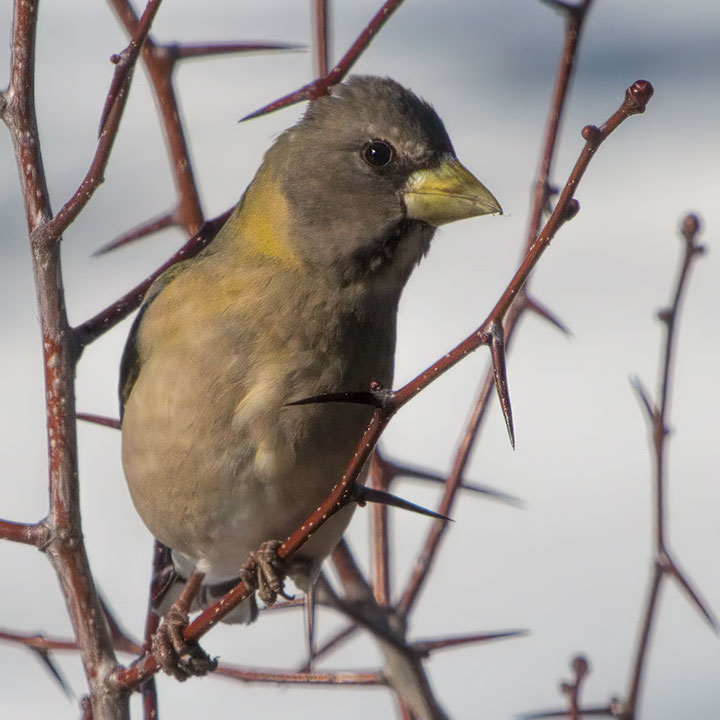
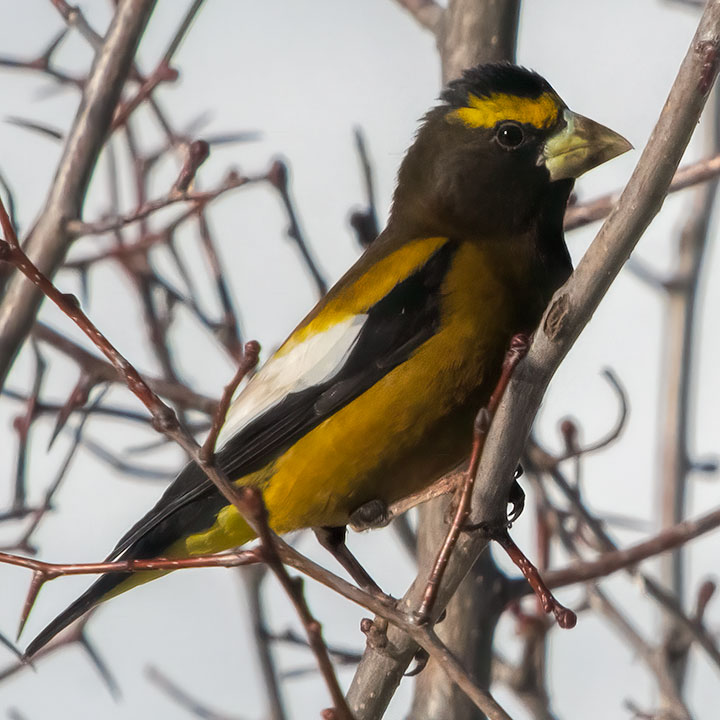
Wandering Grosbeak


The name given this bird by nineteenth-century settlers, Evening Grosbeak, comes from the mistaken belief that it only came out to sing after sundown. Much better is its name in French, le gros-bec errant, for it truly is the wandering grosbeak. Both languages agree on its prodigious beak.

It might be seen around here at any time of the year, but only occasionally, for it wanders widely in its search for food. Although seen by others over recent decades, I last saw one eight years ago.

Last weekend, I watched a small group of them in some black hawthorn bushes — a plant that in some seasons provides them with berries.

A female Evening Grosbeak has a subdued colouration of smoky grey with touches of yellow.

The male Evening Grosbeak is much more stridently coloured.


Posted in birds | 3 Comments

Attacked deer


Now and then, I am reminded that I am only able to glimpse at the lives of the wildlife around me. I see feeding, and furtive attempts to cross a road, but that is about it. However, occasional clues as to the tumultuous lives of deer can be seen. A couple of them were seen a few days ago, but I start with two older observations.

Here is a 2006 shot of a lesion on the leg of a white-tailed deer. I suspect that it records a recent coyote attack — but, who knows? The deer clearly escaped.

Then there is a partial skeleton in the snow seen in 2009. The deer was probably feasted on by a coyote and finished off by ravens.

These early observations were widely spaced. So, it was unexpected to see two more in one day. All that remains in the snow is blood and fur. 

Finally, there was another survivor, a male white-tailed deer (note the pedicle scars), which was crossing the highway in the pre-dawn light. It bore evidence of two prominent lacerations on its side, the size and placement of which suggest the claws of a cougar.


Posted in mammals | 2 Comments

Displaying toms


It has always been a source of mild amusement for me to see Thanksgiving advertisements using clip art of tom turkeys displaying. After all, such displays take place now during the breeding season.

Four toms strut down the road as they stalk two hens.

The hens wandered off into the bush, so the toms followed.

It is important to look one’s best.


Posted in birds | 2 Comments

Western Bluebird


Winter is losing its grip. Valley snow is vanishing and the trees are alive with twittering. Trumpeter Swans and Bohemian Waxwings have flown north to their breeding grounds. Meanwhile Wild Turkey males are displaying and swallows and bluebirds are arriving.

In March, two species of bluebirds arrive: mountain and western. Mountain Bluebirds are the more common and breed throughout the provincial interior. Western Bluebirds only sneak into a small portion of the southern interior. So, it was a bit of a surprise that the first bluebirds seen this year were westerns.

Yesterday, a Western Bluebird couple sat together on a fence post. The male is on the left and the female on the right. The post was within metres of a nest box set up by welcoming locals.

From the post, the birds would fly the short distance to the nest box. This is standard bluebird practice: alight away from the nest; watch for predators and, when all is clear, fly to the nest.

This seems to have been a recognizance mission: “Will this be a suitable place to raise our family?”

“Yep, this will do just fine.”


Posted in birds | 8 Comments

Birds in the woods


Yesterday, I was asked if I were a birder. Probably not. I rarely look specifically for birds and rarely submit observations to birding sites. So, I probably don’t qualify.

What I do do is to look for interesting things in nature. And although what constitutes interesting depends upon experience, it remains that birds are particularly interesting by being some of the most numerous and variable things to be seen during a walk in the woods. I would happily photograph bears and otters (and skunks), but mammals lack the species variability of birds and are less commonly encountered (leaving aside squirrels). 

So, I photograph birds.

Nevertheless, I start with the most common mammal to be seen during a walk.

The Pine Siskin is almost as common as the Black-capped Chickadee.

Although the dipper doesn’t have a colourful plumage, the bird makes up for it by its colourful behaviour. A dipper will frequently just climb out of the creek and onto the shore, yet to get onto this thin border ice, it has chosen to lift off from the water and fly the short distance.

While I occasionally see a Ruffed Grouse in my yard, this one was out in the woods.

I recently posted a picture of a Bohemian Waxwing flying past, but this one perched nearby and allowed a rather close portrait. Notice the crest. The bird lowers its crest during flight.

Trumpeter Swans are still with us, but I don’t often see them so beautifully sunlit against a dark background.

 

Posted in birds, mammals | 6 Comments

White stripes


I was looking for a White-winged Crossbill. It is a somewhat uncommon visitor to the region — and one I had been challenged to find. I did find one, but, one somewhat obscured by branches.

This crossbill doesn’t actually have white wings, but white bars or stripes on otherwise dark wings.

Then I encountered something, other than a crossbill, with white stripes on a dark background.

Seen first was a White-winged Crossbill sitting in a black hawthorn bush.

As I watched in trees for white stripes on birds, I glanced at the ground and found I was being watched by something else with white stripes. A skunk was eyeing me from only metres away.

The arched back and raised tail were a warning to me.

The skunk quickly decided that I posed no threat and merely wandered off.

What was this normally nocturnal animal doing out at midday? It was probably looking for a mate; this is the skunk’s breeding season.


Posted in birds, mammals | 8 Comments

Bohemian flying


Bohemian Waxwings have been here this winter, but they are not nearly as common as they have been other years. A few flocks were seen, but they remained distant. Finally, some flew close.

A Bohemian Waxwing flies by showing the red waxy tips to its wing feathers.


Posted in birds | 6 Comments

February goulash


This is a collection of images that lacked their own postings in February. They are mainly, but not entirely birds. It is interesting that other than squirrels, and deer (that buck has now lost its antlers), I have seen no mammals this month. However, there was ample evidence of their presence through their tracks in the snow: squirrels, racoons, mice, voles, hares, and deer.

According to ebird (which tracks such things) there are no previous observations of Snow Buntings in Februarys. Here is a flock seen on February 25th.  

A Northern Shrike was seen hunting.

I have only seen Gray-crowned Rosy-Finches once before

A little more common (but not much so) is the Pacific Wren. 

This is another view of that Red-tailed Hawk landing in a tree 

In the January goulash,  I noted Trumpeter Swans on the West Arm. They were still there on February 23, but had left two days later.

The month has been cold and windy. Here is snow blowing off a mountain peak. 

Oh, and did I mention that we have had blowing snow?


Posted in birds, weather | 3 Comments