Grizzlies


Recently my parents and I visited Khutzeymateen Provincial park, located an hour and a half north of Prince Rupert by boat.

Finn’s posting: This posting was both photographed and written by Finn, who is Alistair’s grandson.

Grizzly bears are local to the Kootenays, where I previously photographed them, and indeed to most of B.C. However, they appear to be truly at home in the Khutzeymateen.

Protected as a park since 1994 (https://bcparks.ca/khutzeymateen-park-aka-khutzeymateen-ktzim-a-deen-grizzly-sanctuary/), the grizzlies of the Khutzeymateen inlet and river valley are subject to only a few commercial tours licensed to operate in the area, none of which are permitted to step on land. With rain falling 300 out of 365 days a year, the area never runs dry of food; from June until late July, bears thrive on the abundance of protein-rich (~18%) sedge grass adorning every shore. Here I share few moments spent with a mother and young cub (COY – ‘Cub of the Year’) learning to navigate its sanctuary.

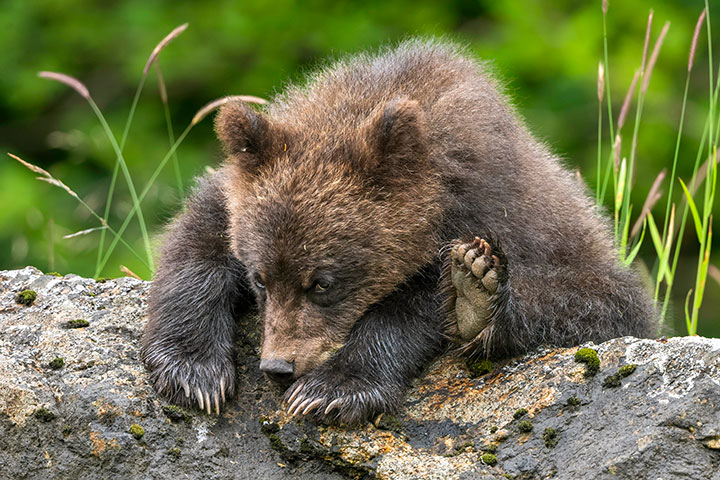
B(e)arely a year old – pun intended – the cub understandably quickly grew bored of chewing on the sedge, instead opting for practicing yoga and an ambivalent flop over a nearby rock.
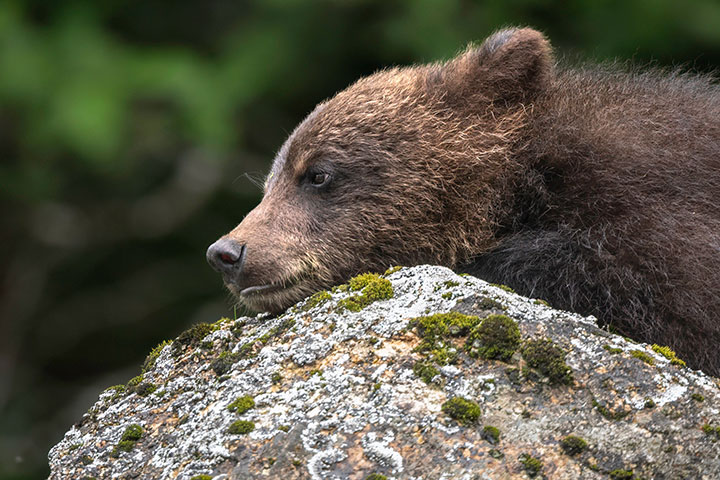
Meanwhile, the mother, with considerably more endurance for the task, continued munching in the vicinity.
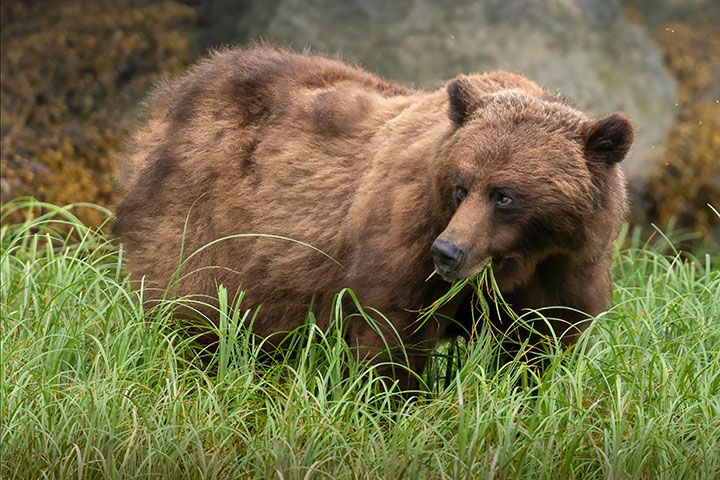
At some point, once the cub had tired of its relaxation, it clambered down off the rock for a heartfelt reuniting with its mother.
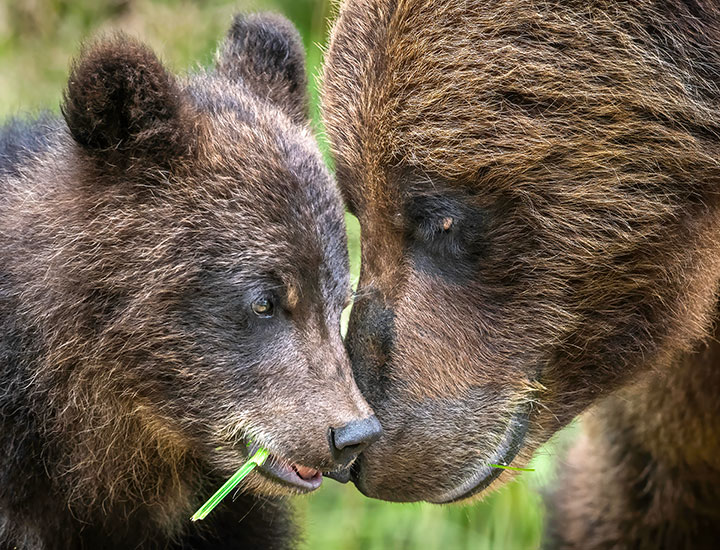
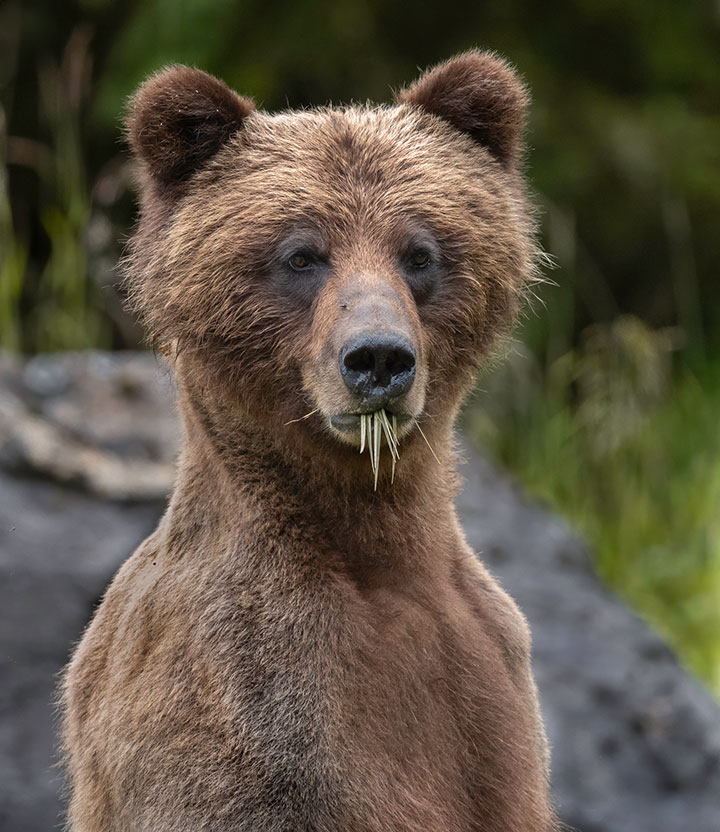
However, the cub soon grew just as tired of its mother as consuming ‘good-for-you’ sedge, and curiously wandered down to the waterline towards us for a drink of (salty?) water. Despite the isolation, the helicopter parenting strategy is also practiced in the Khutzeymateen – the mother signalled her displeasure by rising to her hind legs, the seriousness of her gesture perhaps undermined by the half-chewed bits of sedge hanging out of her mouth.
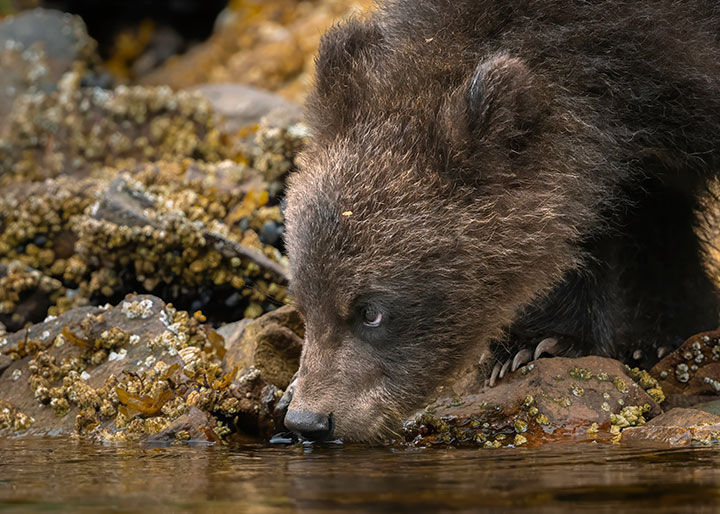
Nevertheless we and the cub heeded her warning, and as the cub scrambled back to join its mother, we moved on and left them to roam their sanctuary.
 

Posted in mammals | 13 Comments

Loons & Osprey


Of the many birds I saw yesterday, two stood out: loons and an osprey. This was the first time I’d seen loons in over a month since they went up to small mountain lakes to breed. And the issue with the osprey was that it had just caught a fish.

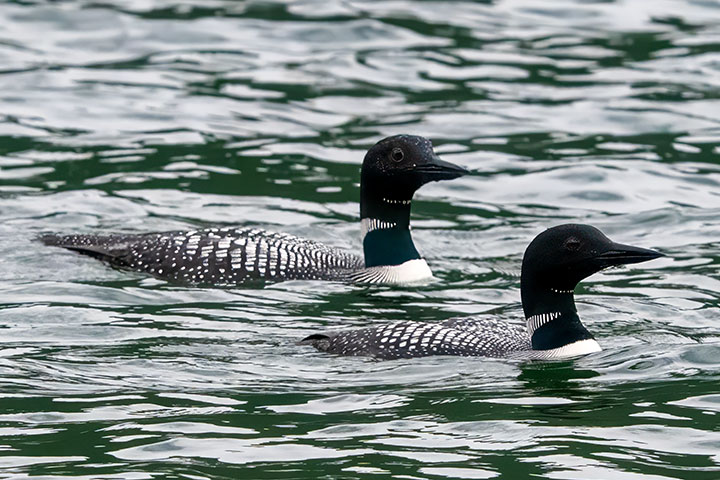
A mated couple of Common Loons (larger male on left) were down from the mountains and back on Kootenay Lake with their striking pattern of black and white plumage. Now, I have seen loons with red eyes and loons with dark eyes. So, I checked for the timing of the colour change on the web and discovered, to my surprise, that someone claimed that “common loons do always have red eyes” <https://www.birdful.org/do-common-loons-always-have-red-eyes/>. Huh? That statement contradicts observations: they don’t always have red eyes. It is the retina of the loon’s eyes that are red during breeding, but the retina are otherwise dark. As the colour of the retina does not influence seeing, the red eyes must signal that the loons are ready to breed. These loons had dark eyes so breeding is over.

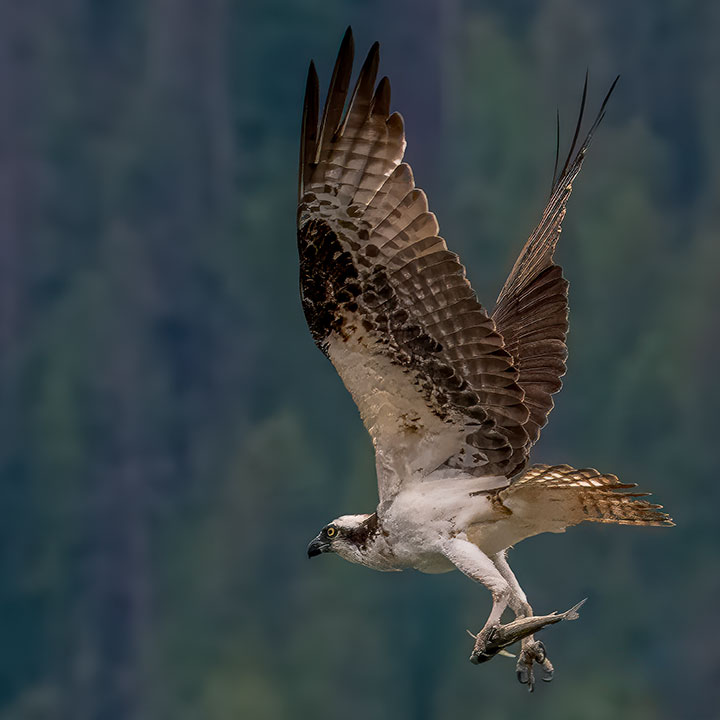
The same day I watched the loons, a male osprey flew by with a fresh fish. Fresh, for the osprey, will generally mean that it has not stopped somewhere to eat the tasty head and brains before delivering the rest to its chicks. This fish still had a complete head.


Posted in birds | Comments Off on Loons & Osprey

Ghost plant


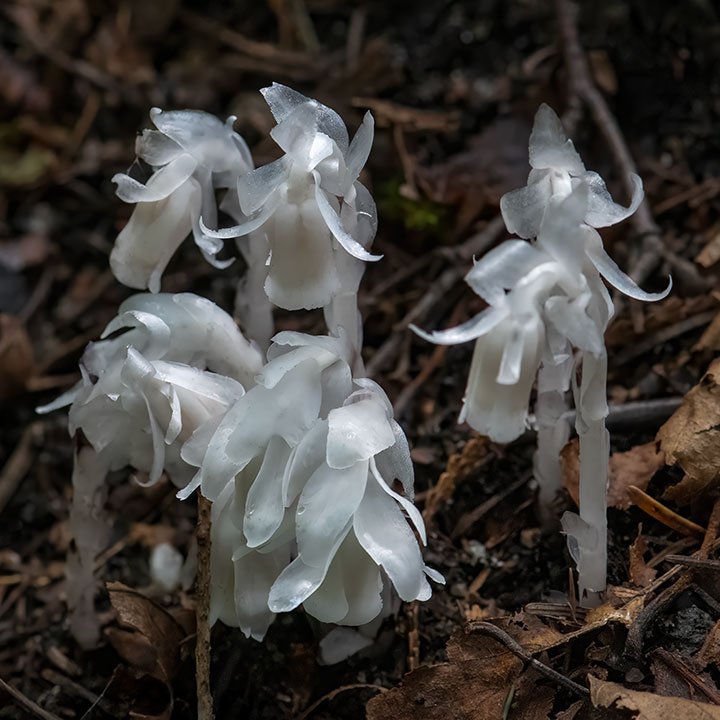
It is mid-July. The time has come to see the ghost plant (formally called the Indian pipe).

The ghost plant is in fact a herbaceous perennial plant (not a fungus), but its strikingly white colour means that it lacks chlorophyll, the substance responsible for the absorption of light to provide energy for photosynthesis. So how does does it manage to get the energy required for growth?

The ghost plant is parasitic; it gets its energy indirectly from trees through fungi. This means that it can prosper in the deep shaded area of a forest where other plants may struggle.

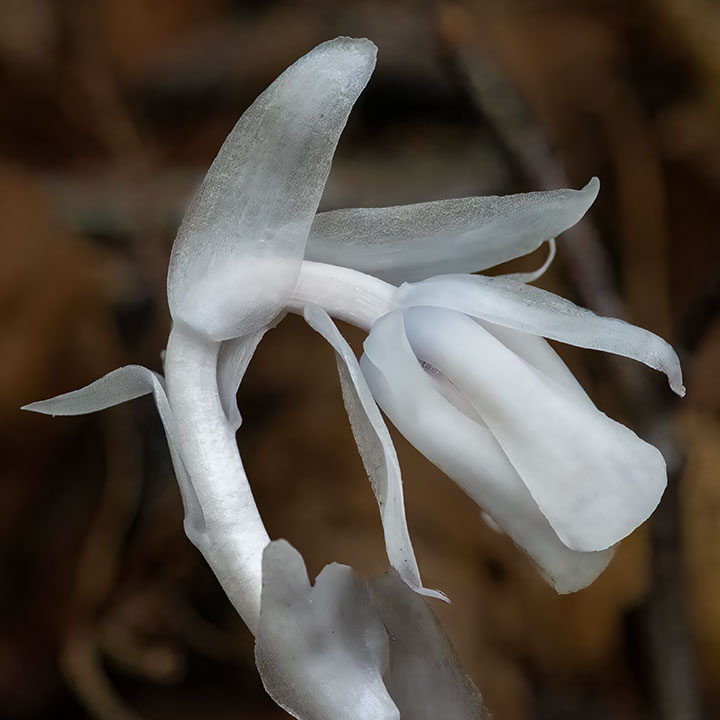
It looks as if it has leaves, yet they are not leaves as they contain no chlorophyll. These structures are often described as scales, but their presence is probably an accidental holdover from an earlier time when the plant needed chlorophyll.

The ghost plant has only one flower per stem, but is often seen together with others.

Yet, it is sometimes seen alone. I have watched a bee pollinate it. 


Posted in wildflowers | 7 Comments

Robin hatchling


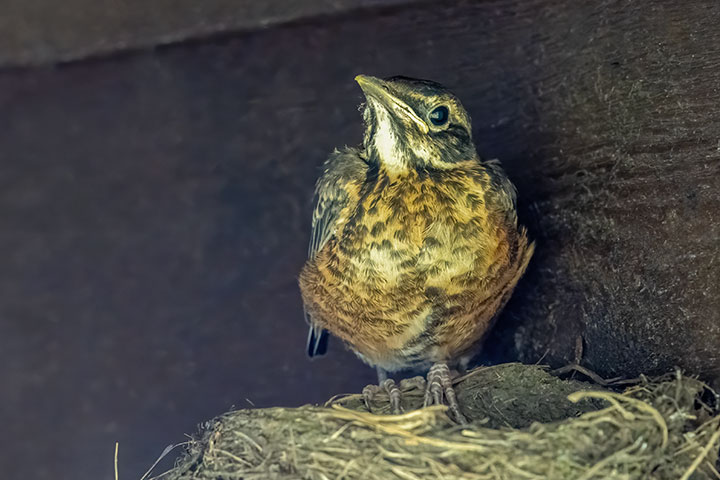
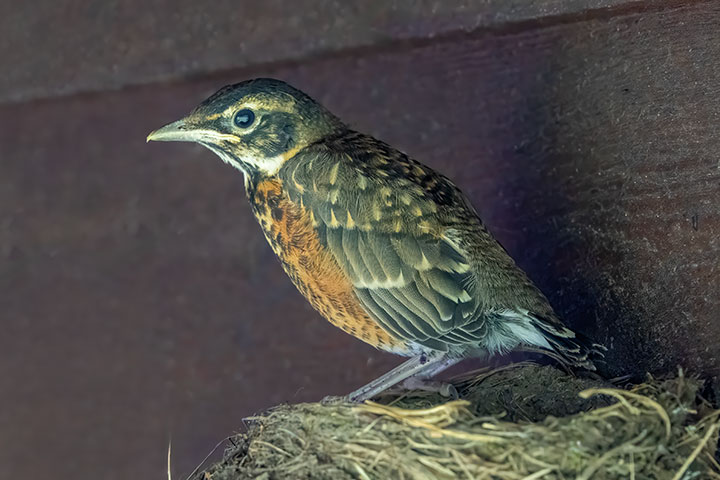
I’ve watched a female robin tend to three hatchlings. Likely both parents fed these chicks. By yesterday, two chicks had fledged and only one remained in the nest. This last one stood up in the nest, waited a few hours, and finally took off. These shots were taken a short time before it fledged (t00k t0 the wing).

The robin chick has a spotted breast.

And has flecks on its wing feathers.


Posted in birds | 1 Comment

Tree Swallow other feathers


I have watched Tree Swallows for a long time and this is the first time that I have seen them collecting the feathers of other birds. Certainly, in some places the Tree Swallow’s nests are lined with feathers, but this depends on local availability. In some places grass is used to soften the rougher surface of the nest. So while feathers are sometimes used, there is a question as to why feathers are being brought in on the day the chicks fledged. This would seem to make them irrelevant.

The feathers were always from other species, were all about the same size, and either white or grey. A number were seen on this final day before fledging, but only one of each colour is shown.

Apparently, such feathers have also been used in what appears to be a Tree Swallow game of catch, but this was not seen.

This feather being brought to the nest cavity was white.

This grey feather seemed stuck to the bird’s bill. It went to the nest, and away again.


Posted in birds | 2 Comments

Tree Swallow feeding


This is the second in a series of three postings on the Tree Swallow. It is concerned with parents feeding their chicks in the nest. The first posting was about flying, and the last posting will be about feathers.

I watched the Tree Swallow’s cavity nest while parents flew in and out for about a week, at which time the nestlings fledged. During the early part of the week, the chicks were in the nest and the parents had to climb in to deliver the food that they had caught on the wing. Chicks were fed insects by both parents every 10 or 20 minutes. Increasingly, toward the end, the chicks looked out of the nest and begged. This picture was early on.

Some of the trips into the nest cavity had the objective of removing the faecal sac, a wrapper containing the chick’s excrement. This keeps excrement out of the nest, and the parent delivers it far off before dropping it to prevent predators from finding the nest. 

During the final days in the nest cavity, the chick is full size, but looks larger than its parents because its feathers are fresh. The parent looks as though it is delivering a wasp.

And the wasp is stuffed into the chick’s mouth.

This looks to be a mayfly being delivered.

The mayfly is stuffed into the chick’s mouth. (Mayflies are common in all warm months.)


Posted in birds | 2 Comments

Tree Swallow flying


This is the first of what likely will be three postings about Tree Swallows. The first is just pictures of them flying. The second will be of it feeding its chicks. The third will be a mystery I have with it concerning its treatment of the feathers of other birds.

One might wonder why I would start with these shots of it flying. Well, the Tree Swallow is a rather fast flyer, and it just was not easy getting a number of close-up sharp in-air shots. So I show the few I have. They are offered without comment.


Posted in birds | 6 Comments

Northern Flicker


The Northern Flicker, our most common woodpecker, is frequent, but often it is seen at a distance. Today, it was near, so I snapped some shots.

First, an old shot showing what the topside looks like. This is a male feeding its two chicks.

Today’s female flicker is flying towards me. The orange under feathers is striking.

And when the flicker is flying away, the underside is spectacular.


Posted in birds | 3 Comments

June goulash


This is a smattering of June pictures that were not previously posted.

Our magpie likes open meadows with a few bushes, so they are not often found in this region. A few here occupy the grass lands of Procter. 

We certainly have muskrats, but they are infrequently seen.

An osprey carries a fish to its nest.

A mother mallard with her six chicks. One is nearly hidden behind another one.

A mother merganser with ten chicks (probably from two families).

The prize of this small collection is the common Song Sparrow for this one has, what I think is, a katydid in its bill.


Posted in birds, mammals | Comments Off on June goulash

Like minds


This is a quirky posting. Most postings are about non-human nature. This is not.

I go for photographic walks with my daughter, Cynthia. We are often separated by anything from three metres to thirty metres as we observe nature.

Yesterday, we watched an osprey flying in circles over the lake hunting fish. It eventually caught one and brought it back our way. One picture I took I really liked. It was the osprey alighting on a distant tree branch, presumably to eat the tasty head of the fish (a common practice) before taking the rest to the nest. Alas, it promptly flew off again when it spotted another bird which, it feared, might try to steal the fish. But the picture of it landing on the tree branch was fine.

All this time, Cynthia was behind bushes somewhere not very far away doing her own observing.

I got home and showed her the osprey landing on the branch with its fish. Cynthia said, “I got one just like that.” I show both pictures. They were probably taken within a millisecond of each other. Minor differences reflect differences in our positions and cameras. Other than that, we both apparently thought: This might make a good shot. 

Cynthia’s picture of an osprey landing on a branch with its fish.

My picture of an osprey landing on the branch with its fish.


Posted in birds | 5 Comments