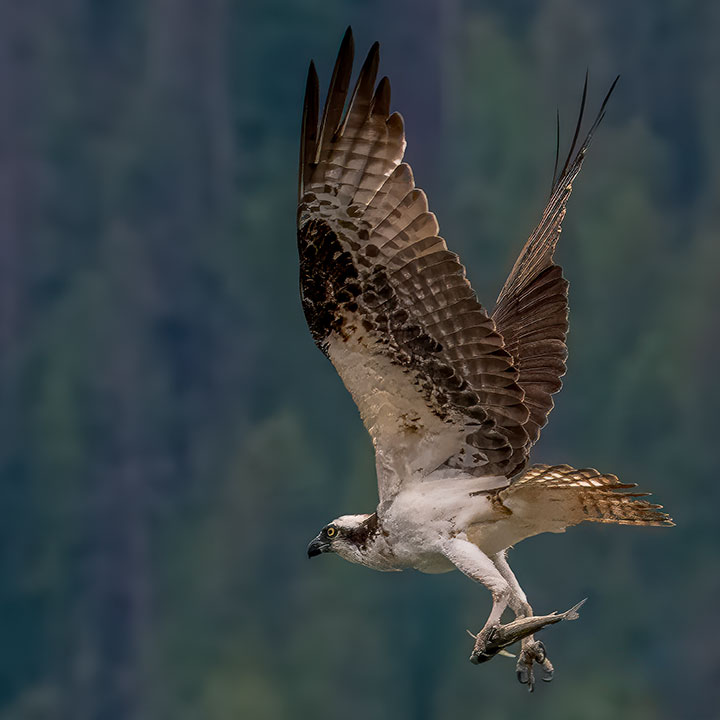
Of the many birds I saw yesterday, two stood out: loons and an osprey. This was the first time I’d seen loons in over a month since they went up to small mountain lakes to breed. And the issue with the osprey was that it had just caught a fish.
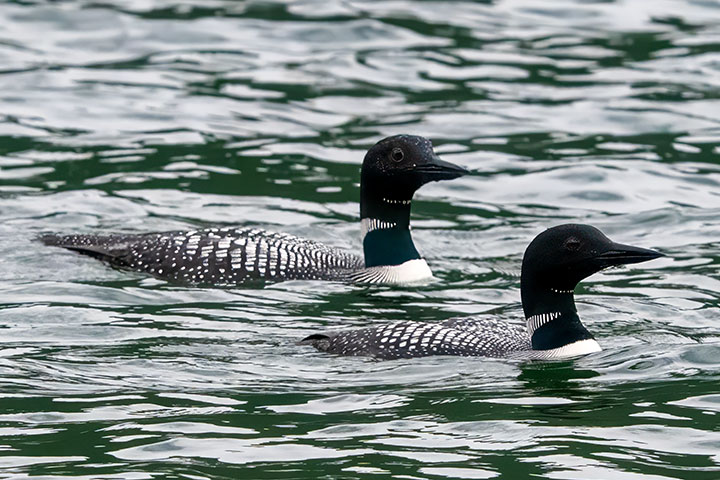
A mated couple of Common Loons (larger male on left) were down from the mountains and back on Kootenay Lake with their striking pattern of black and white plumage. Now, I have seen loons with red eyes and loons with dark eyes. So, I checked for the timing of the colour change on the web and discovered, to my surprise, that someone claimed that “common loons do always have red eyes” <https://www.birdful.org/do-common-loons-always-have-red-eyes/>. Huh? That statement contradicts observations: they don’t always have red eyes. It is the retina of the loon’s eyes that are red during breeding, but the retina are otherwise dark. As the colour of the retina does not influence seeing, the red eyes must signal that the loons are ready to breed. These loons had dark eyes so breeding is over.
The same day I watched the loons, a male osprey flew by with a fresh fish. Fresh, for the osprey, will generally mean that it has not stopped somewhere to eat the tasty head and brains before delivering the rest to its chicks. This fish still had a complete head.