
The buzzing was incessant as I sat still on a rock in the middle of a patch of mud. Around me flew hundreds of insects spread over dozens of species of wasps, bees, flies and butterflies. Although I watched their activities, the minuteness and speed of many of these beasties put them beyond my photographic skills. So the pictures, below, are but a peek into this world. As long as I moved my camera slowly, most seemed unaware of my presence.
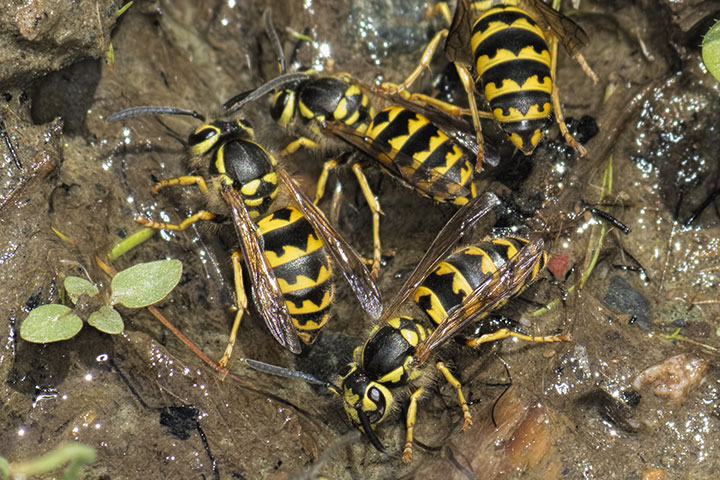
Western Yellow Jackets abounded. It was probably the heat of the day that prompted them to be sipping. The yellow jackets seemed to favour the flowing water.
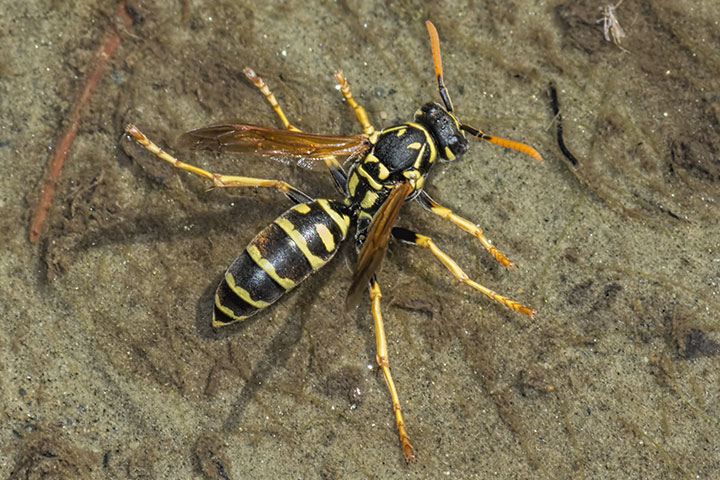
There seemed to be no such preference from the European Paper Wasp; it happily sipped standing water.
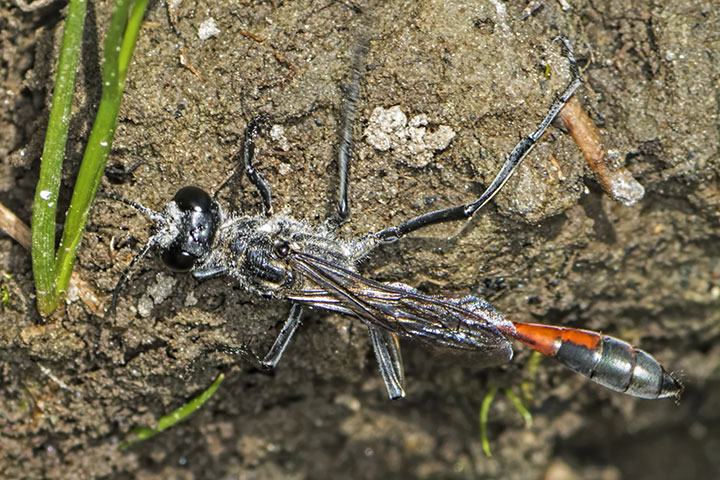
The Thread-waisted Wasp was a new species for me and I could not figure out what it was up to.
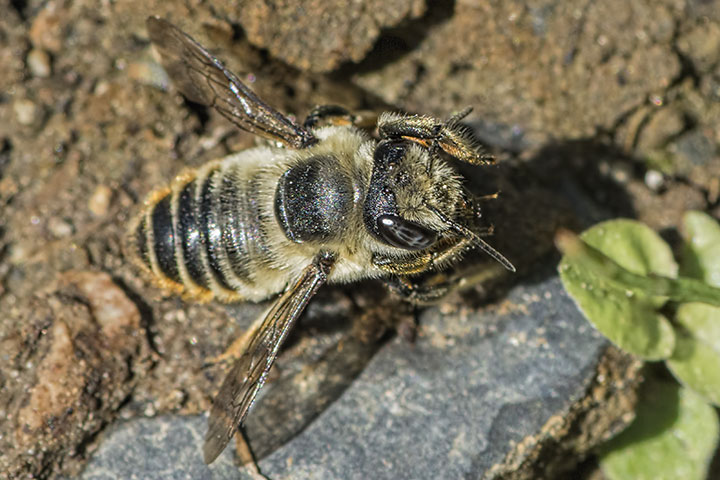
Also new for me was the Western Leafcutter Bee. This solitary bee carries pollen on the golden hairs on the underside of its abdomen.
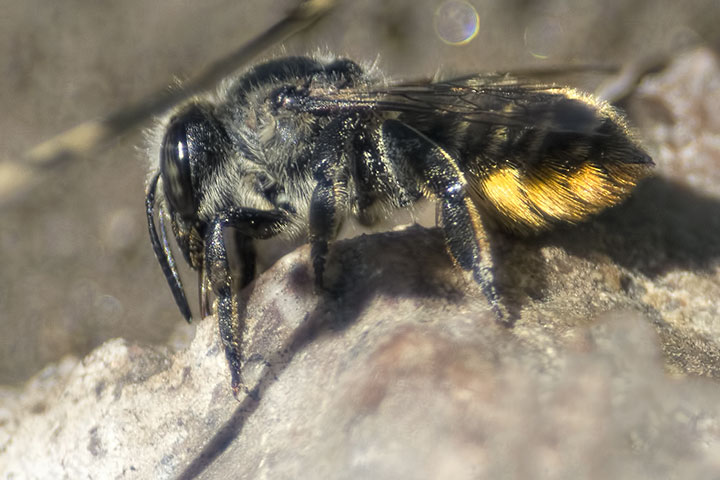
This is the same Leafcutter Bee seen from above.
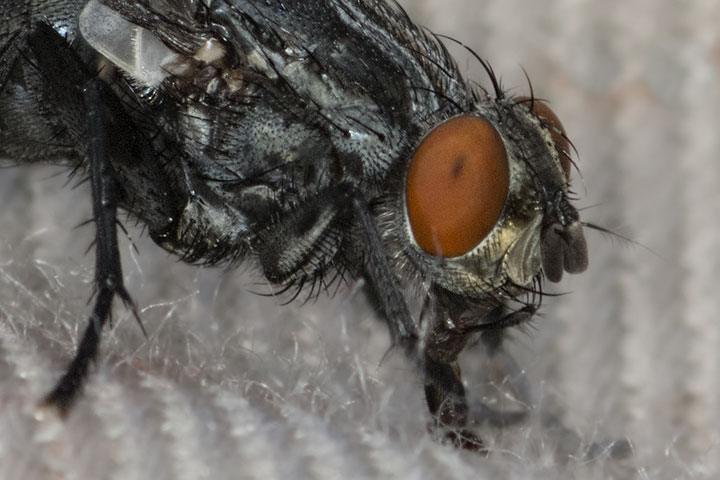
While wasps and bees largely ignored me, flies would land on my trousers. This is a female Flesh Fly.
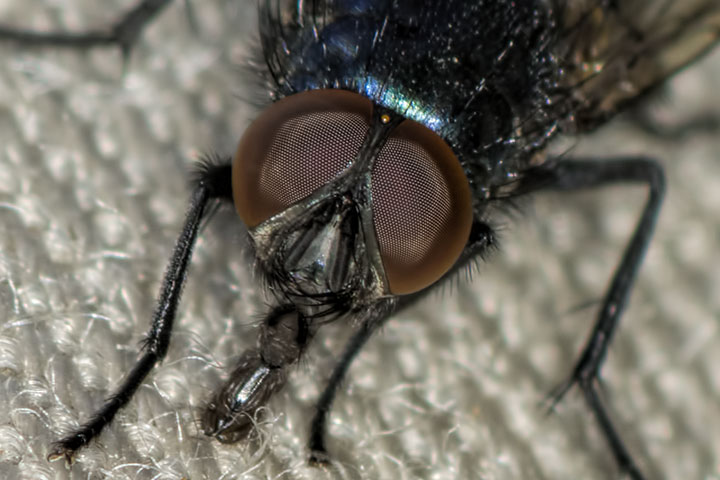
And this is a male Blue-bottle Fly.
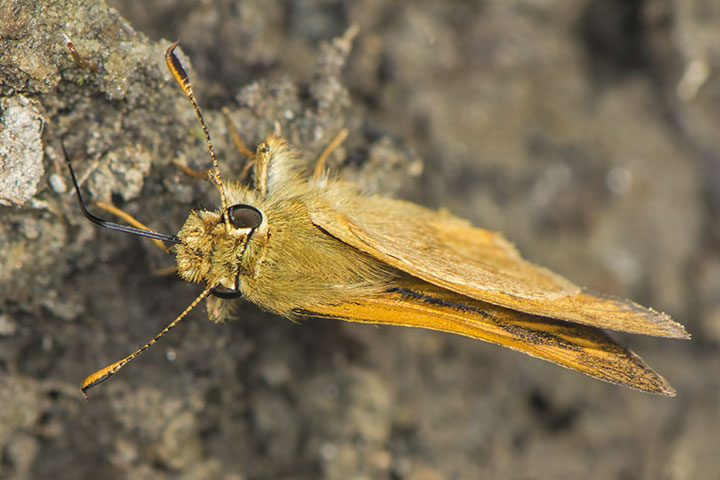
A Woodland Skipper sips nutrients from the moist surface.
Finally, this unknown bee was amazingly small. It has extended its tongue to the surface.
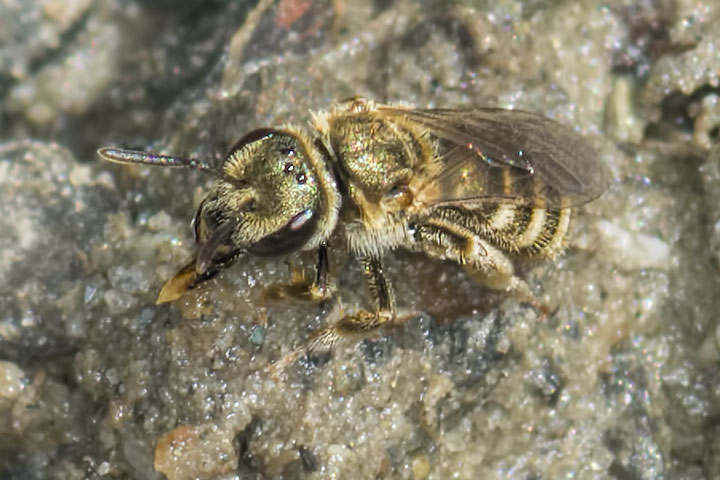
I love seeing these creatures so close and clear. Are those three eyes on the head of the tiny unknown bee?
Lorna, yes. Many insects possess two anatomically separate and functionally different visual pathways: two front- and side-facing compound eyes; two or three top-facing simple eyes, the ocelli. You also can see ocelli on the tops of the heads of some of the other insects in this posting.
That photograph of the Blue Bottle fly is stunning. So much detail. How can you tell it is a male?
Lisa, with flies, the clue is in the eyes. Consider the smaller, more widely separated eyes of the flesh fly—this picture shows a female. The larger, nearly touching eyes of the bluebottle fly reveal it to be a male. Males apparently developed the larger eyes so as to better find females.