Black chin


Canada gets only four hummingbirds. Around the Lake, we get three, and occasionally all four.

Earlier, I posted images of the Calliope and Rufous. Today’s picture shows the third: a Black-chinned Hummingbird. It has been hanging around for a few days, but today, I managed a picture.

A Black-chinned Hummingbird shows purple iridescence at the base of its gorget.

Posted in birds | 3 Comments

Bombus vagans


The Half-black Bumble Bee (Bombus vagans) is a common bumble bee of North America. Its local scarcity this spring has prompted me to wonder about it. However, I am finding it now — not in great numbers, but it is here. I saw it yesterday on a few different plants, including the oft-demonized Spotted Knapweed (Centaurea stoebe).

A Bombus vagans lifts off from the flower of a Spotted Knapweed. 

My favourite shot of these two makes it look as if we have a blue-legged spider bee in our midst.

Posted in bugs, wildflowers | 1 Comment

May goulash


This is the twentieth posting made this month. What could possibly be left over for the end-of-the-month goulash? Many things, it turns out, but I will show only a few of them.

The Chipping Sparrow is a common and widespread bird during our warmer months.

When I see a killdeer eating, it usually consumes insects, but here one is about to down a worm.

This is a profile view of the same chipmunk shown earlier. (I just liked it.)

We get two kingbirds: Western and Eastern. This is the Western.

A Northern Shoveler couple swims by (different shovelers than shown earlier).

There is still time to consider goslings as being cute, rather than as poop generators.

Fallstreaks graced our sky just before a storm.

A muskrat swims by at just below its hull speed.

We see the Horned Grebe in its non-breeding plumage throughout the winter, but it is rarely seen locally in its breeding plumage because it promptly leaves to breed farther north.

A black bear (not the same one as shown earlier) has collected seeds on it nose and ears.

Posted in birds, mammals, weather | 1 Comment

Mammals, timid & bold


Two mammals were encountered during a walk. One was large and formidable; the other was small and harmless. Each knew it was being watched, but their reactions differed greatly.

Upon spotting an interloper in its territory, the black bear promptly ran away.

The chipmunk eyed the intruder, chose to stick around, and even seemed to pose.

Posted in mammals | Comments Off on Mammals, timid & bold

Heron on one leg


A standing person who faints, falls over. Maintaining one’s balance requires constant muscular adjustments. Maintaining one’s balance while standing on one leg is even more difficult.

Consequently, many people have marvelled at the sight of a heron napping as it stands on one foot. Insights into such feats were recently supplied by a study of flamingoes. The authors found that balance aids built into the bird’s basic anatomy allow for a one-legged stance that demands little muscular effort. This stance is so stable that a bird sways less to keep itself upright when it appears to be dozing than when it’s alert with eyes open. Indeed, even a dead bird can be prompted to balance on one foot, when it cannot be made to balance on two.

It appears that some birds have a mechanism humans lack for stably balancing on a single leg.

A week ago, a heron on a piling was standing on one leg. It is a common sight and, until the recent paper on the subject, seemed inexplicable (2017/05/18).

Normally when a heron is hunting, it is positioned on two feet (2013/07/19).

A heron in a tree during really cold weather, is seen to balance on one foot (2012/11/20).

However, the frequent sight of a heron posed on a single leg always seems odd (2013/12/02).

It has been seen so frequently that it must be a stable position for the bird (2006/10/14).

Indeed, even this view of (what appears to be a contortionist) must be normal (2009/10/15).

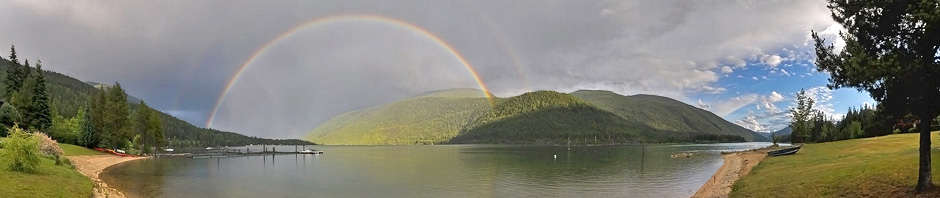
Posted in birds | Comments Off on Heron on one leg

Dinner and dance


The Spotted Sandpiper is usually solitary, so when two forage together, it can prove interesting. 

Two sandpipers spent their initial time together stalking and eating sandflies off the beach.

Each fly was grabbed and swallowed in well under a second.

“Now that we have had a good dinner, would you care to dance?”

Posted in birds, bugs | 1 Comment

Tigers mating


When was the last time anyone watched tigers mating in the wilds of British Columbia?

OK, truth in advertising. The tigers in question are beetles: Western Tiger Beetles.

These beach dwellers use their great speed to chase smaller insects and grab them with large, sickle-shaped, mandibles. On this occasion, the beetles did seem a bit distracted.

Iridescently coloured Western Tiger Beetles mate on a beach.

Posted in bugs | Comments Off on Tigers mating

Wanton spotty


The Spotted Sandpiper is widespread along the shores of lakes, ponds, and rivers. It also has the unusual characteristic of a sexual role reversal. The female is larger, sexually aggressive, and polyandrous — that is, it mates with multiple males, each of which is then left to incubate and brood (what it thinks are) its own chicks.

A year ago, I posted a picture, sandpiper piping, of a spotty that was calling and strutting. I didn’t know what was going on; now, I do. It was a female making an aggressive sexual display towards a nearby male. This last week, I watched this interaction repeatedly.

Having arrived at a dock, a female repeatedly harassed two males. They pretty much ignored her. Here, the female performs her courtship display on tiptoes with wings and tail outstretched.

Such a display is directed towards a particular male and accompanied by a weet-weet call.

“No, no, please don’t leave — weet-weet.”

Finally, the two males flew off. This is the female chasing after them.

Posted in birds | 2 Comments

Fairy slippers


It was an unexpected experience. I was crouched low (and I thought, inconspicuously) on a forest hillside taking pictures of wildflowers when a family hiked by, paused, saw what I was doing, and asked, “Are you Alistair?” So it was that among my blog’s largely unknown subscribers, I had a rare accidental meeting with one of them.

It was also an uncommon meeting with the orchids I was photographing. The fairy slipper (Calypso bulbosa) is the first orchid to emerge in the spring and, of the eight local wild orchids I have photographed, it is loveliest. 

I am used to seeing the fairy slipper in groups of two or three, so this crowd was special.

However, the grandest view is that of a single profile.

Posted in wildflowers | 3 Comments

Pollen covered


This spring has been a strange. Insects, usually plentiful, have been sparse — but not absent.

In a field of dandelions, both hover flies and solitary bees (but, not social bees) flew from flower to flower seeking nectar. It was fairly easy to take pictures of them on the dandelions, but I sought shots of them flying between the flowers. 

A mining bee became covered with pollen as it worked the flowers. 

The pied hover fly is common throughout the Northern Hemisphere. It is a staple of summer flower watching. Yet, this is the first time I can recall seeing one festooned in pollen.

Posted in bugs, wildflowers | 1 Comment