Marmot pups


The pups of the Yellow-bellied Marmot are said to emerge from their natal dens in late June or early July. However, ours have been out and about for the better part of a week. Their antics are fun to watch.

Another oddity is that pups are said to nurse in the den, but switch to foraging on their own when they are out of the den. Again, it seems that these marmot pups have not read the manual. This is the first time I have seen this.

Pups often meet during their foraging. When they do, they greet each other.

Then, sometimes the pups will frolic.

However, the standard greeting seemed to be a nose rub. Each was probably sniffing so as to identify the other.

Posted in mammals | 2 Comments

Breakfast bugs


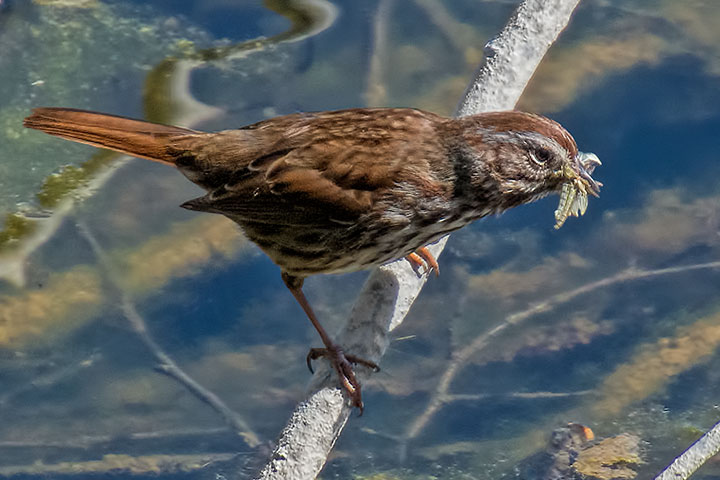
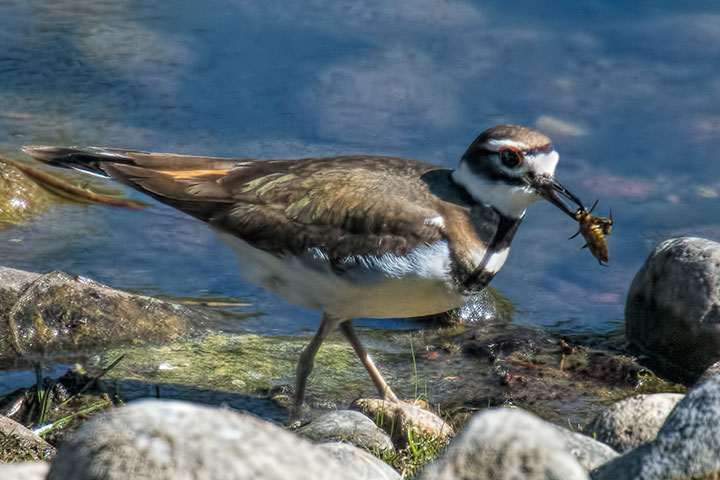
Birds meet the dawn hungry. Here are two that chose bugs for breakfast. The birds, I know; the bugs, I do not.

Song Sparrow.

Killdeer

Posted in birds, bugs | 1 Comment

Osprey kiss


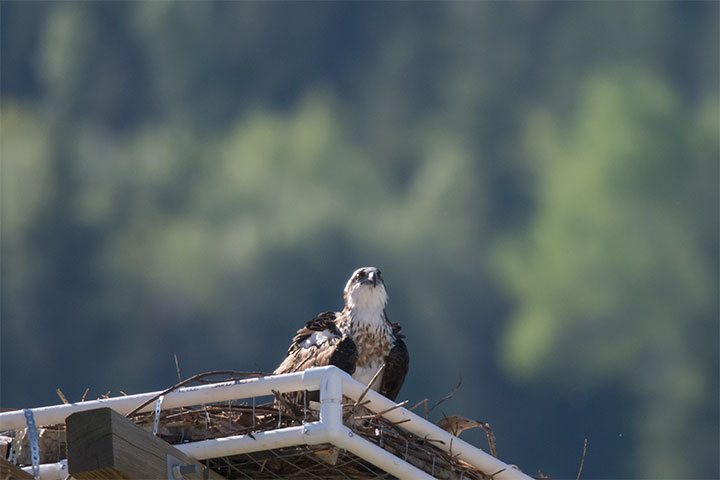
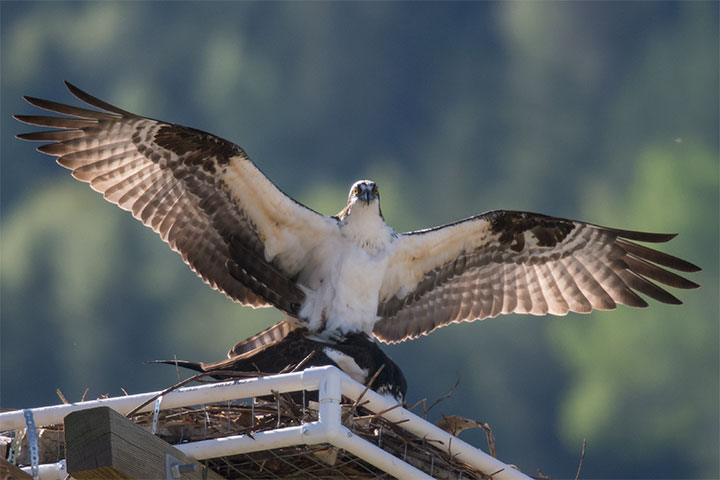
An osprey nest platform erected only this spring has gained immediate acceptance. We look forward to the chicks.

The female osprey sits on the nest and awaits her mate.

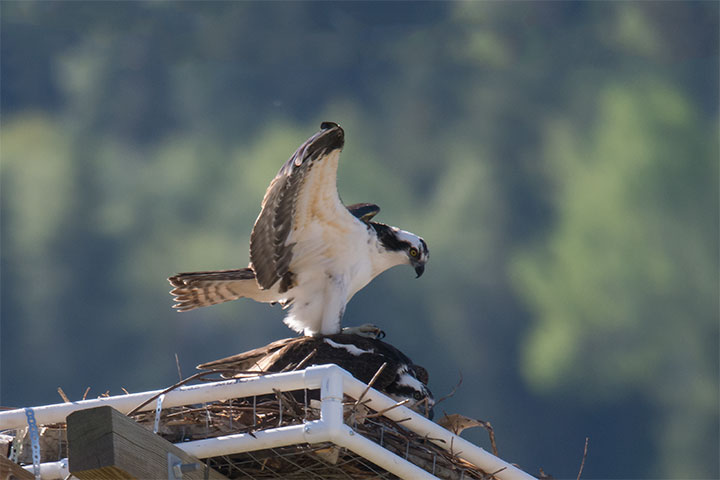
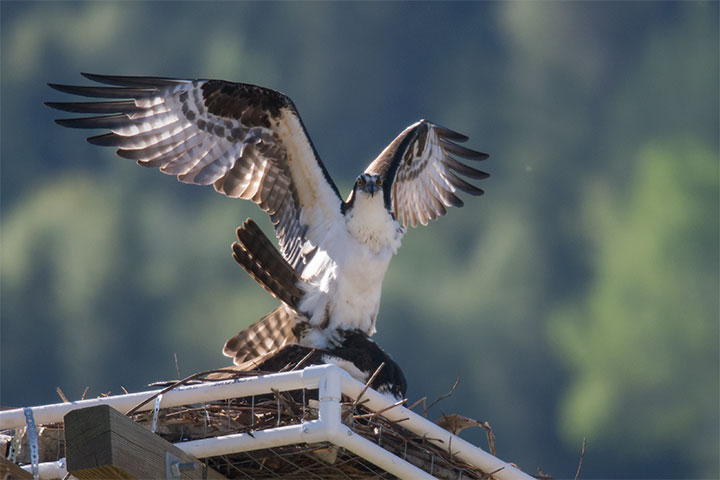
She bends over and he lands on her back, but supports much of his weight with his wings.

She tucks her head down, but has not yet lifted her tail. He manoeuvres into position.

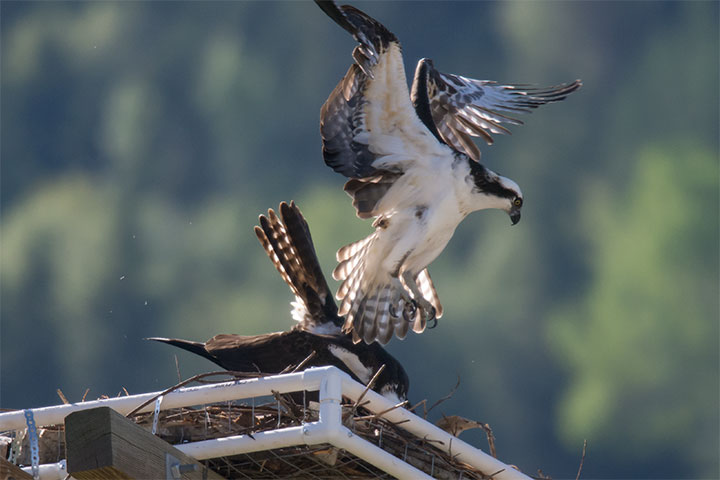
She lifts her tail and their cloacae kiss.

She remains ready with her tail up, but within a second, he is on his way.

Posted in birds | 3 Comments

Morning mourning


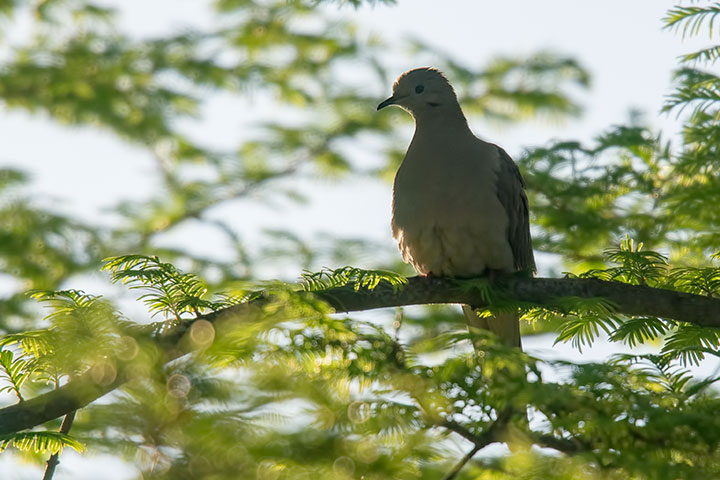
Morning brought a Mourning Dove. Named for its dolorous cooing, it is more often considered a symbol of peace. This is not the morn to mourn.

Posted in birds | Comments Off on Morning mourning

Striped Coralroot


Sometimes while searching for one thing, something better turns up. Such was the case two days ago, when the prize was a Striped Coralroot. I had last seen this wild orchid six years ago and on the other side of the Lake. Now, I know two places where they can be found.

To see the length of the flower stock, slide your cursor up or down over the picture.
[photonav url=’https://blog.kootenay-lake.ca/wp-content/uploads/2016/05/stripedcoralroot160503as5.jpg’ container_height=420 container_width=720 mode=move position=left]

Posted in wildflowers | 4 Comments

Beast with two heads


The beast with two heads is meant to evoke Iago’s remark about the beast with two backs (Othello Act 1, Scene 1, ll. 126-127), for like the bard’s beast, this butterfly with two heads is a copulating pair.

The blending wings of Margined Whites really make them look like a single beast with a head at each end.

The odd thing is that they would fly around attached, and then stop to feed. Here, the male is sipping nectar.

The upper surfaces of wings became visible just before each flight to a new perch. Repeatedly, the couple chose to follow the old advertising slogan to fly united.

Posted in bugs | 1 Comment

Clearwing


This has to be one of the neatest bugs ever. It hovers over flowers sipping nectar like a hummingbird, but it looks like a giant bumble bee. It is neither bird, bee, nor fly. Rather, this oddity is a daytime-flying moth with clear wings. Sometimes called a hummingbird moth, sometimes a clearwing moth, the species occasionally seen locally has the name of a Rocky Mountain Clearwing (Hemaris thetis).

I saw this moth on lilacs three years ago and on dandelions four years ago, but I had not found it since then until a few days ago. Curiously when seen, it was foraging on exactly the same few square metres of dandelions where one was seen four years ago. 

Offered without further comment are four views of a Rocky Mountain Clearwing. The final view is my favourite.

Posted in bugs | 4 Comments

Nest-building styles


Birds certainly have a range of both nest-building styles and sites. Sites are usually chosen to be accessible to food, and inaccessible to predators — including humans. Nevertheless, a few species have discovered that human structures meet their needs better than natural sites. I show three styles seen this last week, sticks, moss, mud, but all built on human structures. 

Ospreys eat fresh fish and so a lakeside nest is ideal. I have seen osprey nests back from the water’s edge and in trees, but most ospreys around here have discovered that few sites meet their needs better than a structure humans have erected in the water, such as, dolphins, bridges, and pilings. This osprey has just built its stick nest on a pylon (marking underwater cables) which was erected only last year.

Dippers seem to favour the underside of bridges where they build domed nests of small sticks and moss This site has been used before, but in the spring it gets rebuilt. The site over a raging stream is beautifully protected from land predators, while the bridge deck fends off rain and diving falcons. When the nest is completed, there will be a small opening on the side (see last year’s pictures of the same site: dipper nesting, dipper chicks). The dipper on the left has flown in with a beak full of moss. A second dipper inside the nest appears to be tamping moss around what will become the small opening.

Cliff Swallows once built their nests on cliffs, but have discovered that buildings and bridges work beautifully and even offer overhangs to protect them from the rain. These swallows build their nests out of about a thousand mud pellets which are first fashioned and then carried to the site individually. These nests are under reconstruction.

Here a Cliff Swallow is about to place another mud pellet.

The swallow that was working on the nest’s interior is now flying off for more supplies while the other one is tamping a pellet in place around the nest’s opening.

“Hey, you down there, hurry up with that mud; we have a schedule to keep.”

Posted in birds | 1 Comment

Sky line


The title is not a typo: this is about a sky line, not a skyline. The last time I saw a nice example of this was three years ago: sky lines. This posting is an adaptation of what I wrote then, but with the current picture.

A white line across the sky is easy to interpret: a contrail (a trail of condensation from aircraft).

What about a dark line across the sky, such as seen here? This line also results from a contrail, but indirectly. Here, the contrail is above the clouds and not visible, but the shadow it casts on a lower cloud traces a dark line across the sky.

Posted in weather | 3 Comments

Magpie preferences


Magpies are smart. Indeed, the Eurasian Magpie, a species virtually indistinguishable from our own Black-billed Magpie, is the only bird to have ever passed the mirror test, a self-awareness test whereby it is seen whether an animal is able to recognize its mirror image as being a representation of itself. 

While rare in the West Kootenay, magpies are common in the Okanagan. 

In what might be considered a touristic promoter’s dream, one might take this to imply that really smart birds prefer the area around Okanagan Lake to that around Kootenay Lake. Alas, the magpie has a bias towards open habitats with occasional trees rather than forests. Humans have more cosmopolitan tastes and some prefer forested landscapes.

So, Kootenay Lake gets the odd magpie, but only in those few regions where open farmlands prevail. 

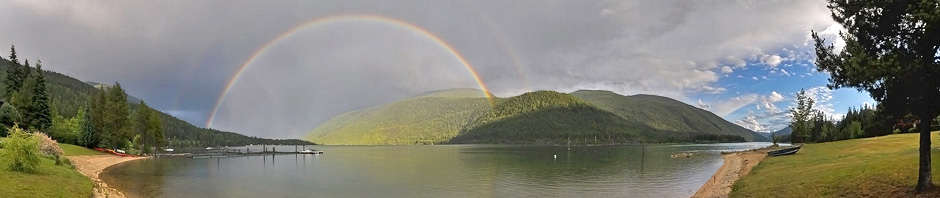
I took this picture a while ago and reserved it until I needed to illustrate the forested nature of the lakeshore. It is now appropriate: most of Kootenay Lake is just not hospitable to magpies.

A few spots (at each end of the Main Lake and the region around Harrop and Procter) have the adequately open country that magpies favour. This magpie was observed in Harrop. I had thought of the magpie as essentially black and white until I took this picture and saw the colour in its plumage.

Posted in birds | 2 Comments