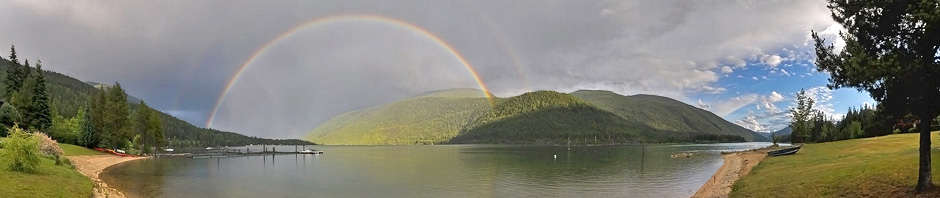
Sub-alpine delights


There are delights in the high country that are unknown, or uncommon, in the valleys. Items, below, were seen a few days ago at an elevation of about 1600 metres.

This is the Western Anemone (Pulsatilla occidentalis). Another term for the plant, the old man of the mountain, makes no sense until one sees what it looks like after it has gone to seed. The name, anenome, comes from the Greek and while it just means windflower, it translates literally as the daughter of the wind (from anemos for wind), apparently so named because the flowers open only when the wind blows.

The Olive-sided Flycatcher breeds in the high country where it is usually found perched in wildfire-damaged openings as it hunts for insects.

Does the chipmunk qualify for this group? I have seen it at the bottom of valleys, but the usual place I see one is above 1000 metres.

The Red-tailed Hawk is an altitudinal migrant. It is found in the valleys in the cold weather, but in the warm season it moves to the high country, a vast space where it is more difficult to find.

The high country can sometimes even provide a view of the trees around one’s home in the valley.

An even more interesting sub-alpine resident will appear in a forthcoming posting.


Posted in birds, mammals, wildflowers | 2 Comments

Heron’s low yield


Being a Great Blue Heron is hard work: Repeated attempts at fishing produced rather little.

Over a period of twenty minutes, a wading heron made 37 lightning thrusts into the water as it tried to capture various fish it had spotted.

On only one occasion did it come up with a fish, and it was tiny. It did catch two at once, but one was dropped before it could be swallowed. Behind, the heron, another small fish jumps. 

At the end, the heron fluffed out its feathers as if trying to shake off a bad experience.

It is time to try elsewhere.


Posted in birds | 2 Comments

Chimeric hymenopteran


The insect that alighted on a leaf near me had the look of a chimera, a mythical beast assembled from the parts of other animals. It had a wasp’s head, a bee’s hairy body; and a butterfly’s clubbed antennae.

I was mystified.

It was a sawfly. 

Sawflies belong to Hymenoptera, the same order that contains ants, bees, and wasps. The common name, sawfly, comes from the saw-like ovipositor with which a female makes a slit in a plant to deposit eggs. The ensuing larvae then feed on the plant. Adults only live for about a week, so this sighting was serendipitous.

A Cimbicid Sawfly (Trichiosoma triangulum) has landed on a leaf in the forest and then lowered its abdomen to deposit eggs.


Posted in bugs | 3 Comments

Juvenile feeds itself


Robins in the spring follow a pattern.

Early on, the adults hunt for worms or moths, capture them, and then pause before taking their prize back to the nest to feed the chicks. Photographing an adult with such a bounty is relatively easy because the food is not consumed instantly, but held to be delivered to the chick.

When the (fledged) juvenile Robin starts hunting on its own, pictures of it with a prey become more difficult for the capture is swallowed instantly.

A few days ago, a male adult Robin paused on the lawn with a worm for its chick.

A juvenile Robin (speckled breast) hunts on its own. The captured ant is downed promptly.


Posted in birds | 2 Comments

Bear colour


Black Bears are so called because all are apparently black on the east side of the continent where they were named. 

However around here, Black Bears come in a remarkable range of hues: black, chocolate, cinnamon, beige, cream, and white. These variations result from colour morphs, not from being subspecies. Indeed, various colours can be seen within one family (rather like hair colour in humans).

Below are two Black Bears, each of which was a first-of-the-season observation.

Karen Pidcock saw this handsome cinnamon bear strolling through her yard two days ago.

This black bear was seen munching on greens in the high country yesterday.

Karen Pidcock’s picture is used with permission.


Posted in mammals | 1 Comment

Dead Duck Day


A month ago, I posted a story, Mallard’s #metoo, about the gang rape of a mommy mallard. At the time, I did not relate my observations to a TED Talk, How a dead duck changed my life, I had watched some years earlier. But, the two events came together, today, on Dead Duck Day.

The Mallard has been characterized as the ubiqui-duck. Observing one does not come close to constituting an exciting sighting. Birders hardly find it worthy of much mention.

So, how did today, June 5th, come to be known as Dead Duck Day — a day which honours a mallard in Holland that died while being accosted? It is now a day when mallard fans gather at restaurants and feast on duck.

The story is told at Today I Found Out, but the circumstances prompting it turns out to be the proclivity towards rape by the male Mallard.

So, my posting, the TED talk, and the article about Dead Duck Day, all came together.

A scene from my posting about mallard rape.


Posted in birds, commentary | 1 Comment

Seasonal birds


Birds come and go. Here are a few to be seen in June.

The Cedar Waxwing is primarily a bird of the warm season. It breeds around the Lake.

The Warbling Vireo is only found around here from May to September.

While the male Common Merganser is with us year round, he only appears in his breeding plumage for another month and a half.

The male Blue-winged Teal (right) will lose his breeding plumage in another few weeks.

The Cliff Swallow is only seen locally during the period of May to August.

The Robin can be seen at any time of the year, but its hunting of worms is a springtime event.


Posted in birds | 1 Comment

KCPP boardwalk


Two years ago, I took a picture of the boardwalk in Kokanee Creek Provincial Park. This path links the creek with the the spawning channel and the Nature Centre. I noted then that plans were underfoot to replace the boardwalk with something offering greater accessibility. The earlier picture I took is shown first. The new boardwalk opened today and a similar view of it appears below.

This is the boardwalk as it was. At the top is a bridge over the spawning channel which also leads to the Nature Centre. At the lower left the boardwalk winds around to the bridge over Kokanee Creek itself. At the lower right is passage along the spawning channel. This is all now replaced.

The new boardwalk is similarly arranged. At the top is a bridge over the spawning channel which also leads to the Nature Centre. At the lower left the boardwalk winds around to the bridge over Kokanee Creek itself. At the lower right is passage along the spawning channel. However, the boardwalk is much broader and more gently sloped. It is fine craftsmanship which allows easier and safer passage, along with potentially better views of the spawning kokanee.


The Park has done a fine job of offering both access and passage.


Posted in commentary, scenes | 5 Comments

Wet slipper


May postings began with two wildflowers: a lily (Glacier Lily), and a wild orchid (Fairy Slipper). Their tenure is now over.

June postings begin with two more wildflowers: another lily (Queen’s Cup), and another wild orchid (Mountain Lady’s Slipper).

The Queen’s Cup was spread across the forest floor in the thousands.

This is one of only six Mountain Lady’s Slippers found among the myriad of Queen’s Cups. A recent shower has festooned this uncommon wild orchid with raindrops.


Posted in wildflowers | 4 Comments

Kokanee Creek mouth


At 534.06 metres, the Lake is still a half metre below the peak flood level of 2012. However, it has been enough to flood some trails in the low parts of Kokanee Creek Park. The Lake is expected to continue to rise.

This is today’s view of the mouth of the creek and the flooded grasslands to either side of it.


Posted in weather | 3 Comments