This is the season for viewing a Bombylius fly. Last year’s posting about this bee-mimic fly was also made mid-April. This year’s images are strikingly similar, same species, same dried grass, same flowers. The difference is that I now know a little bit more about this flying ball of fuzz.
This year, I am fairly confident that the fly shown here is a Bombylius major, a species found throughout North America and Eurasia. That it mimics bees is, of course, a tactic to avoid being eaten by birds (and wasps?) as it goes about sipping nectar from flowers.
It only appears in the spring because that is the time solitary bees temporarily leave their nest sites unprotected. Unlike the social bees, each solitary bee lays her own eggs and does so in a small tunnel she has provisioned with food such as nectar and pollen. She then seals the entrance. However, for the short time it takes to do this, the tunnel entrance is open and that is when the Bombylius fly comes by and deposits its own eggs inside. The Bombylius larva emerges, feeds on the provisions meant for the bee larvae; it then changes form and eats the bee larva, itself. Bombylius has only a short time in the spring to give its offspring this opportunity.
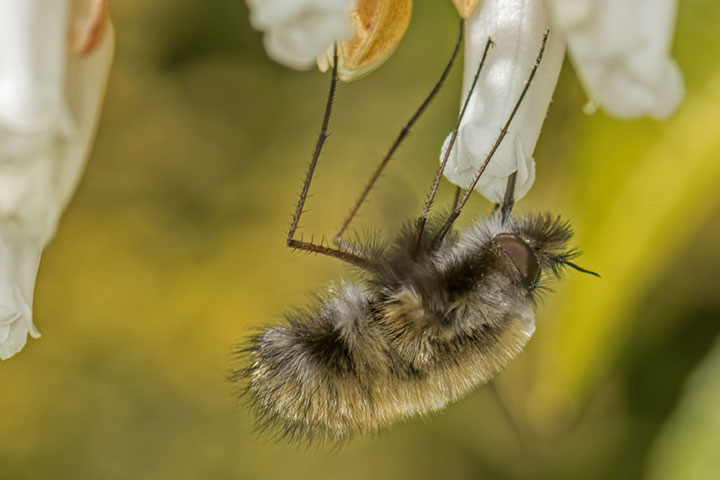
This Bombylius major may be warming itself in the sunlight. The picture shows the fly’s particularly long proboscis and legs. The usefulness of these will be seen in the last picture.
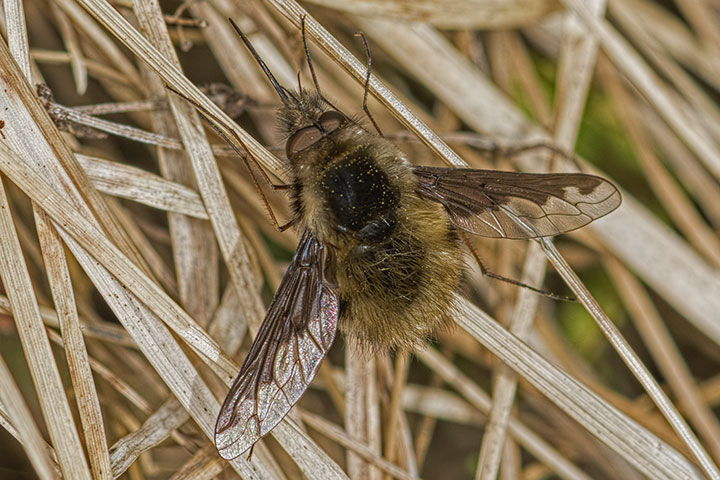
The adult fly lives off nectar.
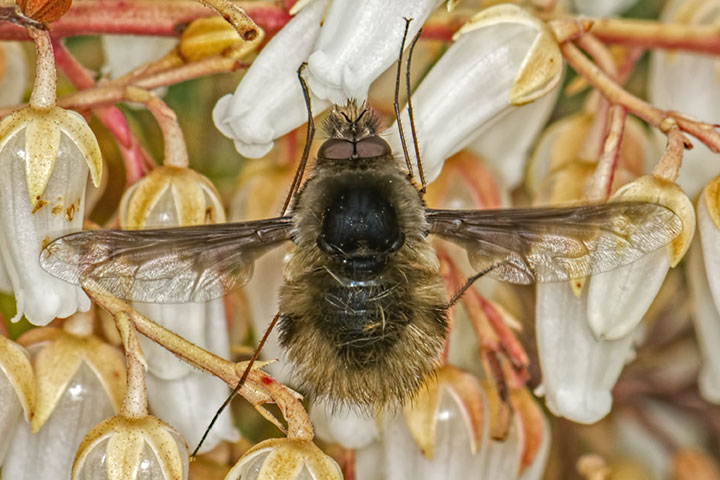
Often this fly does not land on the flower, but hovers adjacent to it (here, its wings are blurred by hovering). Its long proboscis enables it to sip nectar and it merely stabilizes itself with its long legs. Not actually landing on the flower is probably a defensive tactic against crab spiders that pounce on flies that do land.



One hundred thousand
This month marks an anniversary of sorts.
This blog about Kootenay Lake and its surroundings is about four years old. Since that time, there have been just under seven-hundred postings. To these, readers have added about 1600 welcome comments.
Spammers have now passed the hundred thousandth attempt to post commercial solicitations to the blog, none of which has been allowed to appear. Sigh….
Akismet describes the difference between email spam and comment spam of a blog:
Blog spammers have targeted this blog with all manner attempts to hawk questionable products, not one of which has anything to do with the postings. To mark this dubious anniversary, I offer a spring flower from my yard.