Last evening, I saw an osprey eating a fish, and then as the light failed, again the beaver. Then this morning, there was another osprey with a fish.
The evening’s shot of the osprey and fish has a curious feature. The fish is obviously dead for the osprey has already eaten its head. Now I am thoroughly used to the osprey eating the tasty and nutritious head first. But, why is the dead fish flapping its tail? The tail flapped on two separate occasions during this eating. Further, I have seen a partially eaten fish flap before. What is it about a freshly dead fish that enables it to flap its tail under the rough touch of the osprey? Further insights below. 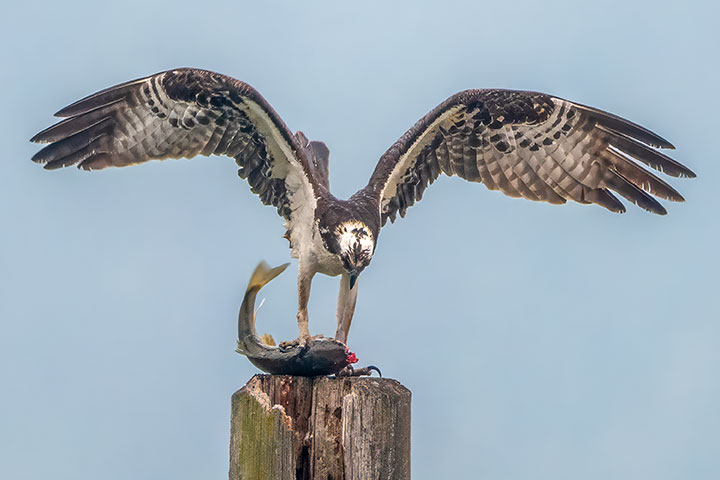
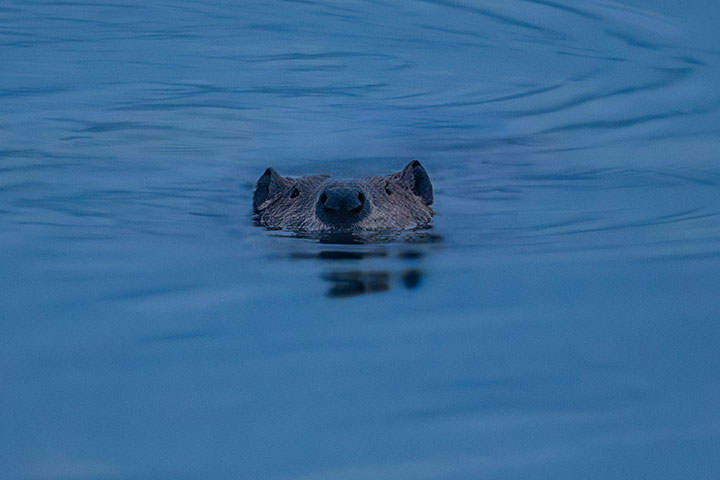
A beaver was taken on the 8th and was shown yesterday. Here it is late last evening. It seems to be living hereabouts. w
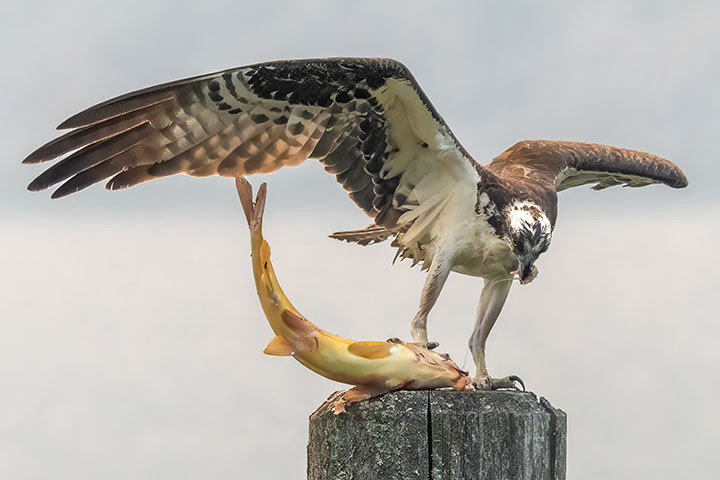
This morning, another osprey came and there was repeated flapping by a fish whose head had been eaten. It seems that, when stimulated, some cold-blooded animals like fish and snakes can flap for much longer after death than mammals. The fish below lay quietly while its head was eaten, but repeatedly flipped its tail thereafter, much to the bother of the osprey trying to consume the rest of it. Have others observed this?
I don’t get to see Osprey with their ‘prey’ where I live, but I do get to see the earwigs in my garden, and they have a very strong life-force, even as I kill them. One half will continue to wriggle. In Sanskrit, life force is called prana, and doesn’t always leave the body all at once. Some bodies loose their prana almost immediately while others seen to leave more slowly. Some of us grow up hearing this about chickens, too.
I have seen freshly dead prawns twitch when served for dinner as well as headless chickens run around when being slaughtered for dinner. Therefor, I conclude it relates to knowing one will be eaten for dinner, like the fish.