Eagles


There is a roughly 40 km dirt road I sometimes take in October. On it I count the Bald Eagles that are seen. They are largely migrants come to catch and eat a few of the many Kokanee salmon spawning in the adjacent river. Now, the eagles are fun and are readily visible, but the real point of travelling this route is not the eagles or the fish. I am looking for the grizzlies that show up for the same fish bonanza.

The migrating eagles are just eating enough to sustain them for the next portion of their trip from north to south, and so can afford to spend much of their time just sitting around. However, grizzlies are eating enough to sustain them through hibernation. Grizzlies just eat and eat.

About 18 years ago, I counted 68 eagles (a rather large number) along the road, then the number dropped for quite a few years. This last weekend, the count was at least 169. The actual count might have been a bit higher, but Cynthia and I began cutting it short after receiving a report of the sighting of some grizzlies ahead. Nevertheless, the count was impressive.

Here are a few eagle shots. The grizzlies will be on the next posting.

A juvenile (left) and an adult Bald Eagle rest on a branch. 

Some trees along the way were really crowded.

A juvenile eagle looks out from a branch. It is probably 3 years old.

And another takes to the air to go to another spot. Photo by Cynthia.

While the eagles spend most of their time just sitting, they occasionally will fly down to the water, catch a fish, bring it to a perch, and eat it. Photo by Cynthia.


Posted in birds, fish | 2 Comments

Two uncommon birds


Both birds shown here have a migration path that is well to the east, and so they normally do not pass through this area. However recently, they were both in different parts of Kokanee Creek Park. They were soon on their way.

The Lapland Longspur nests along the Arctic coast and winters in central U.S. Its migration path is usually east of the Rocky Mountains. (Seen Oct. 15th.)

The Pectoral Sandpiper also nests along the Arctic coast but it winters in South America. Its migration is usually similarly east of the Rockies. (Seen Oct. 5th.)


Posted in birds | 3 Comments

Steam devil


It dawned with cool air this morning, but the water in the Lake was still warm. Then, cold drainage winds from the mountains rushed down and out over the Lake and steam fog formed. 

But, one other feature was necessary for the formation of steam devils: a strong wind shear. Another way of saying this is that what was now needed was a strong change in the strength of wind with height. There was a wind shear, but only a moderate one. Nevertheless, a few steam devils formed.

Mind you, the sun quickly warmed the mountain side stopping the drainage wind and killing both the steam fog and the steam devils. It was fun while it lasted.

A mediocre steam devil towered over the steam fog on the Lake.


Posted in weather | Comments Off on Steam devil

Otter visit


We do not get visits from river otters very often, but now and then, they do stop by.

It is striking how cohesive and indeed affectionate they are to one another.

This is probably a parent and children.


Posted in mammals | Comments Off on Otter visit

Squirrel’s find


In the early hours of the morning, a squirrel was repeatedly rushing across the driveway carrying something large in its mouth. I had previously seen a squirrel carrying food or grass, but this was different.

It turned out to be some pink insulating material lifted from a nearby cottage. It was not clear where the squirrel was going with it, but presumably its destination would make the squirrel’s winter a little bit more comfortable.

A red squirrel carries off some found pink insulation.


Posted in mammals | 4 Comments

Canada Jay


I first saw Canada Jays when hiking in Garibaldi Provincial Park in August 1963. The sightings there were appropriate, for the altitude was about 1670 metres, and this bird lives well above the valley floor. The birds just hung out with us, always seeking food. I have seen it a few times since, always well up on a mountain.

Mind you for the 1963 sighting, I knew it only by a very early name, the Whisky Jack, which was just an Anglicized version of the Wesakachak, the name in Cree, where the bird seems to have been named after an amiable trickster hero. But, by 1956, it became formally known as a Grey Jay. Curiously, from about 1831 to 1956 it was actually called the Canada Jay, and to that name it finally returned in 2018 (story told on Audubon). Sigh, it is a bird that has had a great many names, but it is probably permanent now.

In 2016, an online poll and expert panel conducted by Canadian Geographic magazine, selected the Canada Jay as the national bird of Canada, although the designation has not been recognized by the government. The significance is that this bird is found in all provinces and territories in Canada, but is only found in a few mainly western States — and nowhere else. Further, it doesn’t migrate south. It really is a distinctively Canadian bird. Just don’t look for it in the lowlands. 

These pictures were taken at about 1500 metres elevation.

The Canada Jay.

A Canada Jay eats a slug.

And then flies off with it. Photo by Cynthia.


Posted in birds | 3 Comments

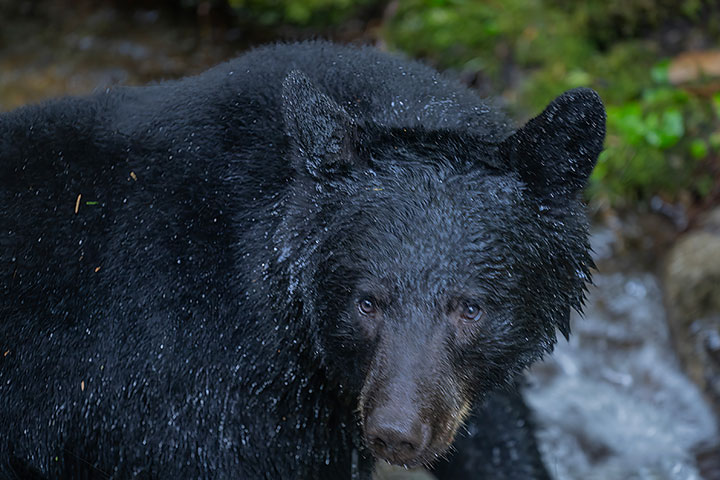
Black bear


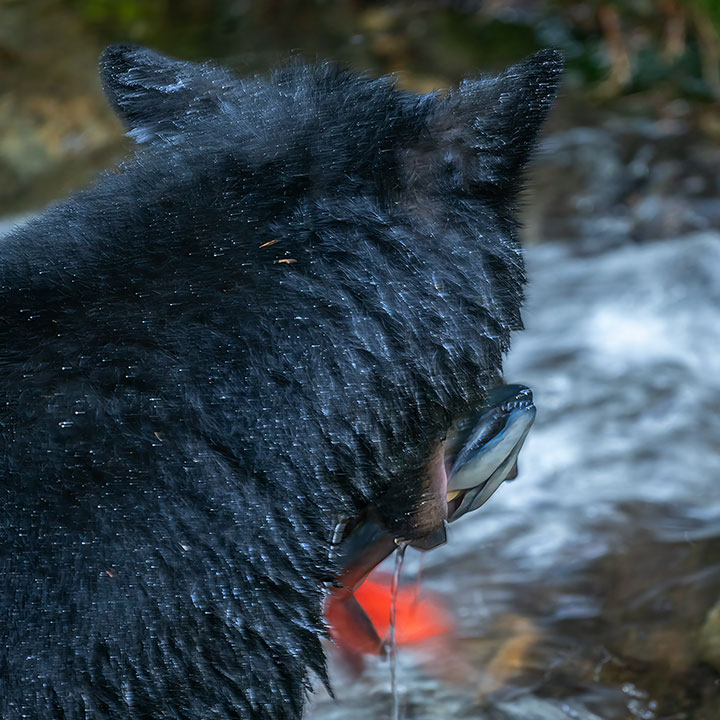
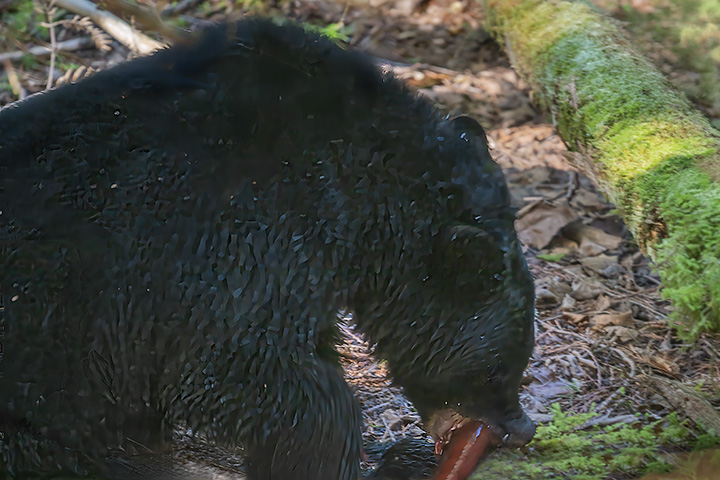
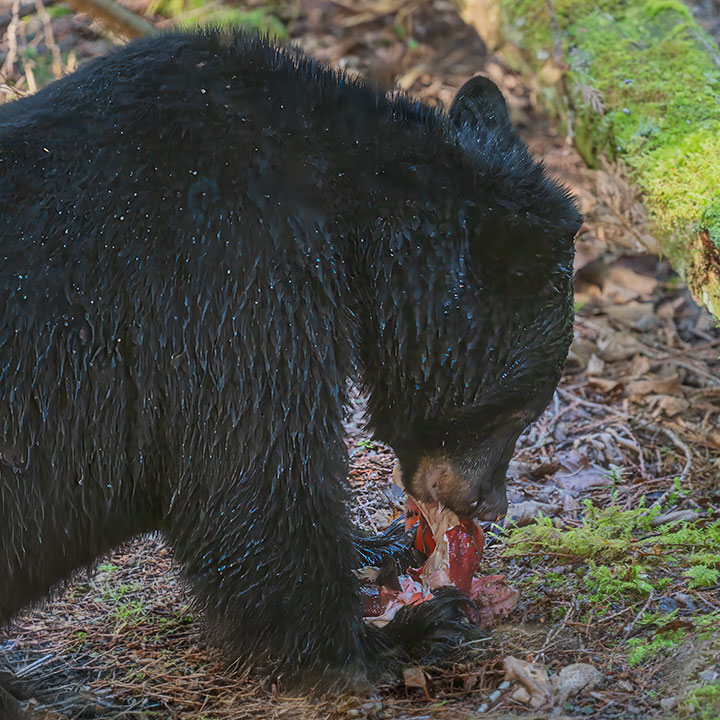
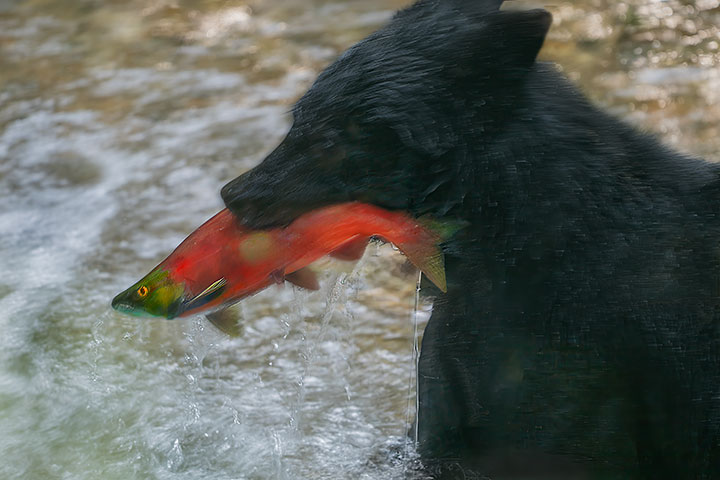
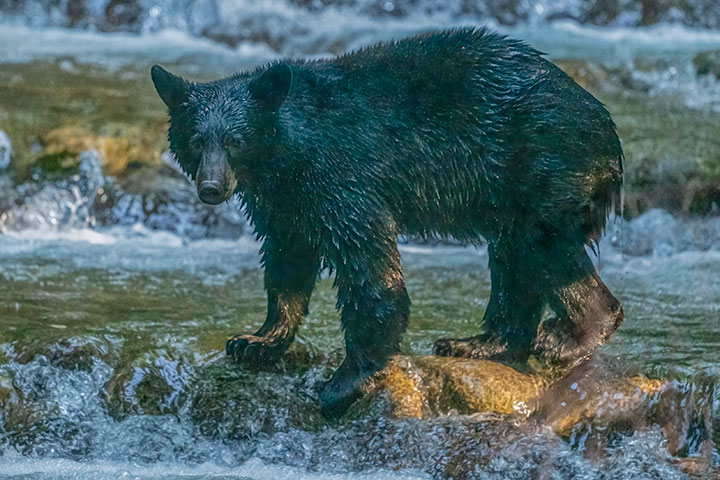
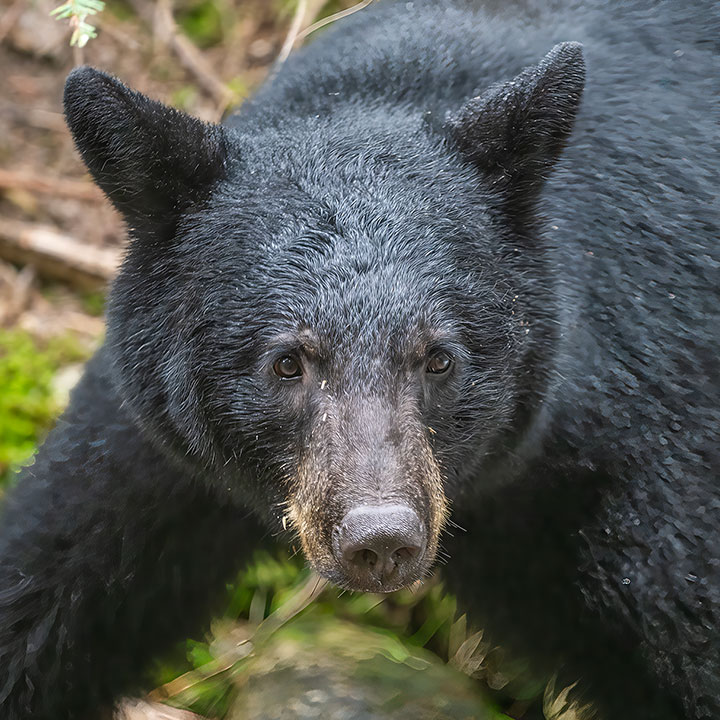
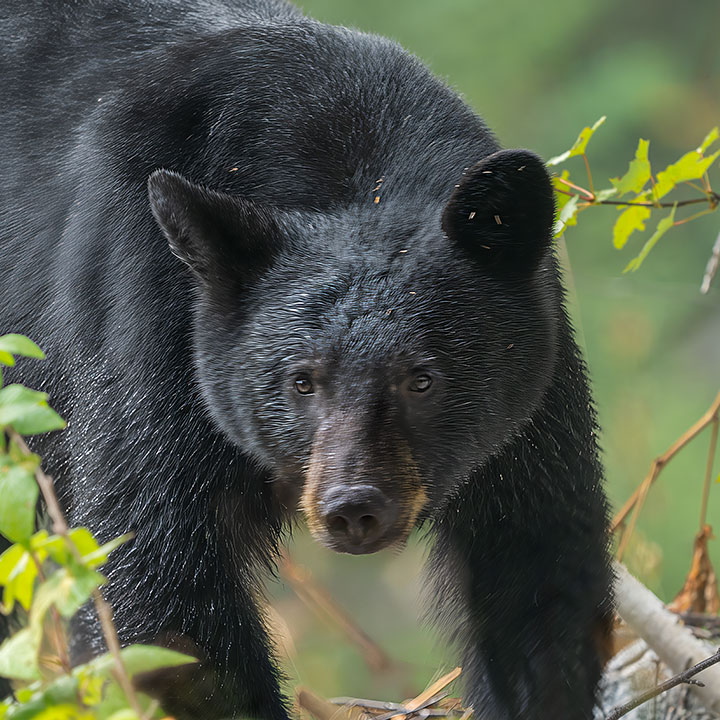
In my wanderings, I have been keeping an eye open for bears — particularly grizzlies. I have seen no grizzlies, and only a few black bears (the nicest was standing with a fish taken a month ago). I suspect that the relative absence of bears at the valley bottom is a result of a good huckleberry crop somewhat higher in the mountains. Also, the abundance of food around Nelson has been an attractant. Indeed, this black bear was in that vicinity.

A black bear staring out of the forest. Photo by Cynthia Fraser.


Posted in mammals | 4 Comments

Feeding on spawners


The spawning Kokanee in our local channel have now died, but the activity has not stopped. Some of the water birds are now feeding on the dead fish.

A mallard helps itself to some Kokanee residue.

As does a merganser.

Not feeding, but looking for food, is a flicker.


Posted in birds | 1 Comment

Pileated Woodpecker


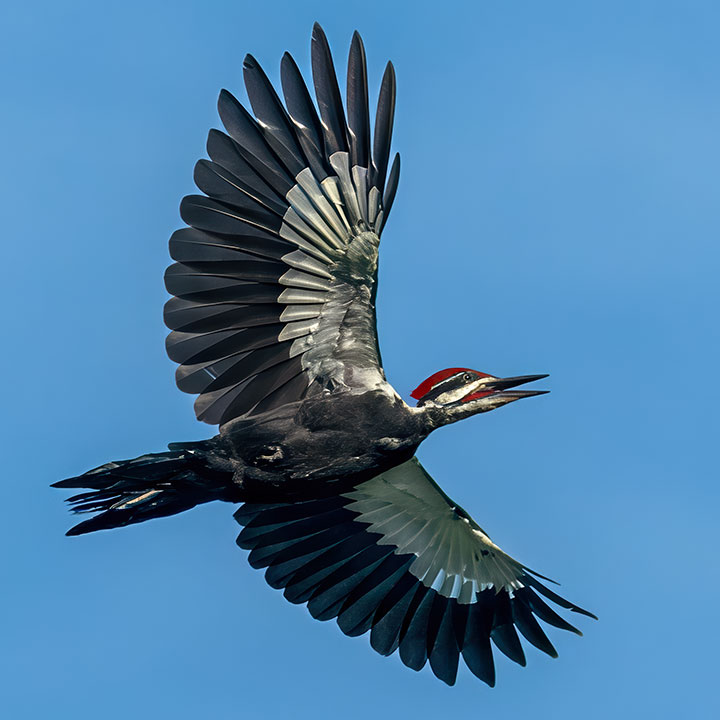
I have occasionally been seeing a young male Pileated Woodpecker (blog.kootenay-lake.ca/?p=34868, and blog.kootenay-lake.ca/?p=34873). It was seen again, this time eating the berries of a dogwood.

Before flying down to the dogwood, the woodpecker perched on electric wire above a cable splice closure. I don’t often include pictures of wildlife in such settings, but as far as the woodpecker is concerned, this is perfectly natural.

The Pileated Woodpecker then flew down to a red osier dogwood and ate berries.


Posted in birds | 2 Comments

Red Crossbill and Pine Siskin


I don’t often see the Red Crossbill and the Pine Siskin because each species wanders far. They eat seeds from the recent cones of mature coniferous forests. The crossbill will nest whenever it finds a rich crop. The siskin is a more regular nester in time, but variable in place. Each of these finches will occasionally flock with the other.

The Red Crossbill is a bird with an unusual crossed bill. The upper mandible might cross to either the right or left. It evolved this way to facilitate extracting the seeds of cones. The crossed tips act as levers, allowing the crossbill to pry the cone scales open. The slightly smaller Pine Siskin, while it likes the same seeds, lacks this bill refinement.

Many dozens of these two species were eating gravel at ground level yesterday. Gravel is consumed because birds lack teeth and the small stones help to break down the plant fibres and may supply some nutrients. 

A female Red Crossbill (which has a yellowish colour) is eating gravel. The upper mandible of this bird crosses to the right, but some cross to the left. Note the outstretched tongue.

A Pine Siskin is on the ground similarly eating gravel.

The female crossbill is on the left and the male is on the right. The siskins are in front.

This is a small portion of the large flock of crossbills and siskins.

These species spend most of their time high in trees. It is to those heights they return.


Posted in birds | Comments Off on Red Crossbill and Pine Siskin