While a black bear had passed by for quite a few days, I didn’t see it yesterday, but there were some raccoon kits.
This big black bear has often come past in the evening.
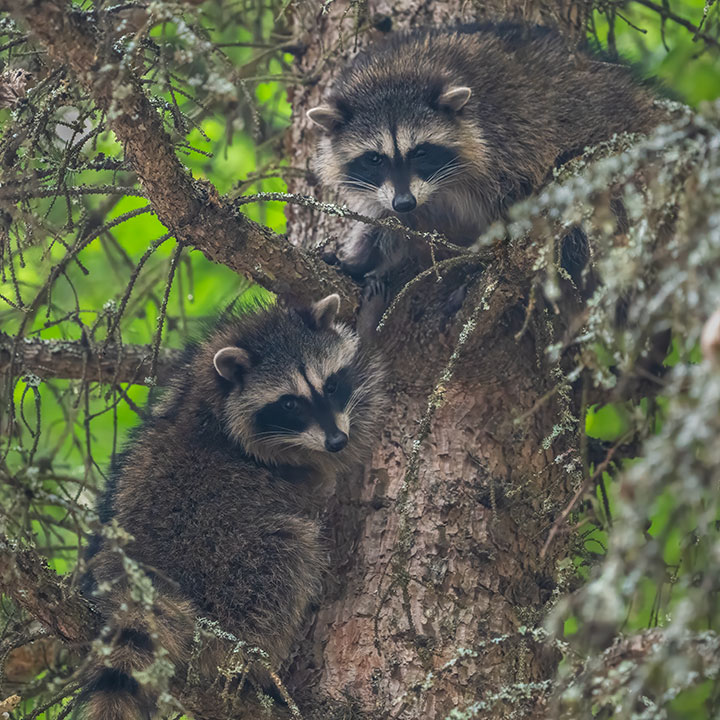
Two raccoon kits were up a tree while their mother hid nearby,
While a black bear had passed by for quite a few days, I didn’t see it yesterday, but there were some raccoon kits.
This big black bear has often come past in the evening.
Two raccoon kits were up a tree while their mother hid nearby,
For many years I presented wildlife talks for the summer speaker’s series at the Nature Centre of Kokanee Creek Park. My last talk was on Wildlife Mating in 2024 with my daughter, Cynthia.
This week I am again sharing the stage with Cynthia. She will show Owls and I will show (the rarely seen) Black Grizzly Bears. We invite you to join us.
Title: Black Grizzly Bears & Owls
Speakers: Alistair Fraser & Cynthia Fraser
Location: Nature Centre, Kokanee Creek Park
Date: Thursday 6 Aug. 2026
Time: 7:00 p.m.
Donation: sought $5 to Nature Centre (not to us)
A black grizzly bear

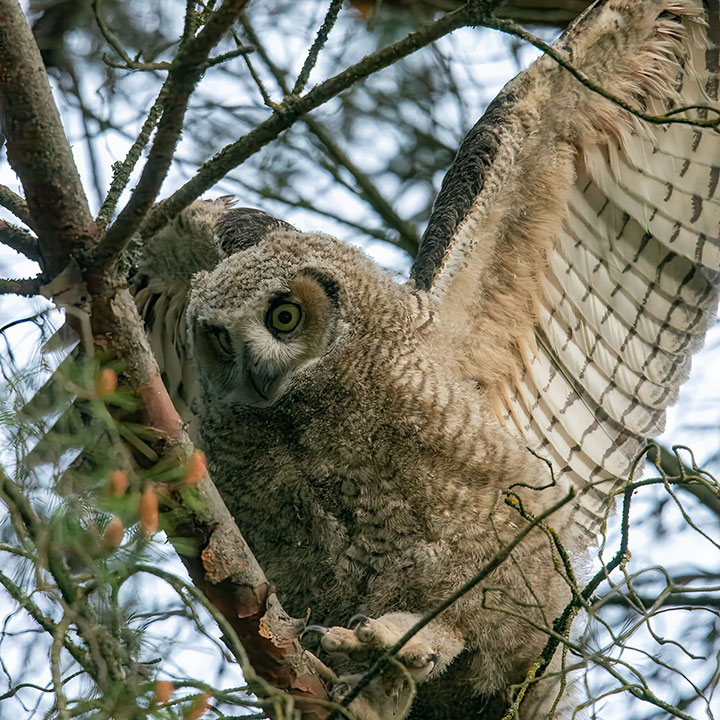
A Great Horned Owl chick learning to fly. Photo by Cynthia.
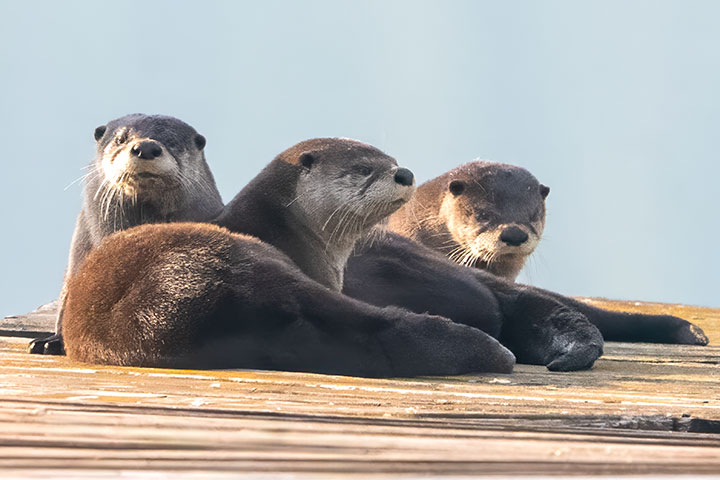
Three otters (mother and two pups?) turned up on a nearby dock and spent about a half-hour preening, scratching, pooping, and resting. Only rarely could one see all three faces at once.
They then went on their way up the lake.
A small family of three otters visited.
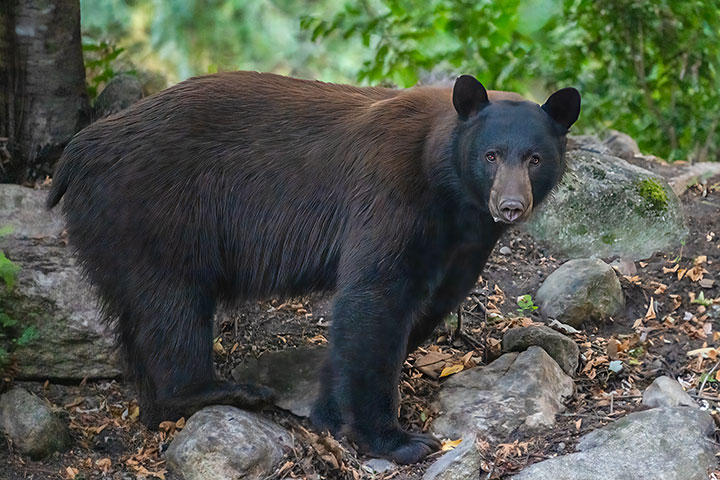
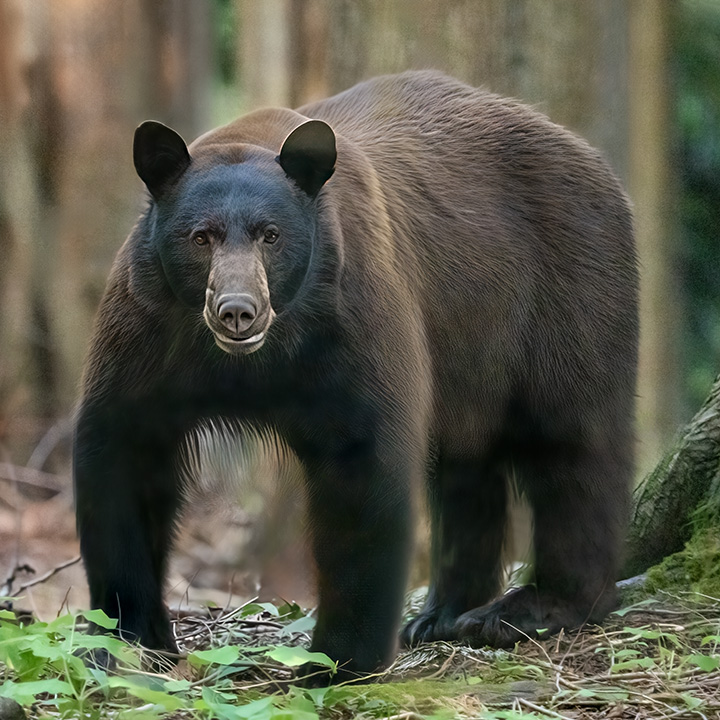
With the return of a large brown black bear, I managed a good shot of it looking in my direction. A striking thing about it were the crests of the shoulder and hip humps. With black bears, hips are higher than shoulders, and this is obvious here.
Of course, with grizzlies, back height is the other way around: shoulders are higher than the hips.
A large black bear looks, just before it vanished.
After seeing my first bear two days ago, I saw another yesterday. At first I thought it was the same bear, but this one did not have a white blaze on its chest while the last one did.
The black bear climbed a Douglas-fir tree and was eating Saskatoon berries.
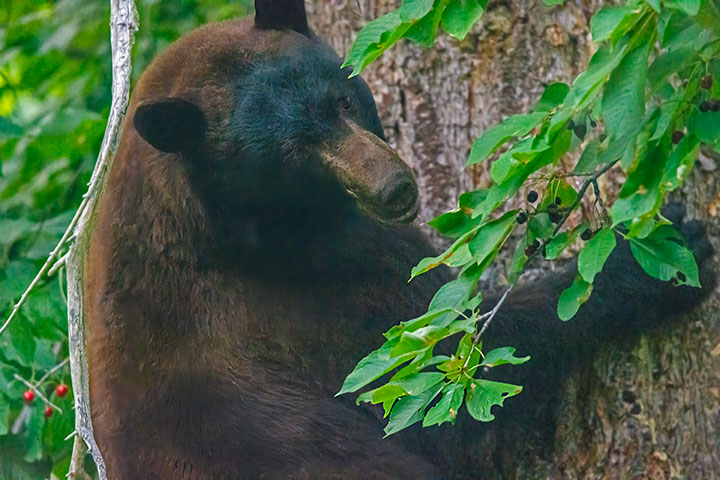
It made a final pause to look in my direction before vanishing.
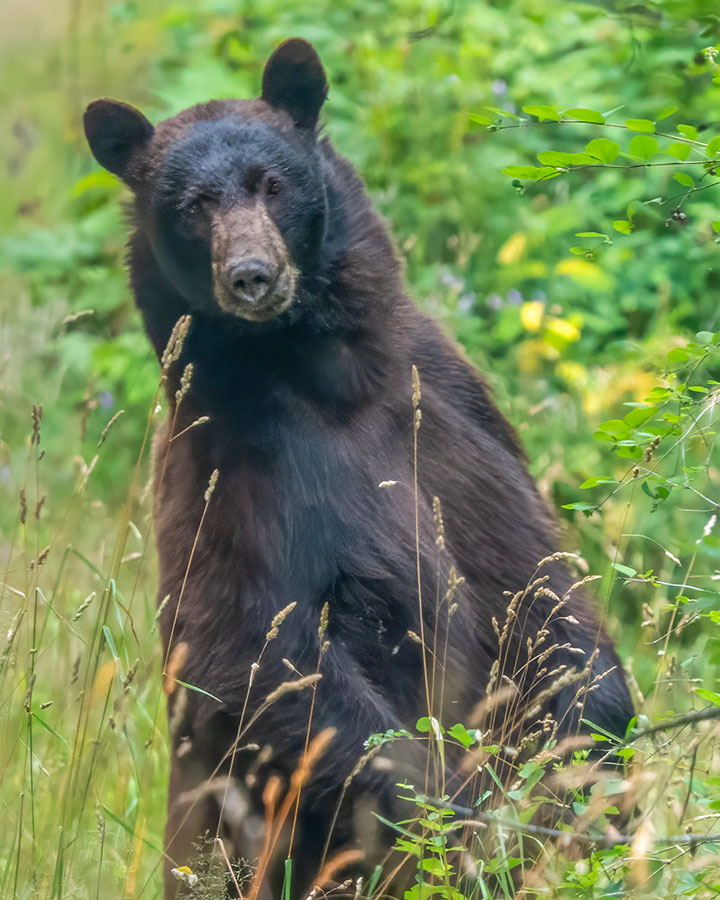
This is the first bear I have seen this year and it is already mid July.
A large, black bear was exploring my property looking for food. It stopped for a moment when it discovered it was being watched. He looked to be in good shape, but had received a minor scuffing of its fur on the left flank.
This black bear is brown.
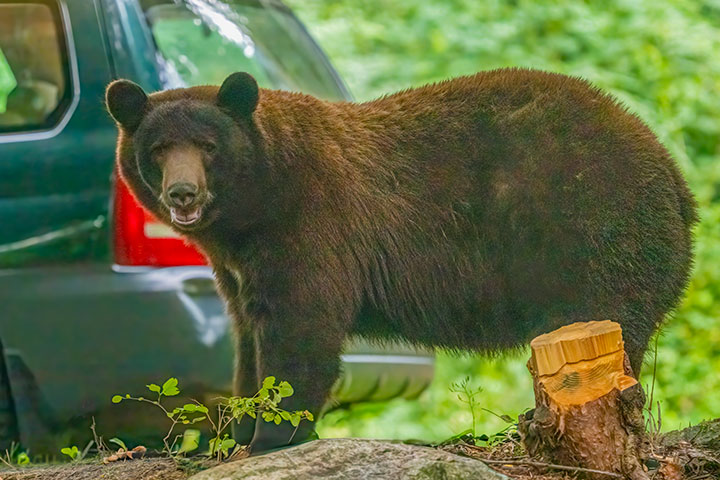
Yesterday morning, I watched both an osprey eating a fish and a heron flying. Each bird is rather large, having wing spans of over about 1.8 meters.
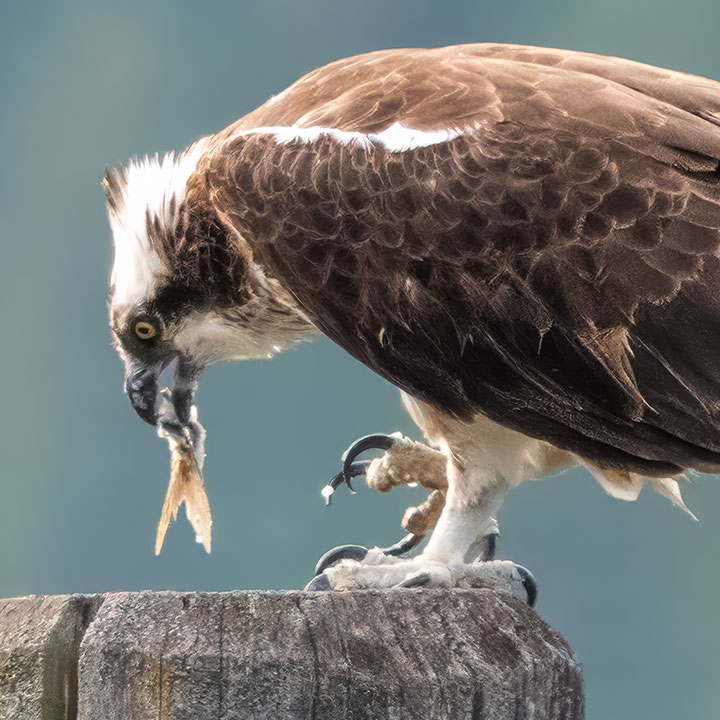
An (likely a male) Osprey finishes eating a fish at the tail.
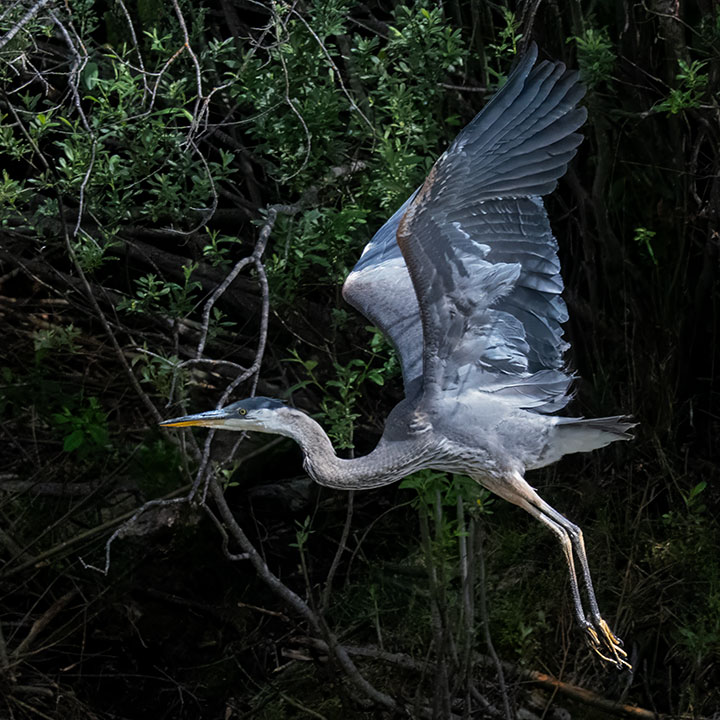
A Great Blue Heron is beginning to gain its breeding plumage.
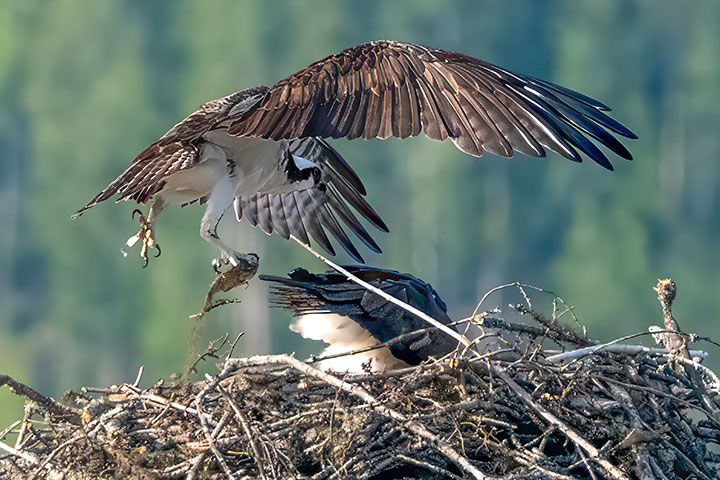
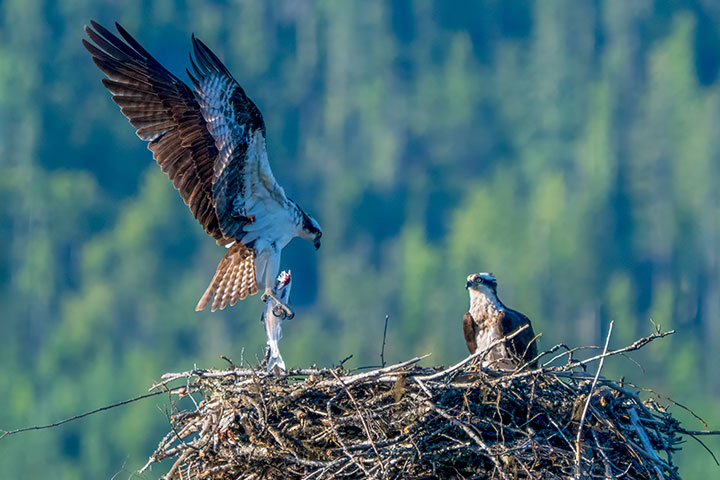
Three of us went early Sunday morning to watch a nearby Osprey nest. We were rewarded by seeing the male bring in a large fish, and the appearance of a chick.
The male Osprey delivers the first fish of the day to his partner and unseen chick.
The female ravenously feeds herself and the chick while the male keeps watch. As far as we can tell, there is only one chick in this family. Photo by Cynthia.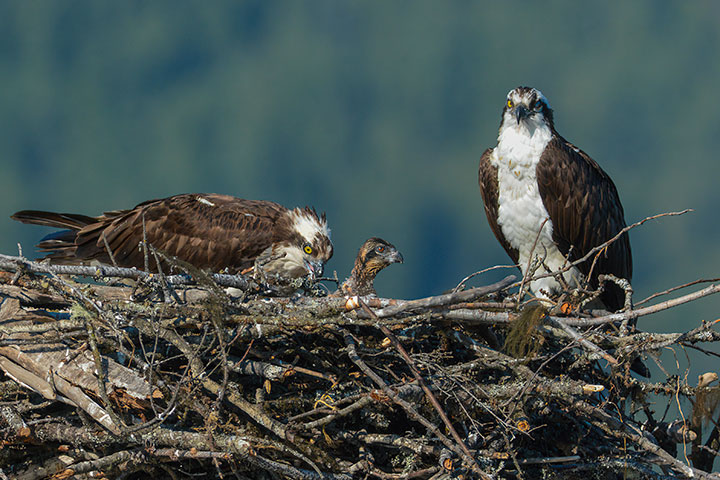
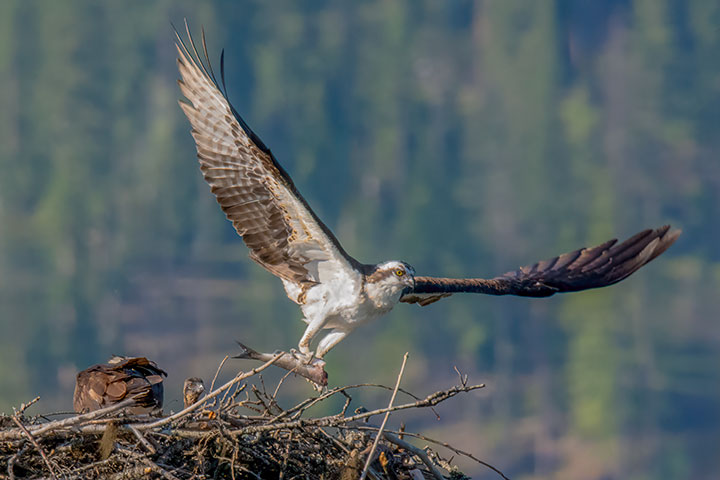
When the female and chick have had a feast, the male flies of with the remains of the fish to eat it on a nearby piling. Photo by Dorothy.
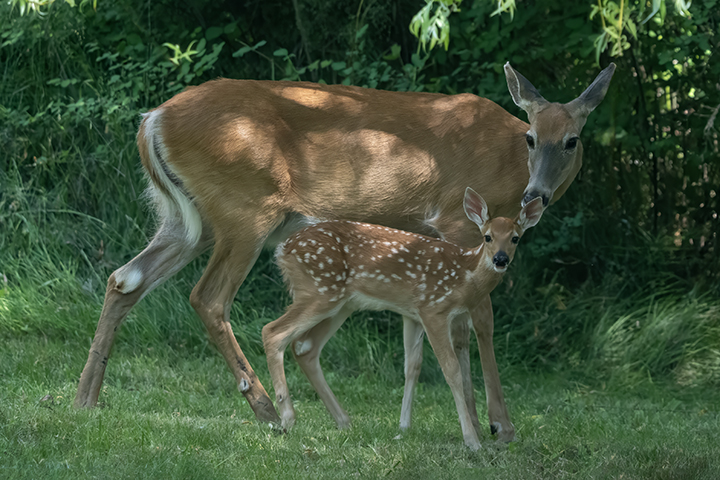
I have seen a few white-tailed fawns, but this has got to be the smallest, and thus youngest, of that small group.
A mother white-tailed deer attends to her small fawn.
When the male Osprey has a partner and (unseen) chicks in the nest, he becomes the sole provider of fish. Yet, when he catches a fish, he often will stop and eat the tasty head before delivering the remains to the nest.
A male osprey has stopped on his way to the nest and has eaten the tasty head.
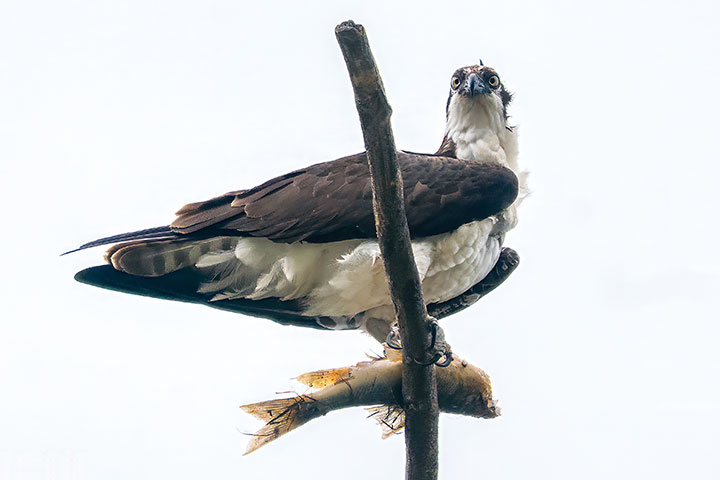
He then takes the rest of the fish to the nest.
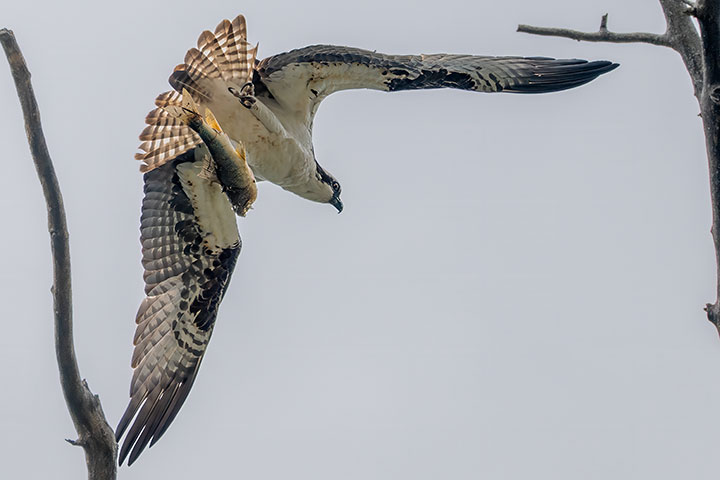
After taking the fish to the nest and feeding his family, this male flew off with the leftovers to eat by himself. His partner is leaning over and tending the unseen chicks.