Flycatchers, and


Many songbirds eat arthropods. Only a few of these are named for their eating habits, but the tyrant flycatchers are. Members of this family often hunt from a perch, fly out and capture an insect in the air and then return to the perch. However, they also glean insects and spiders from the trees. 

The first picture is of the title’s and. Although not in the flycatcher family, this Grey Catbird was hunting for insects alongside flycatchers. Its strange cat-like mewing (from which it gets its name) alerted me. The bird’s preference for skulking through thick brush meant that it took me some time to obtain a clear view of it calling.

Not all family members have flycatcher in their names, but this one, the Pacific-slope Flycatcher, does. This bird was near its nest in a carport. Field guides tell you that it is a cavity nester, but around here, many prefer human structures to provide a covering for the nest. 

I am fascinated by the number birds that are partial to building nests on human structures, but then complain vociferously about the inevitable presence of those humans. While I try to avoid their nests, it is chastening to be vilified by a robin for using one’s own doorway. The Pacific-slope Flycatcher, below, became stroppy when a human dared to use the carport it had appropriated.

Another case of an and. A Tree Swallow also catches insects in the air.

Although a member of the family, the Eastern Kingbird does not have flycatcher in its name. This one is an adult: note the white-tipped tail. 

This kingbird is about to fly off, presumably to catch an insect.

Posted in birds | Comments Off on Flycatchers, and

Useful resources


As I attempt to use images from my camera to help me make sense of my surroundings, I have relied upon many books (ranging over topics such as birds, meteorological optics and dragonflies) and upon many websites (examples being Wikipedia and All about birds).

Some recently developed resources look really appealing. 

Map of Life 
This draws upon about 200 data sets covering nearly a million species all presented though a searchable map. You can either plot the geographic range of a species, or you can pick a location and explore the various species found there. It appears to remain under development as the types of species available in the two sections differ. The datasets can be explored using either:
• An app for use on a mobile device  https://auth.mol.org/mobile
• A website for use on a computer   http://map.mol.org/lists

The name, Merlin, is clever in that it is both the name of a bird and a legendary magician. Oddly, the app’s logo shows a Yellow-bellied Sapsucker (the lab’s logo), rather than a merlin.


Merlin
This interesting routine actually helps you identify birds you have photographed, but two different technique are used. The app uses a bit of textual information you supply (bird size, colours, location, date) to give a list of plausible candidates. On the website, a picture is uploaded and is then marked with the location of the bird, and its bill, eye and tail. The website then uses image analysis to suggest the species.
• An app for use on a mobile device  http://merlin.allaboutbirds.org
• A website for use on a computer  http://merlin.allaboutbirds.org/photo-id/

For months now, I have made effective use of the Merlin app to narrow the possible identification of unknown birds. However, the image analysis performed by the website is even more interesting. In my limited testing, it does superbly with a standard bird-profile shot, but stuggles with an unconventional view, such a bird flying directly towards the camera.


Posted in birds, bugs, commentary, fish, herptiles, mammals | 1 Comment

Skimmer spotting


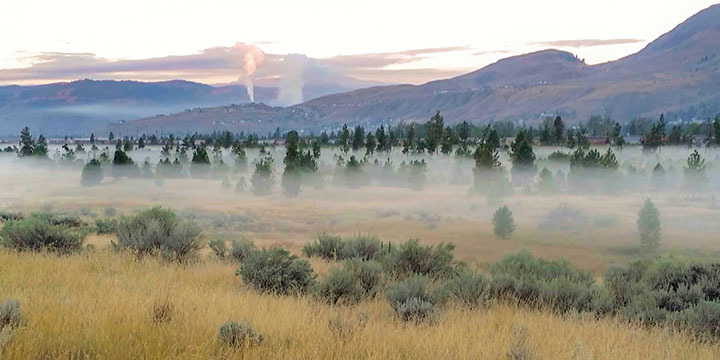
Wildfire: I have been a tad distracted of late by a threatening wildfire. The danger is declining, but has not passed.

Skimmers are a family of dragonflies for which much of the identification involves counting spots. But, there seems to be an arbitrariness about just what should count as a spot.

For example, I suspect that this is a Four-spotted Skimmer, but where are the four spots? Halfway along the forward edge (at the nodus) of each wing is a dark spot. There are four wings, so a total of four spots. What about the dark spots near the tip of each wing? These are the stigma, and are such a common feature of dragonflies as to be not useful for identification. They are not counted.

Then there is a skimmer called the Common Whitetail. It does not even seem to be classified on the basis of the spots on its wings, despite some obvious big ones.

The classification of the Twelve-spotted Skimmer is a bit more obvious. Each wing shows three prominent dark areas, so with four wings altogether, twelve spots.

Two dark spots per wing give the Eight-spotted Skimmer, of which this picture shows two. Normally, a skimmer hunts from a perch. It spots another insect and heads out to capture it. However, males dislike the incursion of another male in their hunting and breeding territory. The resulting combat seems to be what was captured in this fleeting view of one Eight-spotted Skimmer challenging another.

Posted in bugs | 7 Comments

Deteriorating


Late Saturday afternoon I posted a picture taken from my home of smoke from a wildfire on the ridge between Duhamel and Sitkum Creeks. The fire has since grown and has been descending the ridge toward the lakeshore. Homes at the bottom of the ridge have been evacuated. If the wildfire does reach the Lake, it will probably do so about 4 kilometres from my home.

A picture taken from my home at 10:35 pm, Saturday. It shows the fire descending the ridge.

Two hours later at 12:30 a.m., Sunday, the fire continues down the ridge toward the Lake.


Posted in scenes, weather | 9 Comments

Not desirable


A wildfire has flared up in the mountains about seven kilometres from my home. I must say that when I assess the appeal of my new view, I have to describe it as not desirable.

Posted in scenes, weather | 3 Comments

Convergent waters


How is it possible to use the first picture to discuss surface-water convergence and not even mention the word, cute (oops)? Well, there is something interesting here that illustrates both water flow and flexible feeding. This Mallard hen and her nine chicks are feeding on detritus in a region of surface-water convergence.

We are used to thinking about a Mallard dabbling in the shallows. Rather than diving, it will tip up and forage on the bottom with its bill.

Yet, sometimes Mallards can be seen feeding in waters that are much too deep for dabbling on the lake bottom. They are feeding on organic material on the water’s surface. As can be seen in this image, this material has collected some places and is absent in others. The clue to this is the convergence or divergence of surface waters. The width and depth of Kootenay Lake varies greatly along the West Arm (where these pictures were taken). The flow along the arm is fairly gentle, taking three or four days to travel the thirty kilometres. Owing to the variable width and depth, sometimes deeper water must rise to the surface where it spreads (diverges), sometimes surface water converges and sinks. Any floating debris becomes concentrated in regions of surface water convergence. For Mallards, this is a bonanza, a wealth of accessible food even in deep water.

Return to the family introduced in the first picture. The small chicks cannot dabble in shallows an adult would use. However, where a convergent surface flow has concentrated food, all can comfortably feed.

Posted in birds, weather | 3 Comments

June goulash


June ends with a stew made from images that did not manage to get their own postings.

While walking in Kokanee Creek Park early in the month, I saw a Common Yellowthroat,

and an American Redstart.

Our local Garter Snakes are comfortable on land and in water.

I often see hummingbirds battle for access to the feeder, but it is difficult to get a shot of it.

Somewhat easier (but not much) is a portrait of a visiting Rufous Hummingbird.

The season of damselflies has arrived. This is a Northern Spreadwing,

and this dragonfly is a male Common Whitetail.

A pair of Bald Eagles was hanging out in a tree near their nest.

And a female Osprey approached with an offer to share her fish—or maybe not.

Posted in birds, bugs, herptiles | 1 Comment

Tree Swallow chicks


A month ago, I showed Tree Swallows mating: tryst in a trice. Yesterday, I watched chicks clamour for food.

“We’re so hungry and haven’t been fed for days, maybe weeks.”

“Here is something tasty for you.”

“I’m off to get you more.”

“I’m back.” (This image may be destined for an end-of-the-year print.)

Posted in birds | 3 Comments

Hidden pond


In the West Arm Provincial Park (in the South Selkirks, above Kootenay Lake), there is pond known to few other than wildlife. Doug Thorburn watches it and has sent me pictures showing the visits of three cervids. 

White-tailed Deer

Elk

Moose

Doug Thorburn’s pictures are used with permission.

Posted in mammals | 1 Comment

White butt lives still


Much has appeared in the press in the last few years about the plight of bees. Usually the press makes no distinction between the Honey Bee (an invasive species) and the many native pollinators, such as bumble bees. 

The Western Bumble Bee (Bombus occidentalis) used to be plentiful throughout much of western North America. Over a decade ago, it began vanishing from the southern portions of its traditional range, particularly in the United States and much of southern British Columbia.

Yet, I and others still occasionally have seen it around Kootenay Lake (southeastern BC). I have shown images and written about it since 2009, more recently in 2012 as two bees or not to be, and in 2013 as white butt lives. Sadly in 2014, I failed to find it. Had it now been locally extirpated?

It was a delight to discover it yesterday as it collected pollen in my yard.

The Western Bumble Bee is easily identified by its distinctive white butt.

Posted in bugs | 2 Comments