Grizzly & Kokanee


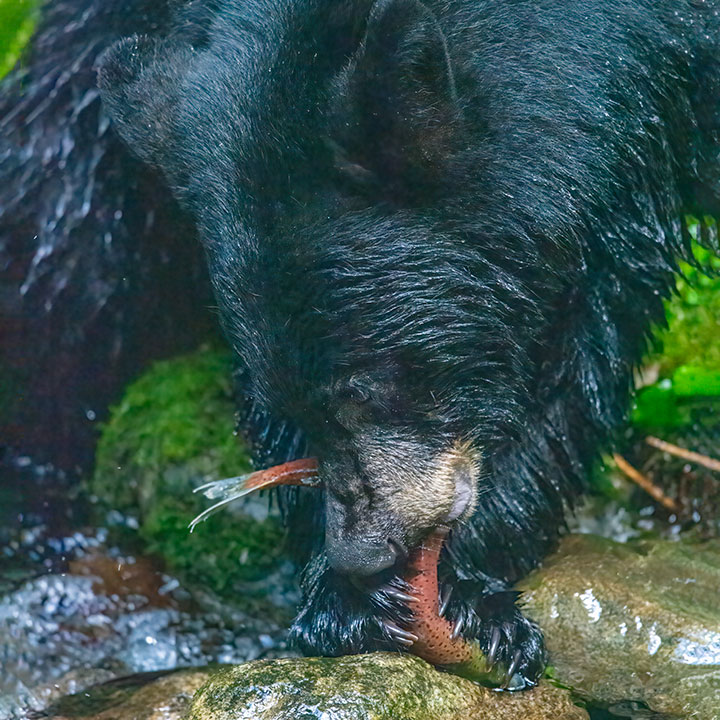
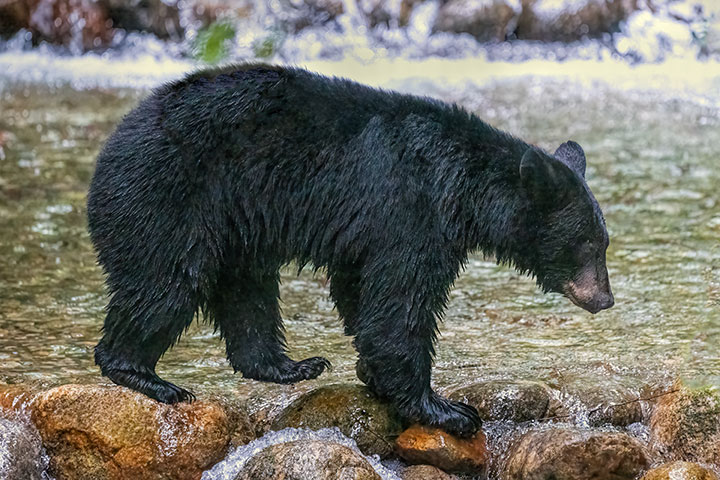
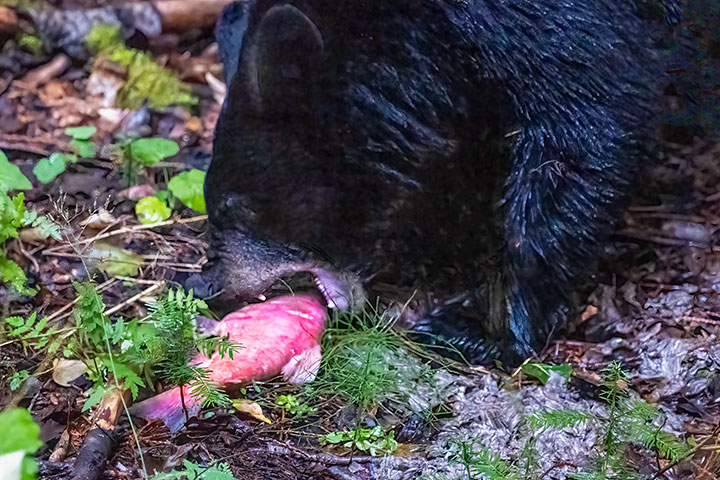
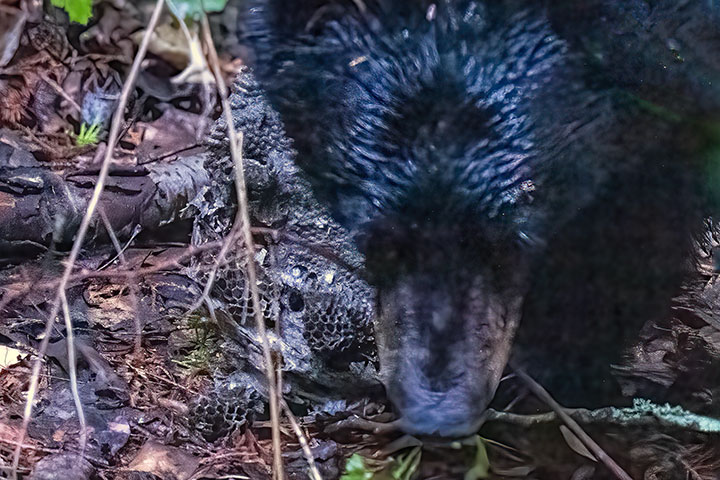
A (female?) grizzly bear wandered by and began feeding on Kokanee salmon. Before wandering off, it had eaten perhaps a dozen Kokanee. A few days ago, I looked at black bears eating Kokanee.

I think the grizzly bear was aware it was being watched, but just went about its eating.

It was not particularly choosy. Sometimes it ate from the head first, and

… sometimes both, and

… sometimes the tail first.


Posted in fish, mammals | 5 Comments

Bears in Park


Bears have arrived at Kokanee Creek Park.

Usually, it is earlier, but while black bears have been here for a few days, they seem to be a bit late this year. Well, it was a good huckleberry season at higher altitudes, but one reason for the tardiness is apparently some fresh paving on the mountain side of the highway. The equipment and traffic this entailed seems to have postponed their arrival. 

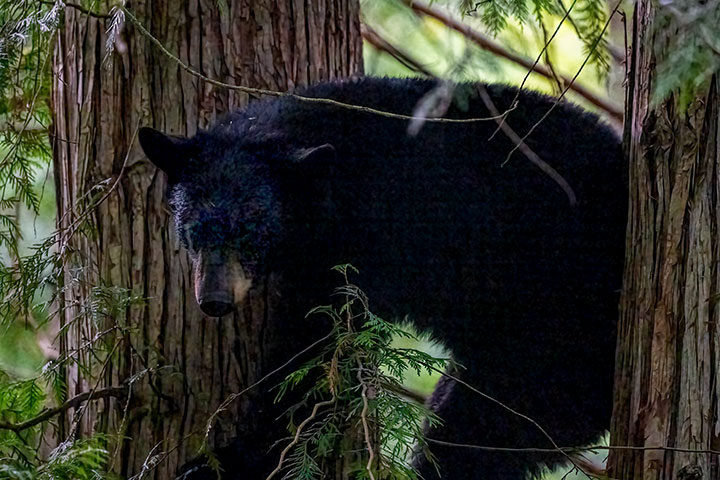
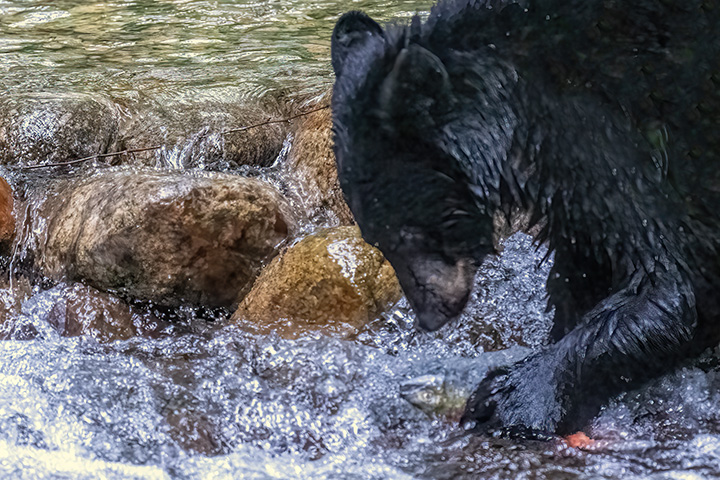
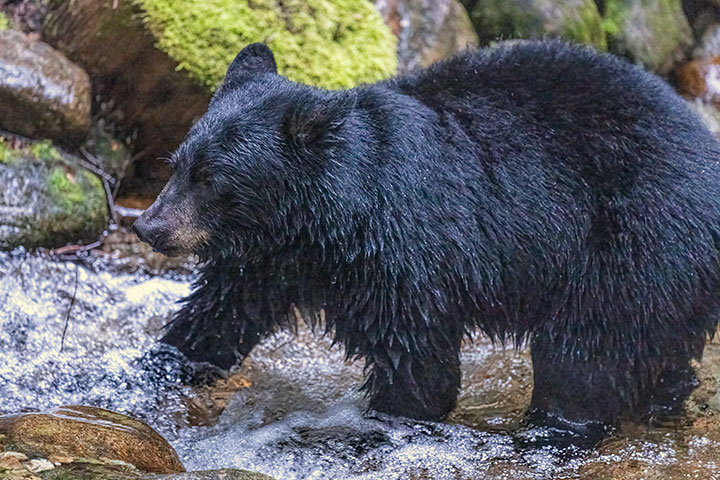
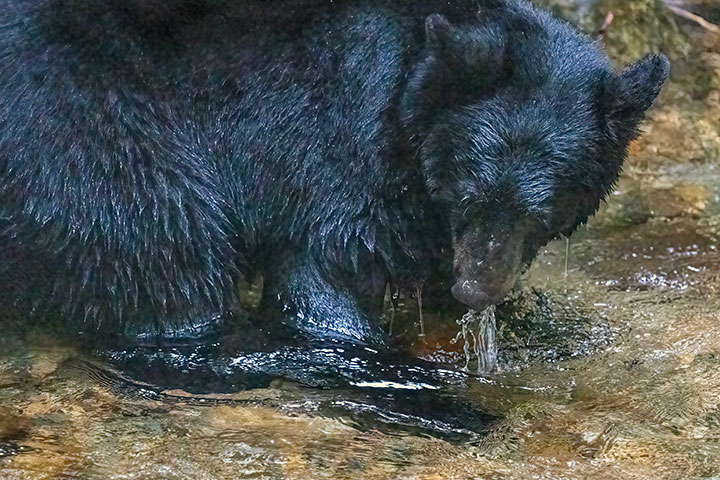
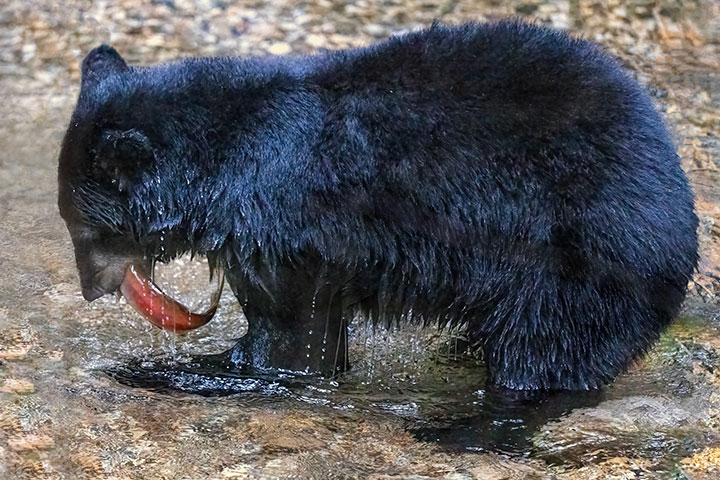
But they are here now. There were eight seen a couple of evenings ago. The attraction is the spawning run of Kokanee salmon, and the black bears need to fatten up before hibernation. 

However, this year’s bears only turn up at dusk. This is a variant on their earlier year’s appearance of coming at any time of day. Skittishly, they seem be trying to avoid people, but their timing makes it difficult to take pictures. While I watched last evening, there were two adult bears, plus a mother and two cubs, but the low light and the skittishness left me with only pictures of three of them.

In the dim light, the camera would no longer focus on the mother bear and her two cubs. The bears were off to the side of the creek waiting for some people to disperse.

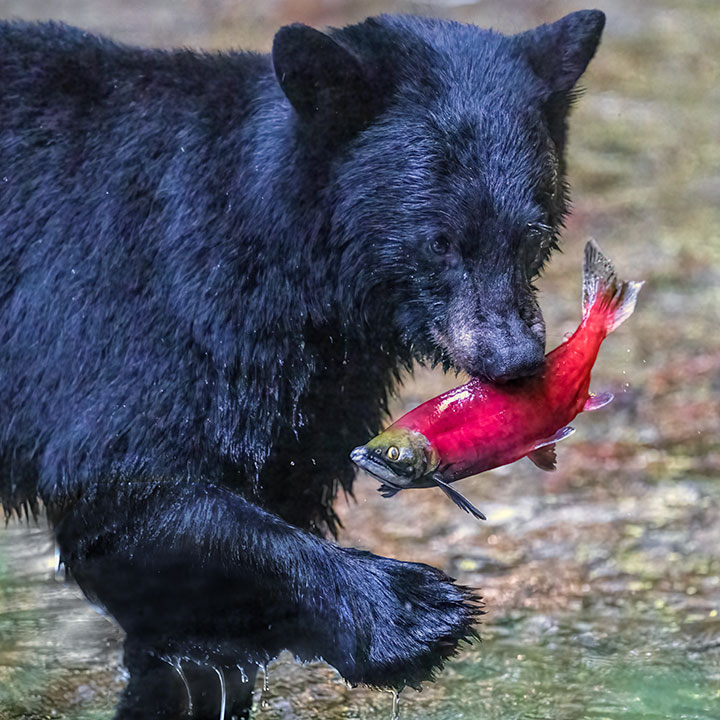
The first bear to arrive is seen with a captured Kokanee salmon. Photo by Cynthia Fraser.

This black bear looks cautiously up at people on the bank of the creek.

Posted in mammals | Comments Off on Bears in Park

A week late


Late August is the time to start watching the Kokanee salmon run and all the results from it. Some of the results, the bears eating fish, has been diminished perhaps largely by the repaving on the road. This activity diminishes their access to the usual spawning streams. But, the birds have arrived for the pending feast. It is unclear to me what insights prompt birds to arrive prior to most of the fish.

Nevertheless, I did observe (poorly) an unfamiliar activity. While waiting for the fish to arrive, some of the juvenile birds fought. 

There is the odd fish available, but not yet a glut of them.

Turkey Vultures are here, but seem to have yet to find many dead fish.

The herons have gathered, some times in fours and fives.

Among the birds waiting for the fish to arrive were these two. Seen briefly (and with poor focus), it was initially not clear who they were, but the two of them were obviously fighting.

Only when they separated could I make out who was scrapping ahead of the fish feed. They were two juveniles: a Red-tailed Hawk (left), and a Bald Eagle (right). Presumably, when the channel was filled with fish, they would be feeding and not bothering one another. It is also possible that the impatience is partly driven by the fact that they are both juveniles and they are both combative raptors.


Posted in birds, fish | 2 Comments

Uncommon harasses rare


I have casually been watching for the Lewis’s Woodpecker and saw it two days ago, a little over two weeks later than those seen last year.

Birds have their niches. Some are adapted to water, some just to shorelines. Some want grassland, some thrive amongst trees. So, a forested land, such as around Kootenay Lake, may not appeal to those who thrive in a more open country.

Consider the Black-billed Magpie. This is a somewhat common resident to the west of the Great Lakes. Yet around here, where it is highly forested, they are few in number and largely confined to a small region where there is the desired open country with a few trees. For us, the magpie is uncommon.

Then there is the Lewis’s Woodpecker. It is blue-listed, which means that it is threatened — and that is based on the populated regions of which Kootenay Lake doesn’t rate. It is known in parts of southern B.C., see A Nest of a Lewis’s Woodpecker, but the reference maps just don’t include us for we get only a handful some years. Last year, there were maybe a half-dozen; this year, there seem to be two (and they are late). Not only does this bird like the open terrain with a few trees that the magpie does, but it sends few breeders this far north. For us, it is a rare bird.

I will start with two old images to set the stage for the two combatants. The first is the Black-billed Magpie.

The second is the Lewis’s Woodpecker.

The first time I saw the Lewis’s Woodpecker this year, it was high, small and distant. Alas, thereafter, it was even farther.

There are two Lewis’s in the scene. The one on the right is on a branch that apparently has something to eat in the top of it — something that the attacking magpie had previously figured belonged to it. This is the first of three attacks. After the magpie failed to drive off the Lewis’s, it temporarily retired to an adjacent branch.

On the second try, the magpie came after the Lewis’s Woodpecker which had climbed to the food. The magpie was again unsuccessful when the woodpecker fought back, and so it retreated.

On the third and last try, the Lewis’s stayed firm and the magpie retreated for good.


Posted in birds | 6 Comments

Eagle juvenile


Two seconds.

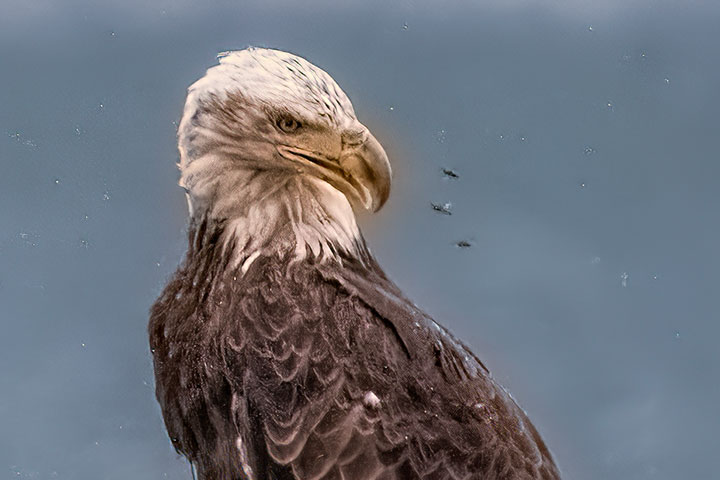
That is all the time I had when I rounded a corner and startled a juvenile Bald Eagle (hatched this year). That is the time it took for the eagle from being in a hidden perch on my left, to flying in front of me, and then vanishing to my right. It was very close and didn’t all fit in the frame.

The first picture is a full-frame crop from the camera and is amazingly sharp. The second is a tighter crop of the head.


Posted in birds | 6 Comments

Chipmunk


I rarely see a chipmunk. And it is even rarer that I see one here in the valley. This is to be contrasted with seeing the red squirrel which loudly berates me almost every time I step outside. The odd thing is that I do not remember this relative sparsity of chipmunks as a characteristic of my childhood here. Back then, there seemed to be many chipmunks. 

But today I was visited by a chipmunk. It had found the bird-feeding corner of the deck — a spot that has also enticed a black bear (last year), a bobcat, a raccoon, and, of course, the squirrel. 

I believe this is a Yellow-pine Chipmunk. It said nothing and generally ignored people watching it. Note, its tongue is out. 

The chipmunk allowed quite a close approach. Well, there was food.


Posted in mammals | 8 Comments

Juvenile ospreys


Two juvenile ospreys have left the nest just this week. It seems a bit early for them and they were being watched by a parent in a nearby tree. We may be able to see them for most of the next month before they migrate to the south not to return for two or three years when they are ready to breed. 

The juvenile osprey are easily distinguished. Most striking are the topside wing feathers that look like they have been dipped in cream. Then there are the orangish eyes (as distinguished from the yellowish eyes of the adult). The breast band is somewhat characteristic for it usually vanishes with the male adult.

At one point, one bird flew off. Shortly afterwards, it returned and to maintain balance, the other stood and spread its own wings.


Posted in birds | 4 Comments

Juveniles


This is the time of year to see juveniles. A number have already appeared in this blog, and a few of these appear again with new images.

A juvenile Great Blue Heron was fishing in the shallows before sunrise when it decided to take off and to look elsewhere. Its lack of a white crown means that it is this year’s youth.

The fawn of a White-tailed Deer walked across a lawn. Not only is it covered in white spots, but its white tail is small. This is the first time I have noticed white hair covering the tarsal gland (on the inside joint of the hind leg). The hair is black on all of the many adults I have seen. Apparently this normal black colour is due to the combination of urine and bacteria. This is clearly a deer of this year. Photo by Cynthia Fraser.

I have seen Striped Skunks kits at other times this year. This time I saw five of them, of which three appear in here. Skunks are generally solitary animals, so three travelling together (let alone five) are clearly young. All of them had their tails raised the whole time for no apparent reason.


Posted in birds, mammals | 4 Comments

Juvenile herons


As the sun was rising, two juvenile Great Blue Herons were hunting from a dock. But, the most striking pictures were of them with their wings out.

At one point, both herons took off at the same time, one from a piling, one from the dock.

Again, one heron landed on the piling with wings and tail spread.

And took off into the rising sun.


Posted in birds | 9 Comments

Osprey & chick


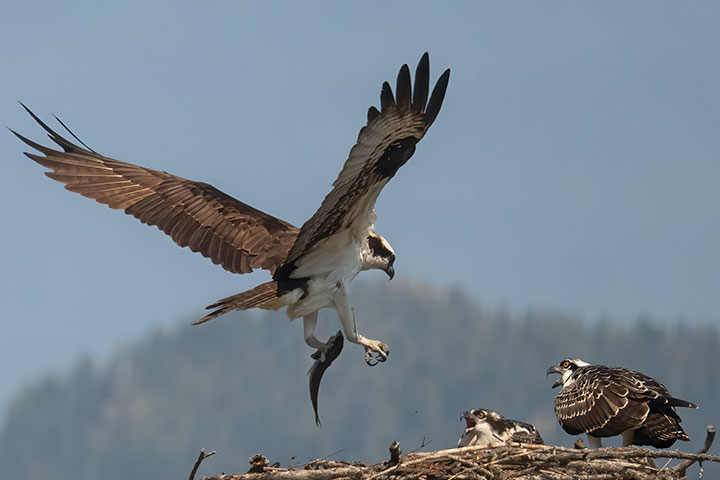
Yesterday, an osprey was sitting in a tree contemplating a headless fish. Not far away, but in a nest above the Lake, was his partner and their one chick.

This male osprey had stopped by the tree to eat the head and delicious brains of a freshly caught fish before carrying it on to his partner and chick. Photo by Cynthia Fraser.

The partner and their chick wait patiently in the nest by the side of the Lake.


Posted in birds, fish | 1 Comment