Faeces disposal


This posting about the disposal of a bird’s faeces was prompted by an observation of Cliff Swallows dealing with nestlings. That treatment will be left to the end. Incidentally, many of these pictures, although taken, were never used before.

Every living thing poops. That includes fungi and plants and, of course, mammals and birds — everything living. Mind you, most of this goes unseen, but a few examples are given. The concentration will be on birds, and in particular, the disposal of the faeces of nestlings.

The leaves of deciduous trees produce food during the summer, but come fall they are waste and are discarded. Even non-deciduous trees lose their leaves (needles) but often do so incrementally.

This is not dew; The large drops on the tips of the grass is guttation. It is excess water taken into the roots that are promptly expelled as waste. 

Mammals have two openings for the disposal of solids and liquids. Birds have just one.

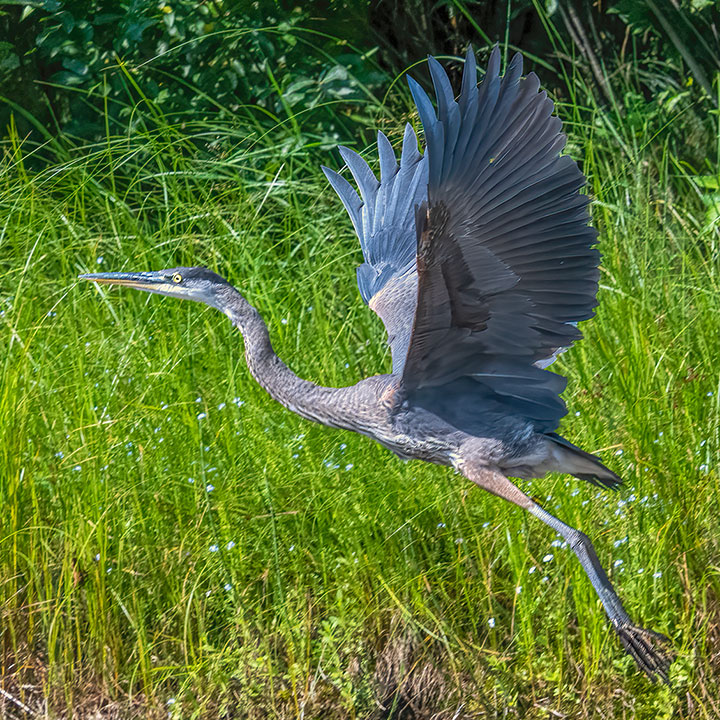
Most large predators, such as this Great Blue Heron, pay scant attention to where their waste is deposited.

However, some predators, such as this Osprey, do lighten the load before flying off.

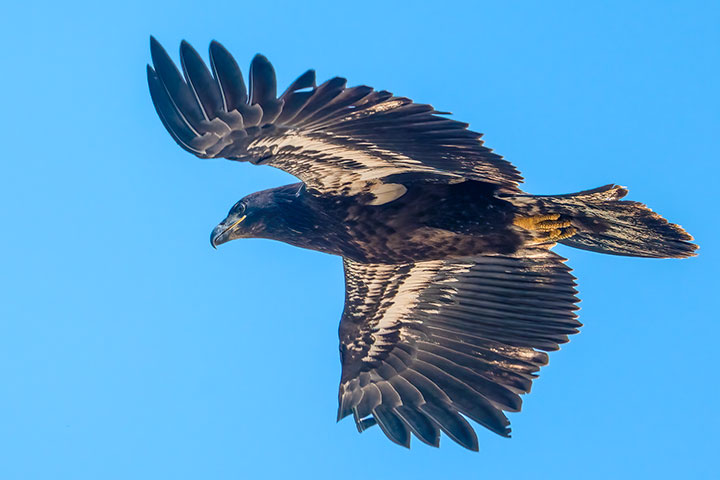
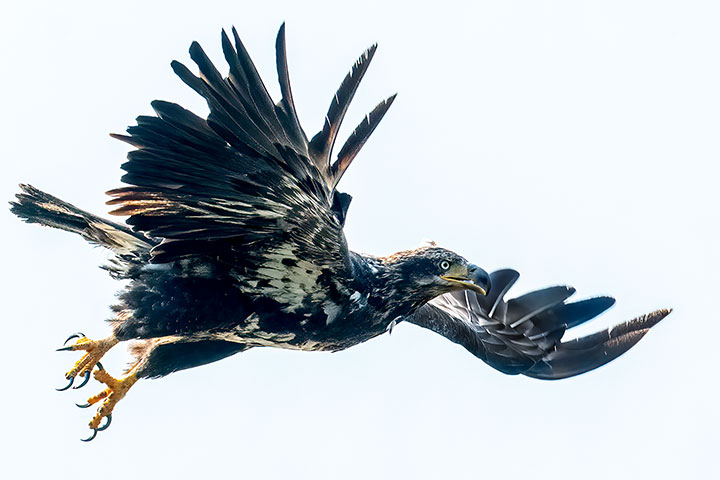
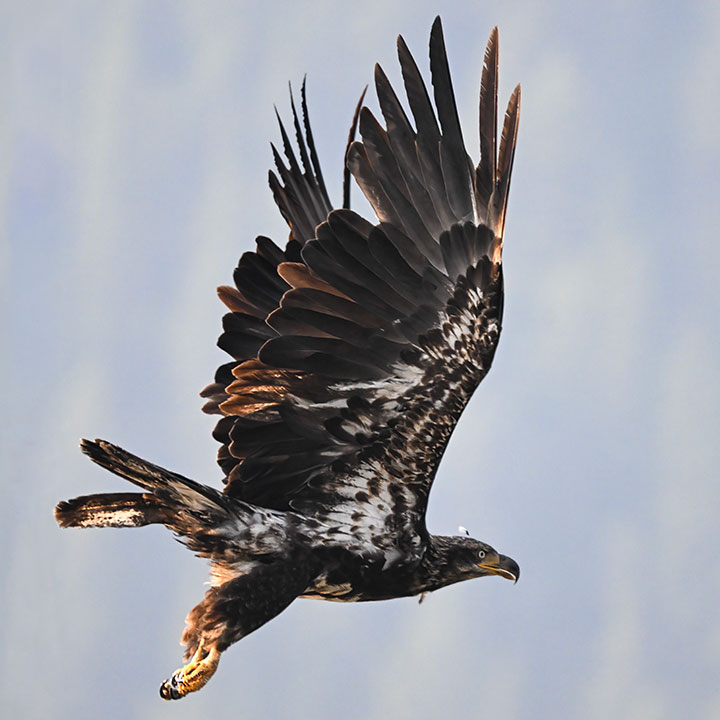
Likewise, and Bald Eagle lightens it load.

Particularly visible is the parents’ cleaning the faecal pellets from their chicks’ nests. This is a Black-capped Chickadee and it takes the pellet far away from the nest to prevent predators from identifying a nest by its droppings.

Similarly, a male Northern Flicker carries off the faecal pellet and hides it.

The fact that I have often seen the Tree Swallow carry the pellet away from the nest made me assume that this was also a characteristic of all swallows.

But, not so for this is a Cliff Swallow. Formerly they did build their mud nests on cliffs, but have spread to a wide variety of  buildings and other human-made structures. 

Having fed the chick inside the nest, the Cliff Swallow now removes a pellet from them and brings it the the mouth of the nest. There, it simply dropped. This may be because the nest itself is highly visible, so there is scant need to hide the droppings.

The sidewalk below the nests is littered with faecal pellets. The store owners had previously removed all the nests at the end of the season. Given the sidewalk mess, this is understandable. Mind you, this year, the Cliff Swallows merely rebuilt their nests.


Posted in birds, commentary, mammals | 1 Comment

Ghost plant


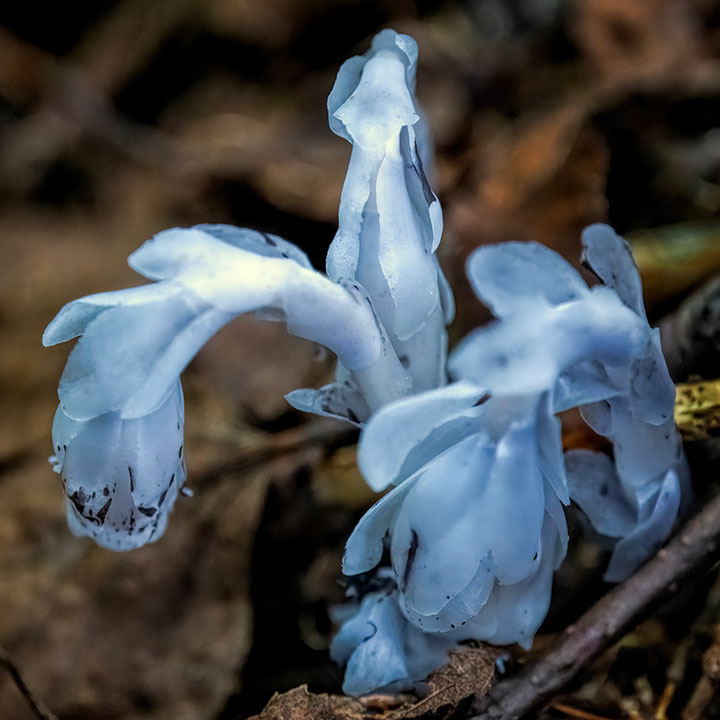
This somewhat uncommon flower has given me a great deal of trouble. It wasn’t due to the behaviour of the flower itself, which is unusual, but straight forward. It was due to the name it has had: the Indian pipe. For reasons of the inappropriateness of the word Indian, various sources have changed it to ghost pipe or to ghost plant. Presumably, a ghost being an imaginary creature, does not have a particularly vocal constituency. But, what about the second word: pipe or plant. Now, Indians can have a pipe, ghosts are never illustrated this way. Alas, there is more that one species of plant called the ghost plant. Oh well, ghost plant will do. (Avoid the problem and look it up with its scientific name of Monotropa uniflora.)

The ghost plant begins its life being white. It has no chlorophyll and so does not capture energy from the sun. It therefore lives at the bottom of a thick canopy of trees and is parasitic on ground fungi of the Russulaceae family. 

I watched for it in mid-July. The attached picture was taken soon after they appeared. It will now grow black splotches and its flowers will switch from hanging down to looking up. It is pollinated by bumble bees.


Posted in wildflowers | Comments Off on Ghost plant

Snowshoe hare


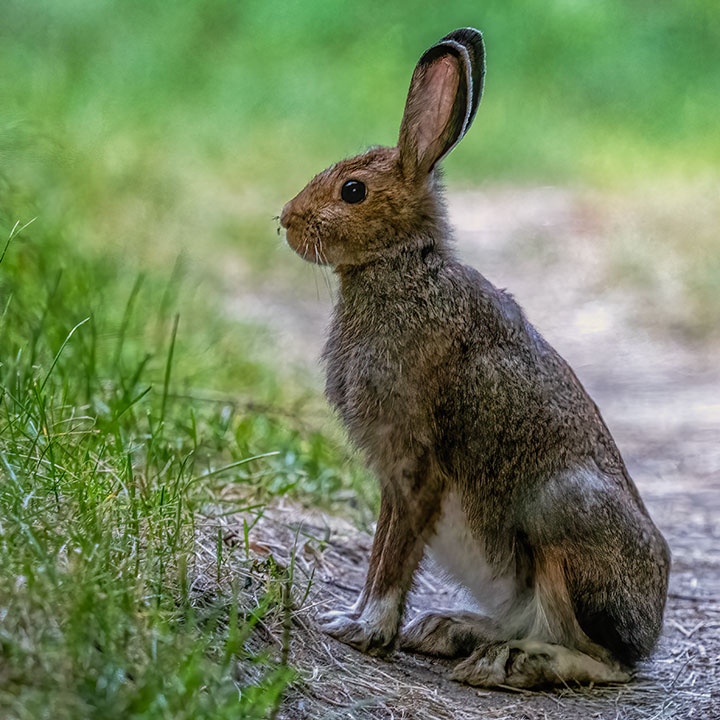
Snowshoe hares are notable for a number of reasons: Their colour changes with the season; They can be frozen when watched, yet have great speed when chased; Their population cycles with an eight to ten year period. 

This brief observation of a hare today revealed: It is brown in the summer; It sat frozen as I approached, but then bolted; It was the first one I have seen in three years. 

Is this a sighting of an isolated member of a low population, or the beginning of a multitude of them?


Posted in mammals | Comments Off on Snowshoe hare

Skunk kit feeds


Sunday evening I watched two skunk kits forage. This was odd. Normally at this time of year these juvenile skunks would be accompanied (and supervised) by their mother, but these two were alone — no mother.  Over two weeks earlier, I had posted Turkey Vultures where I noted that the carcass of a skunk (now assumed to be the mother) was the object of the vulture’s feeding. Now, the clearly hungry kits were desperately looking for food on their own.

The kits foraged extensively on the grass and the beach, but only the one that found something will be followed here.

The skunk would sniff the ground as it foraged and found something under a visually undistinguished spot on the beach. It then dug it up. There are very few animals which will bury a partial meal for later, and the most likely one around here is the coyote.

But what (rotting) delectable has this kit found? This picture shows what might be either a fin or feathers. As the likely burier was a coyote, this is probably the remains of a bird.

The skunk kit carried his prize to the longer grass, presumably for security. It spent considerable time trying to eat what looked like a rather long alimentary canal. Mind you, its molars are likely not well-developed. Granted, the kit is rather small, but it may have come from a raven. Photo by Cynthia.

A shot of the meal shows what looks like feathers (lower left). Photo by Cynthia.


Posted in mammals | Comments Off on Skunk kit feeds

Feeding swallow chicks


These Tree Swallows have been feeding their chicks in their cavity nests for some time, however the chicks are now big enough to be sticking their heads out and so can be seen.

Both parents have a full-time job. They spend most of their time flying around the immediate neighbourhood of their nest catching aerial insects.

An winged insect is delivered to the yawning gape of a chick by the mother.

And the father delivers a different insect.


Posted in birds | 2 Comments

Heron & fish


The Great Blue Heron is a patient bird. Yesterday, it spent an hour on a dock ramp just watching for a fish before it caught a small meal.

This seems to be an adult female heron. It has a white crown, but even though it is breeding season there is only scant evidence of plumes on its head and neck.

It spent most of the hour staring at the water off the edge of the ramp. It would occasionally walk a short distance and stretch to its full height but was fairly dedicated to the task of watching for a tasty fish.

Once, it had a good scratch.

And once, it saw something in the water and dove in, only to come up empty.

On a second dive into the Lake, the heron did catch a fish.

And swallowed it. The gullet is swollen and the tail is visible. The heron then flew off.


Posted in birds, fish | 2 Comments

Turkey Vultures


Two adult Turkey Vultures visited the waters near my home. While they tolerated my presence when I took pictures, it wasn’t until the next day that I finally figured out what they were doing there. They were feeding on the carcass of a skunk along the beach but chose to perch on a piling and a dock as they waited out some competition from a raven. 

One Turkey Vulture spent its time on a piling. 

The other spent its time on the railing of an adjacent dock.

The raven that shared the carcass with them stopped by and was eyed, but ignored.

Bellies full, the vultures chose to fly off.

And it’s away.


Posted in birds | 2 Comments

Starling chick


Starlings are an invasive species which were released in New York in the 1890s and have since spread across the continent. Certainly, they are found at the south end of Kootenay Lake, but their numbers on the West Arm are rather few.  

Starlings battle for nest spots, and this year have displaced Tree Swallows in a Flicker cavity the swallows had long assumed. (The tree swallows merely moved to a different cavity.) The starling then raised a chick. It was discovered the day before the chick fledged and was photographed from a distance as it fed the chick.

The adult Starling feeds its chick.

In the fading light Cynthia took this shot from a boat of the chick just before it fledged. 


Posted in birds | 1 Comment

Eye to eye


Within a few hours, I stood eyeball to eyeball with two predators. Well, neither was after me; I am just too big for them.

One was a raccoon kit. Like the bobcat before it, it was checking out the corner with the bird feeders. 

The second was a crab spider. It had been hunting for pollinators on a daisy the day before, but the light was getting low. So, knowing its habits, I went back this morning and found it looking up at me. It was whitish as it sat on the daisy’s petals, but I have seen it coloured yellow when sitting on the yellow portion of the flower.


Posted in bugs, mammals | Comments Off on Eye to eye

Nesting material


Nearly two weeks ago, I spotted a Townsend’s Warbler at the entrance of Kokanee Creek Park. OK, this is the season when this warbler is here. It seems to be collecting some nesting material. A day later and many kilometres away, I took a poor picture of a Yellow-rumped Warbler with what appeared to be the same material in its bill. 

But, what is this nesting material?

A Townsend’s Warbler with nesting material.


Posted in birds | 6 Comments