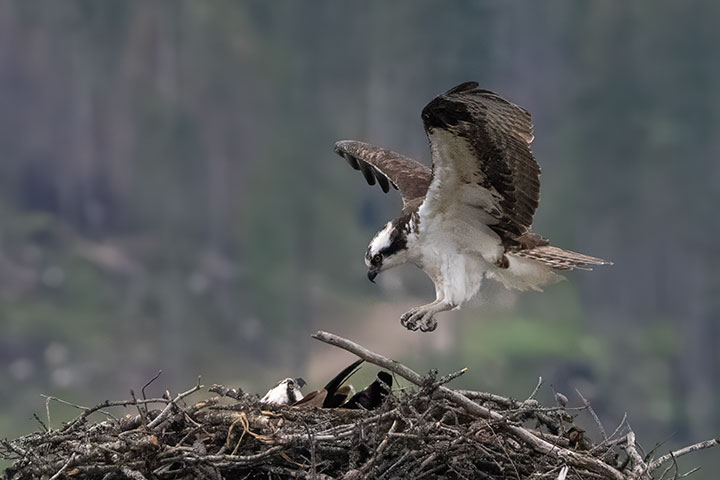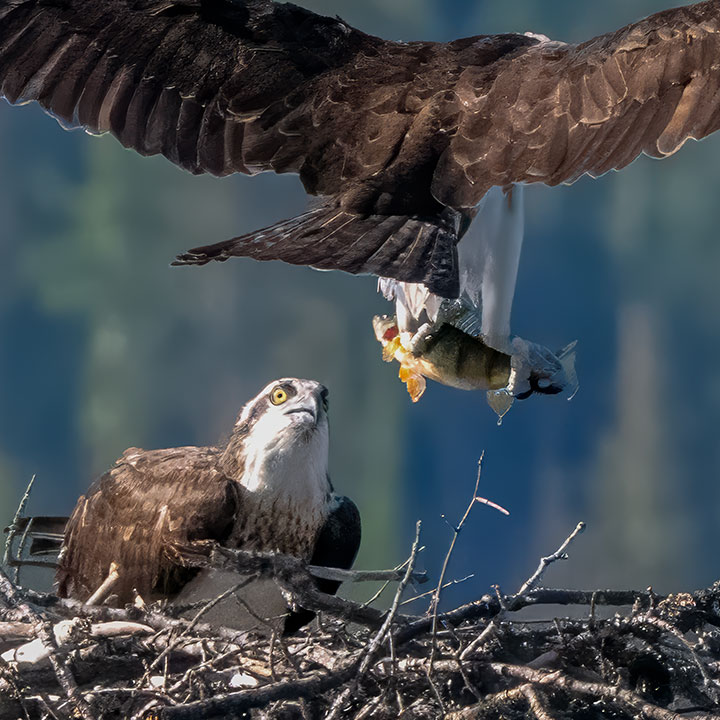
It was a calm time for the nesting osprey. The female was sitting on unseen eggs and occasionally turning them over, and the male went out hunting for a fish for his partner.
Then, an interloper came by.
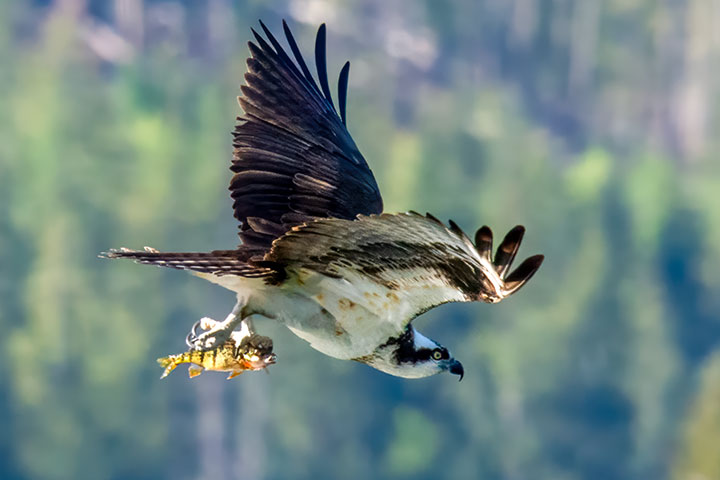
The male Osprey heads out to catch a fish.
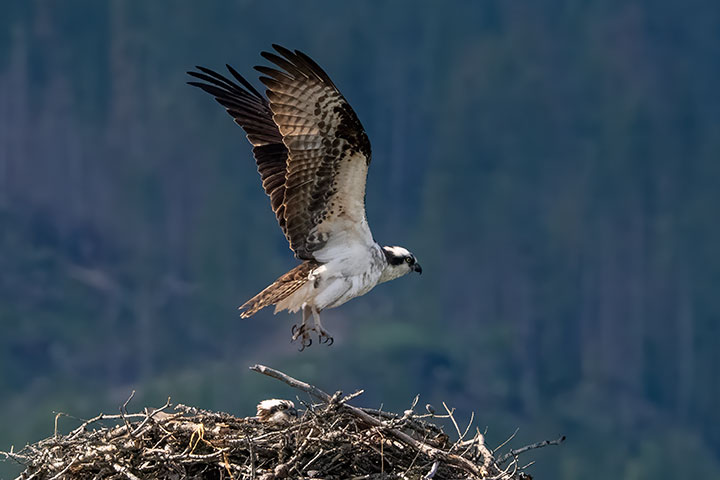
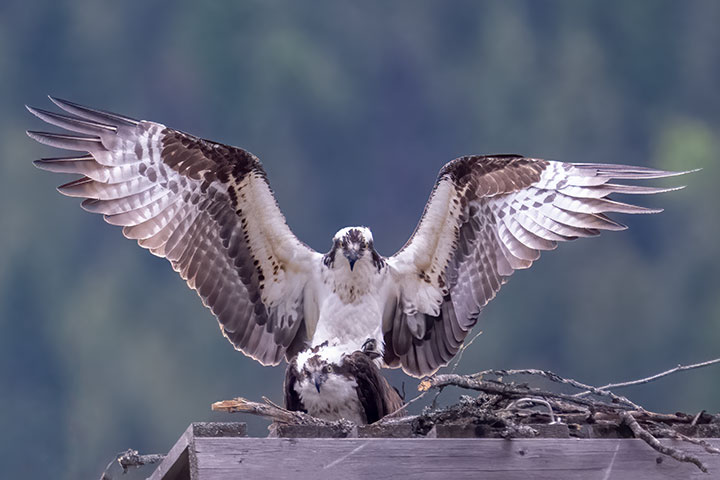
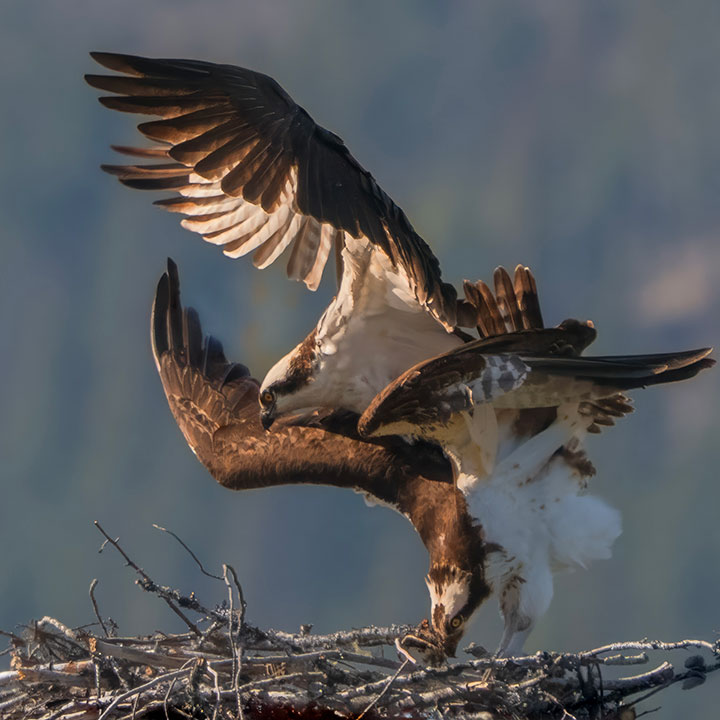
While he was away, the female received an unwelcome visitor. It was another male osprey apparently looking for an opportunity. As he was preparing to land, she recognized him as an interloper and stood up and squawked at him to go away.
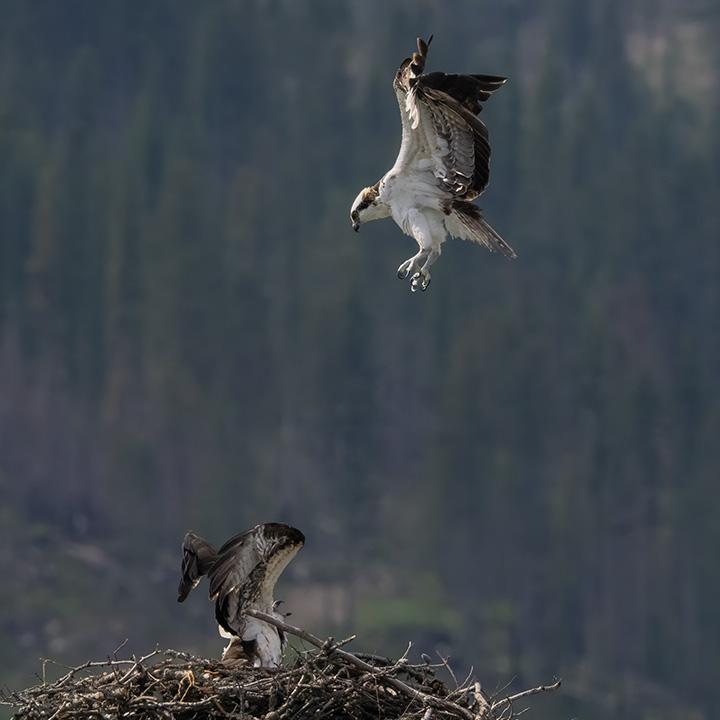
Being rejected, the interloper ceased trying to alight, and flew off. Now, it took me some time to figure out how she recognized him as being different from her partner. I am not sure how she did it, but it seems that he has slightly different markings on his crown.
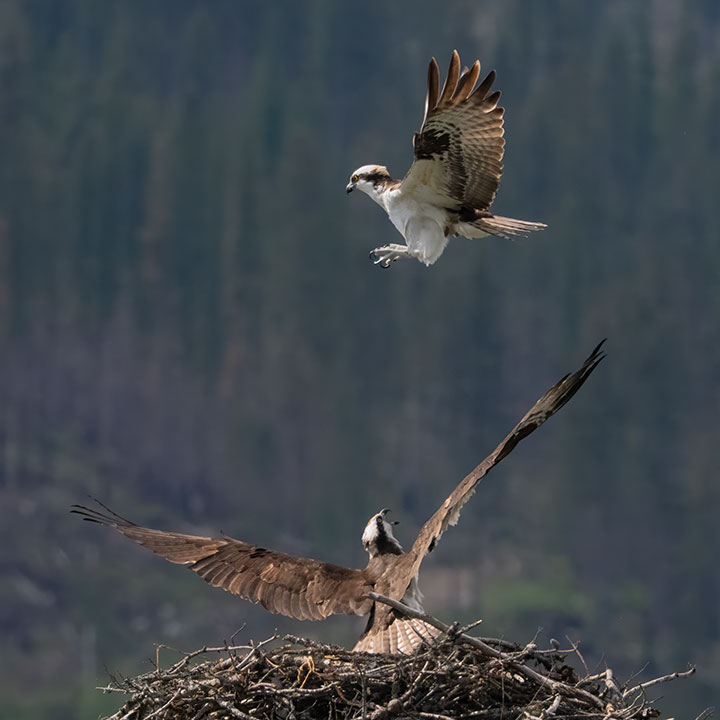
Then her partner returned having not found a fish. She accepted him immediately.