Indian pipe


The season of indian pipe is upon us again. That it has appeared this early in the summer may be a result of our recent rain and cloud.

Although it looks like a fungus, indian pipe is indeed a plant, but one that lacks chlorophyll and so cannot manufacture its own carbohydrates. Rather, it obtains carbohydrates from another plant (such as a tree) through a fungal intermediary. This tactic enables it to compete successfully on the dark forest floor where little sunlight penetrates.

Indian pipe has started pushing its way above ground. Soon, its white flowers will attract bees.


Posted in wildflowers | 1 Comment

Finn’s view


Two days ago, I noted that during a walk in the woods, my daughter, Cynthia, managed nicer images than I did.

Recently, my grandson, Finn, also spent a week with me. During our walks, he did likewise. He is faster on the draw, and more patient in observing than I am. Here are four of Finn’s shots.

A European Skipper sits in a world awash with ocher.

A white-tailed buck in velvet peeks out from the security of tall grass.

An Eastern Kingbird goes after a bug in the grass.

His most dramatic shot is of squabbling Tree Swallows.

Finn Grathwol’s images are used with permission.


Posted in birds, bugs, mammals | 6 Comments

Chipping Sparrow feeding


I have reached the enviable situation where my descendants are besting my photographic efforts.

This is the summertime, and I am being visited by family, some of whom choose to wander the woods with me. The striking thing is that when we go out, these family members frequently succeed in capturing more interesting scenes than I do. There will be other such postings.

The three images below, were captured by my daughter, Cynthia, — alas, I missed the shots. She recorded a Chipping Sparrow feeding an insect to its just fledged chick.

The adult Chipping Sparrow is on the left passing a winged insect to its chick.

“Yummy, that is good.”

“But, it is not enough. What else are you going to get for me.”

Cynthia Fraser’s images are used with permission.


Posted in birds | 3 Comments

Belated chicks


Mallard chicks, still in their natal down, were first seen in mid-May. Since then, the chicks seen have been juveniles, smaller than adults, but long out of their natal down and all looking like the female duck.

It came as a surprise yesterday, over a month and a half after seeing the first ones, to see fresh mallard chicks in their natal down. That strikes me as a rather long period over which hatching has occurred.

These mallard chicks, swimming along a creek this week, have been long out of their natal down.

Last evening, I watched some tiny chicks that looked as if they had just hatched.


Posted in birds | 2 Comments

Unrequited yellowthroat


The Common Yellowthroat is a warm-season warbler that is found in our patchy fields and wetlands. It feeds and breeds locally.

I encountered a canoodling couple in some wetlands. Each hung around the other bearing a grub to offer a potential mate. Yellowthroat protocol requires that the male follows the female until she flutters her wings as a signal that she’s ready to mate. Yet, while each bird paid close attention to the other, she never gave the signal.

Each Common Yellowthroat (female on wire, male flying up) brings a grub to offer the other.

The two of them seem to compare their grub offerings, but to no effect.

They got together at various places along the wires of a fence.

But, she ultimately took her grubs and went off on her own.

And he abandoned the quest — for now.


Posted in birds | 5 Comments

Canada’s diversity


Today, July 1st, marks Canada Day and the country’s 152nd birthday.

Canadians value and celebrate diversity — by which they mean cultural diversity. However, some feel that the preservation of our species diversity merits a similar attention.

This selection of images, taken from the blog since last year’s celebration, was chosen more for variety than drama.

I start and finish with an uncharismatic phylum: arthropods. This deer fly is laying eggs.

A Northern Flicker father feeds ant’s eggs to his chicks. 

Turkey Vultures warm their wings in the morning sunlight, while eyeing tasty Kokanee spawning in the creek below.

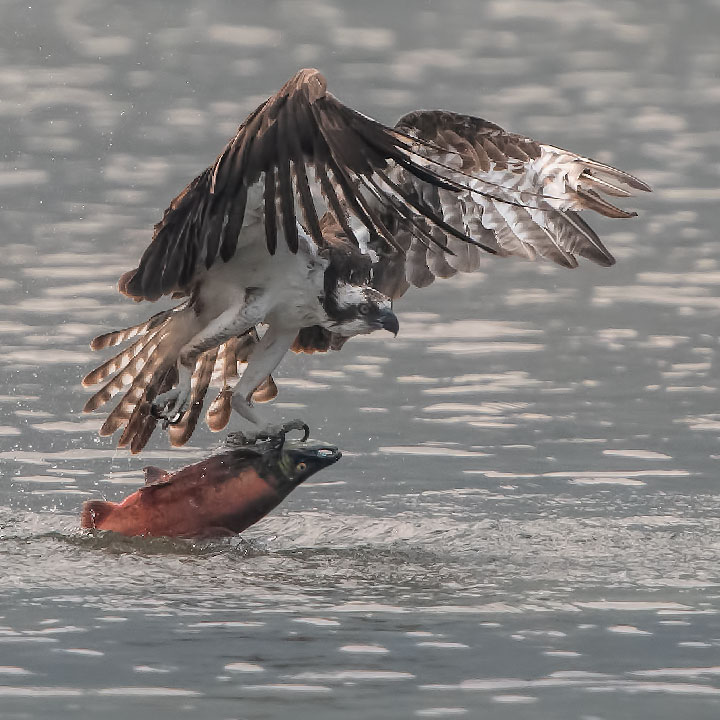
An Osprey struggles to lift a large Kokanee from the Lake.
An elk browses in the woods.

If you are a small bird and you see this Merlin out of the corner of your eye, you are toast. 

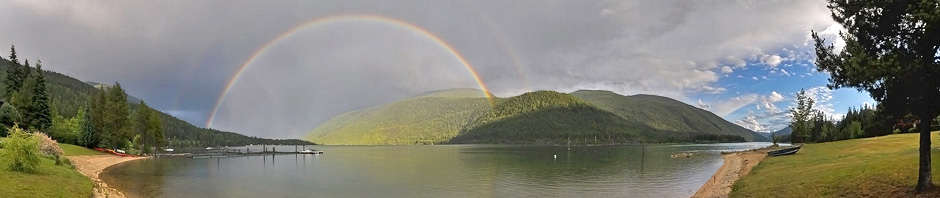
Not all natural delights are wildlife species. This is a circumzenithal arc. 

A long-tailed weasel hunts. 

Succeeding in shooting a snipe in flight qualifies me as a sniper. 

A pika chows down on leaves. 

Two Double-crested Cormorants comment on the flyby of a third. 

A Rough-legged Hawk speculates on the edibility of my camera. 

A bee-mimic fly visits a flower.

A raven flies off with a Cassin’s Finch 

A Western Bluebird couple looks out from a nesting box. 

This striped skunk is probably out in the daylight because it is looking for a mate. 

A Bohemian Waxwing flies by. 

A mule deer stots

Migrating Trumpeter Swans have been feeding in the shallows of the Lake. 

These Western Toads are in amplexus.

A diving muskrat looks as if it is kissing the water. 

Two Great Horned Owlets, still in down, size up their new world. 

I close this collection with two more arthropods: a crab spider consuming a flying ant. 


Posted in birds, bugs, commentary, fish, herptiles, mammals, weather | 7 Comments

June goulash


This is a collection of images from June, none of which has had a posting of its own.

The Cedar Waxwing breeds around here in the summer.

This Eastern Kingbird feels the need to express its opinion.

A Cedar Waxwing flies across a field of flowers.

There have been thunderstorms of late. When precipitation falls from the thunderstorm anvil into the clear air below, it sometimes drags large pendulous pockets of air down with it. These dark pendulous blobs are called mamma. 

A Black-billed Magpie, here caught in flight, is common in some parts of BC, but not here.

Black-billed Magpies mate for life. During their courtship they use a tail-spreading display. The female, the smaller of the two, initiates the interaction by begging for food.

A Northern Rough-winged Swallow has a serene pose.

I rarely see a doe and a buck browsing together, but here they are. 

Wild Turkey chicks stay close to mommy. 


Posted in birds, mammals, weather | 4 Comments

A heron flew by


Following my posting, an eagle juvenile flew by, I watched a Great Blue Heron do likewise.

Mind you, the heron did not look my way, as the Bald Eagle had, but just went about its business of monitoring the wetlands.

A Great Blue Heron flies low over the wetlands.


Posted in birds | 7 Comments

Eagle juvenile flew by


A juvenile Bald Eagle flew by.


Posted in birds | 2 Comments

Loon stressed


Yesterday’s posting asked whether a loon rising out of the water and flapping its spread wings represented preening or aggression. A brochure, Learn to Read the Signs, from the Loon Preservation Committee says that the loon uses the wing flapping for each purpose. To distinguish them, one has to read the loon’s behaviour: had it been preening, or had it shown other signs of stress?

I saw no preening prior to the wing-flapping display, but it did go on to show another sign of stress: sinking low in the water so as to become inconspicuous. It could well have been my presence that prompted the loon’s actions. On the other hand, I was on the bank when the loon came swimming by. It probably had not expected someone to be there. The loon and I then just wandered off in different directions. 

A loon sinks in the water, apparently to make itself less conspicuous.


Posted in birds | Comments Off on Loon stressed