Squirrel with berry


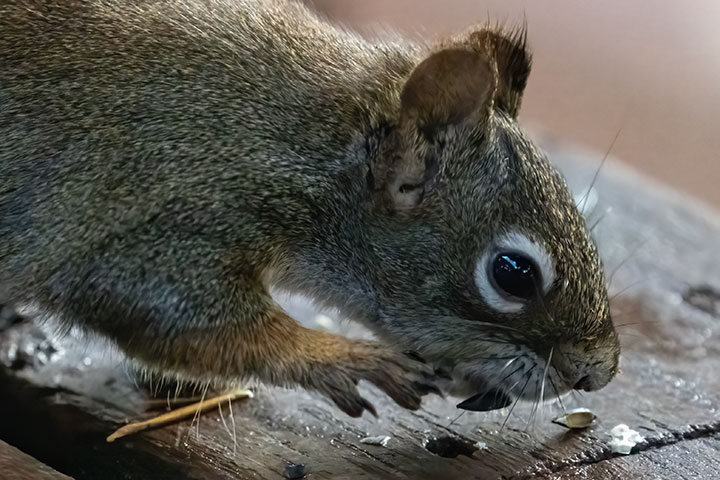
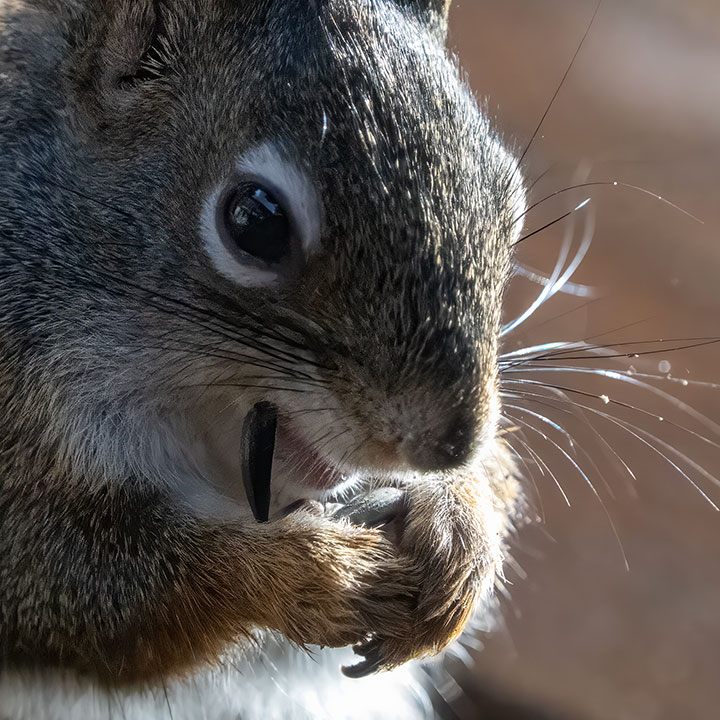
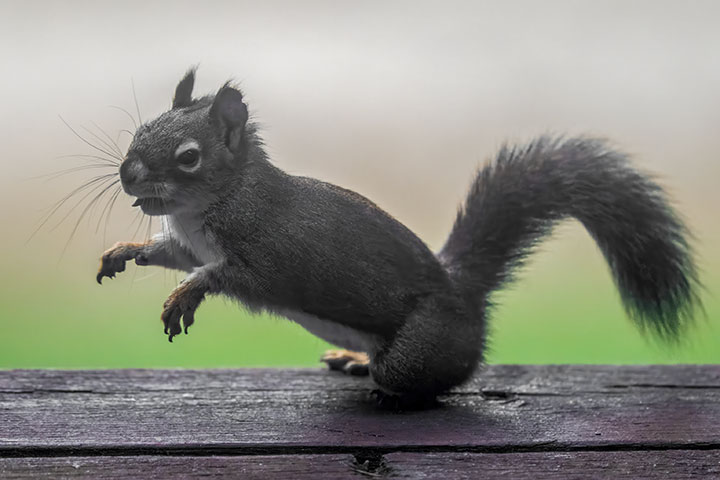
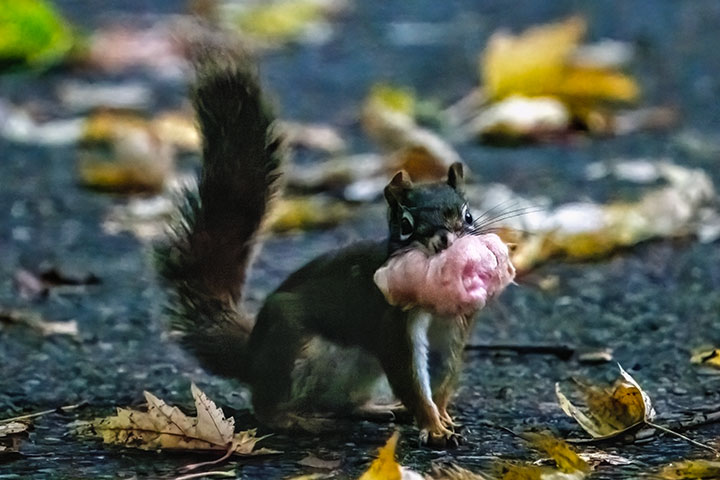
A red squirrel found a reddish berry and hauled it away to eat. (But, I have been unable to determine what the species of berry it is. It seems that no reddish berries are yet in season here.)

The squirrel picks up the berry and examines it.

Deciding the berry is worth eating, the squirrel sets off with it in its mouth.

And a moment’s glance to see if anyone is watching before vanishing up a tree.


Posted in mammals | 5 Comments

Bufflehead


The Bufflehead is our smallest diving duck and the two sexes look different. It is primarily a somewhat uncommon winter bird here for it breeds farther north.

I got some pictures of the male flying. This is with wings down.

And with wings up.


Posted in birds | 2 Comments

Female rufous


Now after a few days of having a male Rufous Hummingbird, the female has arrived.

On a good year, we also may expect to see male and female Black-chinned Hummingbirds and Calliope Hummingbirds. So, more may be coming.

A female Rufous Hummingbird.


Posted in birds | 3 Comments

Three spring creatures


Today brought three spring creatures (in four pictures)

The Wood Duck is a water bird and seasonal migrant. This is a male. This is the first time I have seen it on a piling. 

Every May brings the Bombylius major in numbers to the yard. This tiny bee-mimic fly is a nectar robber. It uses its long proboscis to steal nectar and pollen from a flower without ever touching either anthers (male) or stigma (female). In this way, it violates the contract between flowers and insects: nectar in exchange for pollination. However, it is likely that its long legs and proboscis evolved, not for larceny, but to protect it from crab spiders lurking among the flowers.

The last few days have brought me the first hummingbirds of the season. This is a Rufous Hummingbird. Its gorget (throat) is iridescent. Under many circumstances, it is black.

However, with the proper lighting, it will flash a briliant red. 


Posted in birds, bugs | 1 Comment

Heron is back


In past few days, I have seen a Great Blue Heron a couple of times. I had not seen one here since last August for it is migratory and only appears here in spring and summer to breed. Alas, this particular heron is too young to breed, it being perhaps a year old.

A juvenile Great Blue Heron flies by.


Posted in birds | Comments Off on Heron is back

April goulash


This is a smattering of April pictures that were not previously posted.

This is a Say’s Phoebe. It winters far to the south, but migrates north to the Okanagan in the summer to breed. It generally avoids the Kootenays. The problem is that this bird prefers dry, sparsely vegetated areas, including, sagebrush flats, badlands, dry barren foothills, but our region is heavily forested. 

Now three birds with something to eat in their bills: This is a dipper by Dorothy Fraser.

And a Black-billed Magpie alighting on a fence and then eating.

Then a Song Sparrow with a beak full of grubs.

I have seen this Merlin in the distance for a month, but this is the first close picture.

I have been watching Violet-green Swallows. I had wanted a picture that showed both colours in its name, but they are not seen when the bird is sitting, and when it is flying it is hard to get because it of its great speed. Finally a shot.


Posted in birds | 4 Comments

Killdeer returns


Around here, the Killdeer is a migrant. It is usually here in the spring and summer. Indeed, there have been a few observations of it here for nearly a month, but, to my knowledge, these are the first pictures of its 2025 return.

A shore bird, the Killdeer blends in nicely on a beach. Indeed, I heard it chirping some time before I found it.

There were two foraging near the water. They were probably mates.

The Killdeer would fly from place to place as it looked for food.

Here is a close shot of one of them chirping.


Posted in birds | 1 Comment

Antler buds


Deer grow their antlers anew each year. And although it is variable, the new antler buds usually appear in April. Yesterday, I saw a male white-tailed deer with antler buds.

A deer’s antlers are the fastest growing animal tissue peaking at up to two cm/day. They will reach their full extent by September. Despite the high-cell division rate, they are remarkably cancer-free.

Two little antler buds are visible between eyes and ears on this male white-tailed deer.


Posted in mammals | 1 Comment

Turkey Vulture eating


Turkey Vultures are migrants that come here to breed from mid-March to mid-September, having wintered well to our south. 

For years, I only saw them soaring as they scanned the ground for carrion to eat. Certainly, they did find carrion, but I never found them when they were on the ground eating it. In fact, it was years before I even saw some alight in a tree.

But, that all changed this morning.

This morning, I again saw a Turkey Vulture soaring.

But, for the first time, I saw a Turkey Vulture on the ground.

From there, it approached the carcass, of what I assume had been a deer.

And set to eating it, a first for me.


Posted in birds | 1 Comment

Yellow-bellied marmot


Yellow-bellied marmots are back out of hibernation. I think that only the adults are visible at present. Soon there will be mating, and then, after about 30 days of gestation, we will see pups nursing.

A marmot watches the world.

Often only the head of the marmot is seen as it lounges. Here is the full marmot walking.

And another of it standing up watching something.


Posted in mammals | 1 Comment