Cattle Egret


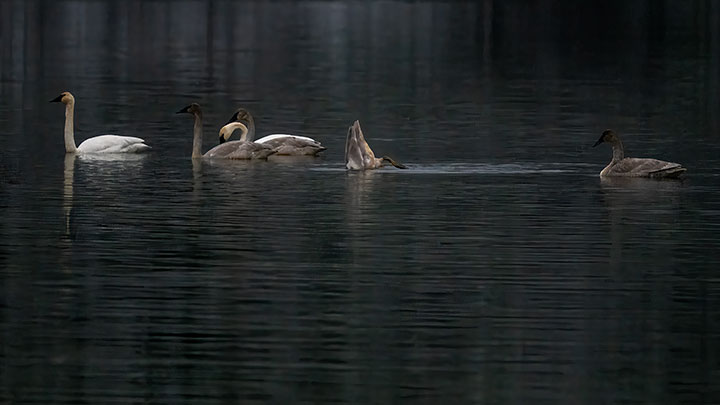
Amazingly, a Cattle Egret appeared in Nelson yesterday. It was well outside its normal range. It was also in its breeding plumage. 

I have seen the Cattle Egret once before, but a long way from here. It was (appropriately) feeding on cattle’s parasites. I start with an earlier picture because it is seen here in its non-breeding plumage.

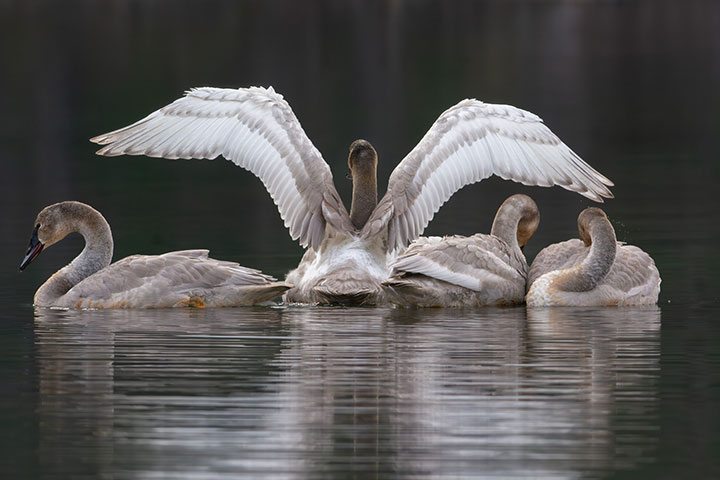
A Cattle Egret on cattle in Maui in November 2016 lacks its breeding plumage.

A Cattle Egret in Nelson in breeding plumage was first spotted by Sachi Snively.

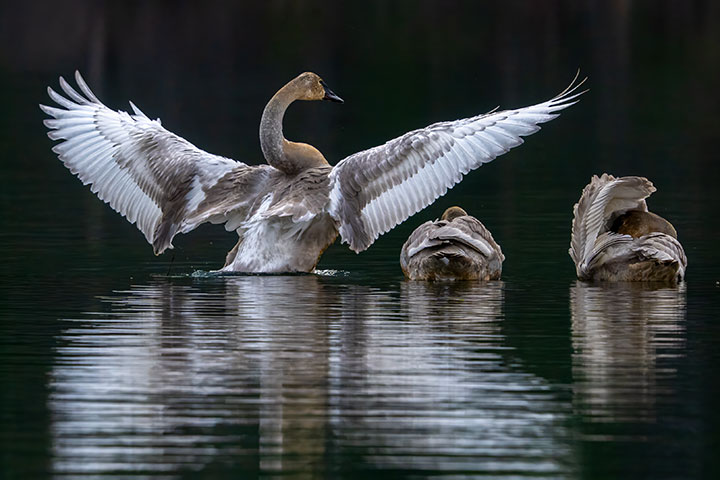
It spreads its wings in peparation to flying.

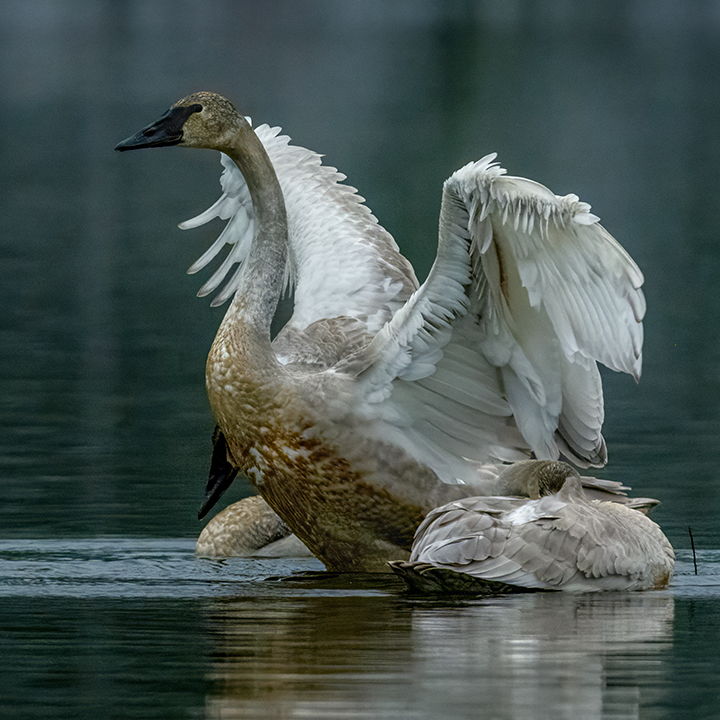
And takes to the air, but does not go far. Photo by Dorothy.


Posted in birds | 4 Comments

Two hummingbird species


Three weeks ago, I posted pictures of our three hummingbirds. The males arrived first and of the three, two were illustrated with iridescent chins (blog.kootenay-lake.ca/?p=34515). 

Now, the females are here, but one species, the calliope, has not returned. So, this posting will show just the rufous and the black-chinned. However, a female is shown, and the male appears with and without displaying its chin’s iridescence. 

First is the rufous, then the black-chinned.

The male Rufous Hummingbird is normally seen with a simple black chin.

But, when it is seen opposite the sun, its chin turns an iridescent orange.

The female shows a series of spots on the chin that occasionally are iridescent.

Usually, the male Black-chinned Hummingbird is seen without iridescence.
 

But, when opposite the sun, its lower chin lights up in iridescent violet.

Our female Black-chinned Hummingbird has practically no chin adornments.


Posted in birds | 1 Comment

Heron & metal piling


Twelve years ago, I wrote a post about birds and pilings (blog.kootenay-lake.ca/?p=8842). In it, I noted that many birds like the wooden pilings and often rest on them and even nest in them. For these birds, wooden pilings provide a refuge from many predators and a good view of the lake and adjacent shore. For people close to the lakeshore, this also provides them with a entertaining view. On wooden pilings, I have seen many ducks, geese, raptors, woodpeckers, swallows, corvids, herons, kingfishers, and gulls. What is not to like? 

But some time ago, people began to shift from wooden to metal pilings which have both the advantage of lasting longer and disadvantage of being unfriendly to birds. The latter has a conical top upon which the only bird I have seen capable of sitting there is a kingfisher. Now, many years later, I watched another bird try: a Great Blue Heron. It wobbled, couldn’t get a grip, and left again about one second later. Sigh.

A juvenile Great Blue Heron fails to perch on a metal piling and promptly leaves.


Posted in birds | Comments Off on Heron & metal piling

Dipper and fish


Dippers eat mostly aquatic insects and insect larvae. However, they will occasionally take other invertebrates, as well as small fish or fish eggs. For the longest time, I had only ever seen it eat juvenile fish (alevin and fry) in the winter, presumably when invertebrates are uncommon.

It came as a surprise to see a dipper feeding a small fish to its chicks in a nest. Mind you, the chicks are still deep in the nest so I did not see them actually eat the fish, but the fish was delivered to them, and the parent left the nest without it.

A dipper stopped on a rock in the stream to look around for predators. It has a fish in its bill. It then flew up to its nest and fed it to its chicks.


Posted in birds, fish | 1 Comment

Black bear cub


Come summer, I often see bears  in my neighbourhood on the West Arm of Kootenay Lake. They are almost always black bears, and always look heathy, whether boar, sow, or cub.

So far, this year has been unusual. I have seen two bears in the late spring, both cubs, and both looking worse for wear. The grizzly cub was healthy, but scrawny. The black bear cub was also gaunt. Why were they both on their own, apparently without a mother? 

The black bear cub paused and looked up. It is missing fur and has a possible injury on its left rear hip. The missing hair might be the result of mange.

As the gaunt cub hurried away, the possible injury and missing fur is clearly visible.


Posted in mammals | 1 Comment

Spring azure


Spring azures are small (22-35 mm wingspan) springtime butterflies. They were seen on a slightly darkened patch of a back-woods roadway where a large mammal had urinated. Many mainly male butterflies group there and sip nutrients, particularly salt, that are needed for mating.

Now, the spring azure is a fairly common butterfly in North America, but as they are only seen in the spring, and have a short lifetime, they are inconspicuous when perched and easy to miss. The delight occurs when they fly and the upper side of the wings are revealed. They are a marvellous blue (thus, the name).

On a forest road, a group of mainly male spring azures sips urine for its salt. When perched, this butterfly has its wings up and shows the camouflaged grey and black markings. But. when flying the delightful upper wings are seen.

A male spring azure flies off and reveals its top-wing colour. (The female butterfly has more black on it.) It will mate and die, having had only a couple of days as an adult. This is a difficult shot to get as the spring azure is a fast flier. 


Posted in bugs | 2 Comments

Black-chinned fought


I have been watching hummingbirds in an attempt to get pictures of the female Black-chinned and the female Calliope. It has been unsuccessful so far. However, I did spot an unusual feature on a Black-chinned male: evidence of a battle.

I had long been aware that the Rufous Hummingbird was combative during the breeding season when it would challenge other rufous males. But, nothing was ever said about the black-chinned. Well, here is evidence, a black-chinned with a few other hummingbird’s feathers in its claws.

This Black-chinned Hummingbird has some feathers of another hummingbird in its claws.


Posted in birds | 1 Comment

Three hummingbird species


I mentioned earlier (blog.kootenay-lake.ca/?p=34474) that we get three hummingbirds: rufous, black-chinned and calliope. In the last few days I have seen males of each of these birds. They migrate here before the females do.

The gorget (throat) of many hummingbirds is iridescent: sometimes it is black, sometimes it displays colours.

The rufous, with its sometime orange gorget, was first to arrive.

The black-chinned with its sometime purple gorget has been here for about three days.

North America’s smallest bird, the calliope has been here a couple of days.


Posted in birds | 3 Comments

Red squirrels mating


The North American red squirrel is our most common tree squirrel. It is generally a solitary creature. It will only be with other red squirrels when the female nurses pups or when it mates.

The oestrus period for the red squirrel only lasts one or two days per year. Yesterday as pheromones rose, the female ran from the male, but did mate in the end. Today, she was positively friendly and mated five or six times. I suspect this is it now. 

One shot of squirrels mating from today.

The best shot of the squirrels mating was yesterday.


Posted in mammals | 2 Comments

Grizzly cub


We certainly have grizzly bears in the West Kootenay. Yet we practically never see them on the West Arm of Kootenay Lake, which has a fair number of homes. Presumably, grizzlies just avoid people. Joanne Siderius, the Senior Naturalist at Kokanee Creek Park observed a grizzly in the spawning channel in August 2018 that prompted all the black bears to leave.

So, it came as a surprise to observe a young grizzly foraging on my and adjacent properties early this morning.

This young grizzly is perhaps only a year old, and looks a bit emaciated. It was traveling alone, so what happened to its mother?

The bear looked earnestly for food.


Posted in mammals | 1 Comment