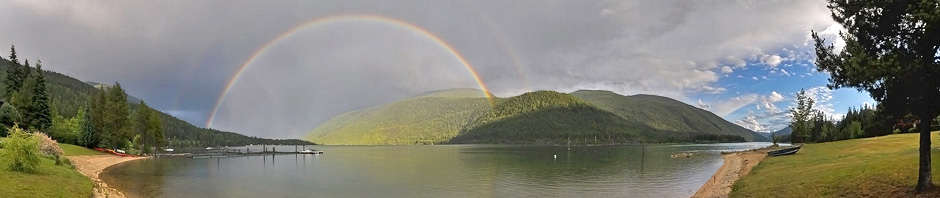
A week ago, this blog crashed: earlier postings could not be seen and nothing more could be posted. The blog is now restored.
A week ago, the wildfire smoke became intolerable, and I headed west to find cleaner air. While away, I continued to explore nature. All the things I show in this restoration goulash are things that have also been seen around the Lake, yet a number of them are distinctly uncommon there.
This female Anna’s Hummingbird is showing iridescent spots on her throat. Around the Lake, Anna’s are seen rarely. I have seen one.

The male Anna’s is noted for its iridescent gorget and crown.

I get to see a Barred Owl at the Lake maybe once a year, yet here I have seen three.

Looking greenish owing to light passing through the leaves, another Barred sits deep in a deciduous tree.

Certainly Wood Ducks are seen around the Lake, but I include this shot of mommy and chick because I liked the lighting.

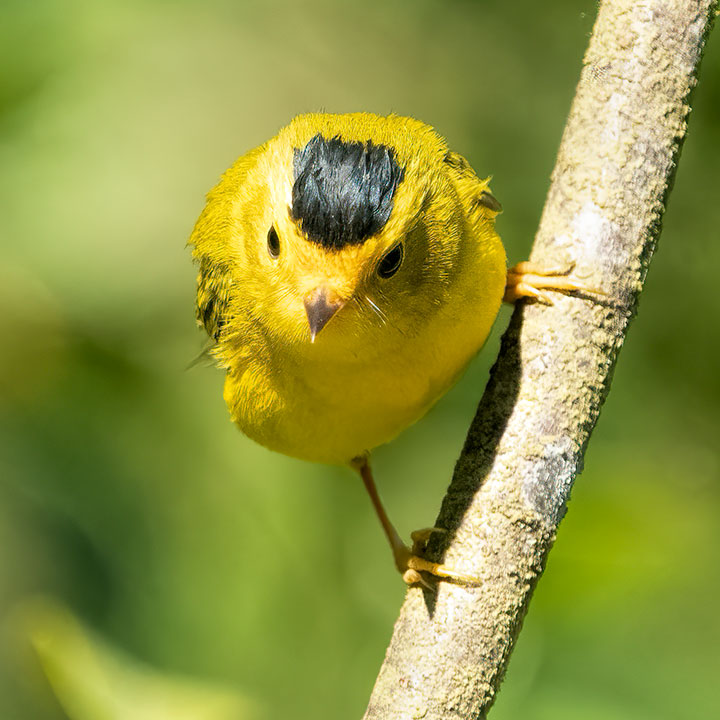
We have Wilson’s Warblers at the Lake, but I had to go elsewhere to see one.
Second only to the Anna’s in the unlikelihood of it being seen is the Virginia Rail.

This marsh bird is not only few in number, but decidedly secretive.

Here is the (black) chick of the Virginia Rail.

I can see a Merlin a few times a year around the Lake, but I include this picture because it is amusing. Notice the wooden beam extending from below the house peak on the right. It is festooned with wires in an effort to prevent birds from perching on it and defecating. The Merlin’s response: move to the peak and defecated on the roof.

Certainly we have raccoons around the Lake, but I have rarely seen a mommy raccoon with its kit, and certainly not in a tree.


 There is an evolutionary process here which gradually increases the length of both the moth’s tongue and the nectar spur. The moths with the longest tongues are favoured as they can reach the bottom of the spur and so receive the most nutrients. The flowers with the longest spurs are favoured as their reproductive organs optimally press against the moth which then increases their reproduction. So, each slowly gets longer and longer.


Flying fish
Problem month: Unlike my usual ten or so postings a month, for the last thirty days, I made only one. The blog, itself, vanished, and even when it was restored, the subscriber emailer did not work. Add to this, interminable thick wildfire smoke blanketed the area making eyes burn and breathing difficult. (I fled to the Coast.) Further, local covid cases skyrocketed. It has been a difficult month. Sigh…, with this posting, the blog, mailings, and I seem restored.
More than any other bird, the Osprey is the symbol of Kootenay Lake. It is numerous and highly visible during the warm season as it fishes and nests over and adjacent to the waters. If you head out on the Lake in the summer, or even walk its shore, an inquisitive eye treats you the sight of an osprey hovering over the water, diving, lifting fish from the water, and flying off with it to feed its young.
This leads to a summer of flying fish, many of which are headless.
Ospreys and humans have had a long relationship, certainly since European settlers started driving pilings in the shallows, and possibly earlier. Ospreys like the easy access to the Lake that humans provide by building dolphins and erecting pilings. They find these human structures propitious for their nests. Mind you, while ospreys tolerate human presence, they chirp their objections if people happen to get too close to what they perceive as their nest-bearing structures. Oh well, they are fun to watch.
The relationship did not always go as well as it does now. When I was a child, my family was horrified when louts would set nest-bearing pilings afire so as to incinerate osprey chicks. (The pilings at Troup still bear the scars of those fires.) The motivation for this bit of vandalism was apparently the assumption of local fishermen that the ospreys were stealing all the good game fish, and these were fish the humans wanted for themselves.
Apart from the inherent injustice of this behaviour, it relied upon a faulty assessment of osprey activities. Osprey generally grab the easiest prey, and those tend to be the slowly swimming suckers. Suckers are not the good-eating fish that fishermen seek. However, the facts did not stop humans from demonizing osprey believing that they favoured trout and Kokanee. Sigh….
Here are two pictures of flying suckers taken this last week.
